
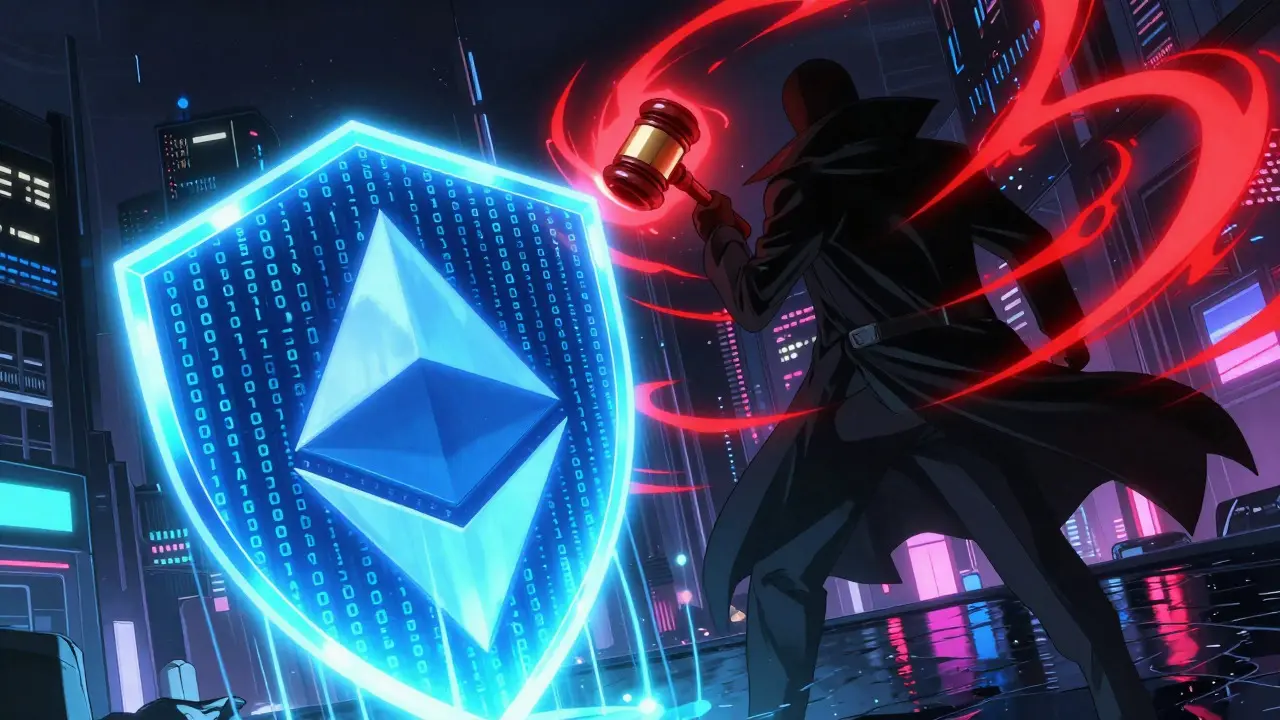
Imagine writing a computer program that runs forever, without a boss, a headquarters, or even a phone number. You publish the code for anyone to use, and suddenly, the U.S. government declares that very code illegal. This is not a scene from a dystopian novel; it is the reality of the Tornado Cash, an Ethereum-based cryptocurrency mixing protocol sanctioned by the US Treasury in 2022. When the Office of Foreign Assets Control (OFAC) slapped sanctions on this decentralized finance (DeFi) tool in August 2022, they didn't just target a company. They targeted immutable smart contracts sitting on the blockchain. This move shook the crypto world to its core, raising urgent questions about privacy, free speech, and who really controls digital money.
The Core Conflict: Code vs. Criminal Law
To understand why the Tornado Cash case matters, you have to look at what the platform actually did. Launched in 2019, Tornado Cash allowed users to deposit cryptocurrency into anonymity pools and withdraw it to different addresses. It used zero-knowledge proofs, a complex cryptographic method, to hide the link between the sender and the receiver. For everyday users, this meant financial privacy. For criminals, it meant a way to wash dirty money.
The U.S. Treasury Department argued that Tornado Cash failed to implement basic anti-money laundering (AML) controls. They pointed to specific incidents where the mixer was used to launder over $7 billion since its inception. Most notably, North Korea’s state-sponsored Lazarus Group used the platform to clean up more than $455 million stolen from various crypto projects. In June 2022 alone, over $96 million from the Harmony Bridge Heist passed through Tornado Cash. Under Secretary Brian E. Nelson stated clearly that the platform had "repeatedly failed to impose effective controls" despite public assurances otherwise.
But here is the twist: Tornado Cash had no central server to shut down. It had no CEO to arrest immediately. It was open-source software deployed on the Ethereum blockchain. Once the code was live, it operated autonomously. By sanctioning the smart contracts themselves, OFAC effectively banned any U.S. person from interacting with them. This was unprecedented. It treated software like a foreign adversary, freezing assets and prohibiting transactions under penalty of law.
The Trial of Roman Storm: A Split Verdict
If the code couldn't be arrested, could the creators be? The U.S. government turned to Roman Storm, one of Tornado Cash's co-founders. Born in Ukraine but living in Germany, Storm became the face of the legal battle against decentralized developers. His trial in the Southern District of New York in 2025 was closely watched by lawyers, coders, and regulators worldwide.
The prosecution argued that Storm and his team operated an unlicensed money transmitting business and conspired to violate sanctions. They claimed that by designing the system without built-in blocklists for known bad actors, Storm intentionally facilitated crime. The defense countered that open-source software is protected speech and that developers cannot control how third parties use their tools once released.
The jury delivered a mixed verdict on August 6, 2025. Storm was convicted on one charge: conspiracy to operate an unlicensed money transmitting business. However, the jury deadlocked on the heavier counts of conspiracy to commit money laundering and conspiracy to violate sanctions. This split outcome is significant. It suggests that while the government can punish developers for lacking proper licensing, proving criminal intent to facilitate sanctions evasion is much harder. The precedent set here will influence how future DeFi founders are treated.
| Event / Entity | Date | Significance |
|---|---|---|
| OFAC Sanctions Imposed | August 8, 2022 | First time open-source software was added to the SDN list. |
| Lazarus Group Laundering | 2019-2022 | Over $455 million stolen funds moved through the mixer. |
| Roman Storm Trial | 2025 | Criminal prosecution of a DeFi developer ended in a partial conviction. |
| Sanctions Lifted (Reported) | March 21, 2025 | Market reacted positively; TORN token rose from $8 to $15. |

Why Privacy Tools Are Not Just for Criminals
Critics of the sanctions argue that punishing privacy tools hurts innocent people too. Financial privacy is a legitimate need for many. Journalists reporting on corruption, activists in authoritarian regimes, and businesses protecting trade secrets all benefit from obscured transaction trails. When you ban a mixer, you don't just stop hackers; you also strip away a layer of protection for vulnerable populations.
Moreover, the technical reality complicates enforcement. Smart contracts are immutable. Even after OFAC designated Tornado Cash as a sanctioned entity, the code continued to run on Ethereum. Users outside the U.S., or those willing to risk penalties, could still interact with it. Data analysis showed that fluctuations in sanctions had negligible influence on exploiters' use of the platform. Determined bad actors simply found other ways, or ignored the laws entirely. This raises a tough question: if the code can't be stopped, does sanctioning it achieve anything besides chilling innovation?
Impact on Developers and DeFi Projects
The shadow cast by the Tornado Cash case extends far beyond one protocol. Every developer building decentralized applications now faces a new level of risk. If creating a privacy-enhancing tool can lead to federal indictment, who will take the leap? Many startups have paused development or moved jurisdictions to avoid U.S. reach.
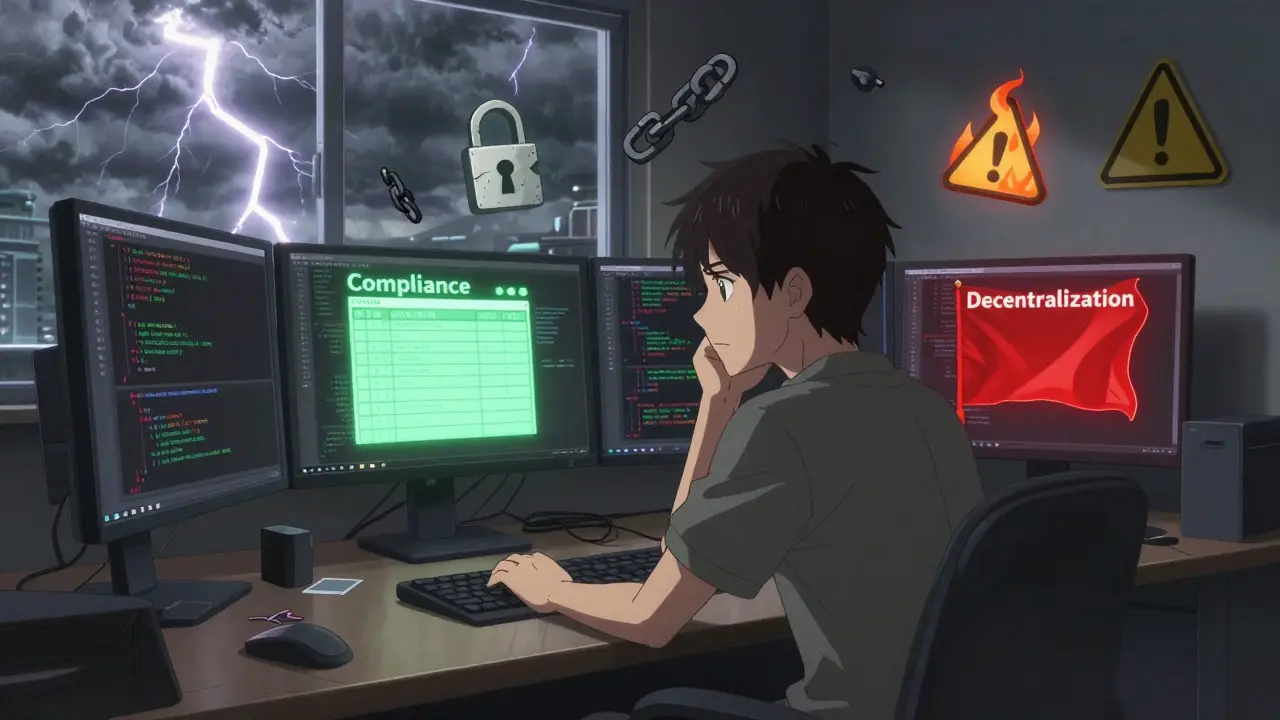
We are seeing a shift toward "compliant DeFi." Some newer protocols are incorporating identity checks or allowing governance votes to blacklist addresses. While this helps with regulatory approval, it undermines the core promise of decentralization: permissionless access. The industry is caught in a bind. Keep things open and risk jail time, or add controls and lose your user base to truly decentralized alternatives.
Exchanges and financial institutions have also scrambled to comply. They must screen every transaction for interactions with sanctioned Tornado Cash addresses. This creates a massive operational burden. One accidental touch of a tainted wallet address can freeze a user's entire account. We are seeing a rise in false positives, where legitimate users get blocked because they unknowingly received dust from a mixer years ago.
What Comes Next for Crypto Regulation?
The Tornado Cash saga is not over. With reports suggesting sanctions were lifted in March 2025, the market reacted with optimism. The native governance token, TORN, surged as investors bet on a return to normalcy. But the legal battles continue. Civil lawsuits challenge whether OFAC exceeded its statutory authority by sanctioning code rather than persons. These cases could redefine the limits of government power in the digital age.
For the average crypto user, the lesson is clear: transparency is becoming mandatory. If you want to stay out of trouble, you need to know where your funds come from and where they go. Privacy is no longer a default feature; it is a liability. As regulators refine their approach, expect clearer guidelines on when a tool crosses the line from helpful utility to illicit enabler. Until then, the tension between freedom and control remains the defining struggle of the blockchain era.
Is using Tornado Cash still illegal in the US?
Yes, for U.S. persons and entities, interacting with Tornado Cash smart contracts remains prohibited under OFAC sanctions unless explicitly lifted or modified by recent court rulings. While there were reports of sanctions being eased in 2025, the legal status is complex and subject to ongoing litigation. Non-U.S. residents may still use it, but global exchanges often block these addresses to maintain compliance.
What happened to Roman Storm?
Roman Storm, a co-founder of Tornado Cash, was convicted in August 2025 of conspiring to operate an unlicensed money transmitting business. However, the jury deadlocked on charges related to money laundering and sanctions violations. This split verdict highlights the difficulty of applying traditional financial crimes to decentralized software developers.
How did Tornado Cash work technically?
Tornado Cash used zero-knowledge proofs and smart contracts on the Ethereum blockchain. Users deposited ETH into anonymity pools, which mixed funds with other deposits. When withdrawing, users received ETH from the pool to a new address, breaking the on-chain trail between the original sender and the final recipient. The system was non-custodial, meaning no central party held the funds.
Did the sanctions stop criminals from using the mixer?
Analysis suggests the impact was limited. Despite the sanctions, the smart contracts remained operational on the blockchain. Exploiters and sanctioned groups like the Lazarus Group continued to find ways to use the protocol. The sanctions primarily affected U.S.-based users and compliant exchanges, rather than stopping the underlying code from functioning globally.
What does this mean for other DeFi projects?
The Tornado Cash case sets a risky precedent for all decentralized finance projects. Developers face potential criminal liability if their tools are used for money laundering, even if the software is open-source and autonomous. This has led to increased caution, with many projects integrating compliance features or relocating to jurisdictions with clearer regulatory frameworks.