


Imagine waking up one day and finding your $15,000 in crypto gone-not stolen, not lost, but frozen. No warning. No explanation. Just a message from your exchange: ‘Funds temporarily unavailable due to regulatory action.’ That’s what happened to thousands of Filipinos in early 2025. The Securities and Exchange Commission (SEC) of the Philippines froze $150 million in cryptocurrency assets tied to 20 unlicensed exchanges. For many, it wasn’t just money-it was rent, school fees, or savings built over years of gig work and remittances.
Why Did the SEC Freeze $150 Million in Crypto?
The Philippines didn’t wake up one day and decide to crush its crypto market. It had been watching for years.
Back in 2022, the Bangko Sentral ng Pilipinas (BSP) put a three-year pause on issuing licenses to crypto exchanges. That meant companies could still operate-but legally, they were in a gray zone. No one was stopping them. No one was checking them. By early 2025, over ₱6 trillion ($107 billion) in crypto was moving through the country. That’s more than 10% of the country’s GDP. And most of it was flowing through platforms that never filed a single form with regulators.
In January 2025, the SEC stepped in. It issued two rules: SEC MC No. 4-2025 and SEC MC No. 5-2025. These defined exactly what a crypto-asset was, who had to register, and what protections users should get. Suddenly, every exchange had to prove they were keeping customer funds separate, disclosing risks, and verifying identities. If they didn’t? They were blacklisted.
By June 2025, 20 platforms were on the list. Their assets-$150 million worth-were frozen. Most of it? Stablecoins. USDT and USDC made up 68% of the frozen amount. Bitcoin was next at 22%. The rest? Altcoins. The funds were spread across Ethereum (45%), Binance Smart Chain (30%), and Tron (15%).
This wasn’t about targeting Bitcoin or punishing innovation. It was about shutting down platforms that looked like exchanges but acted like casinos-no licenses, no audits, no accountability. And the numbers proved why: Chainalysis reported $2.17 billion stolen globally from crypto services in the first half of 2025. The Philippines didn’t want to be the next hotspot.
Who Lost Money-and How?
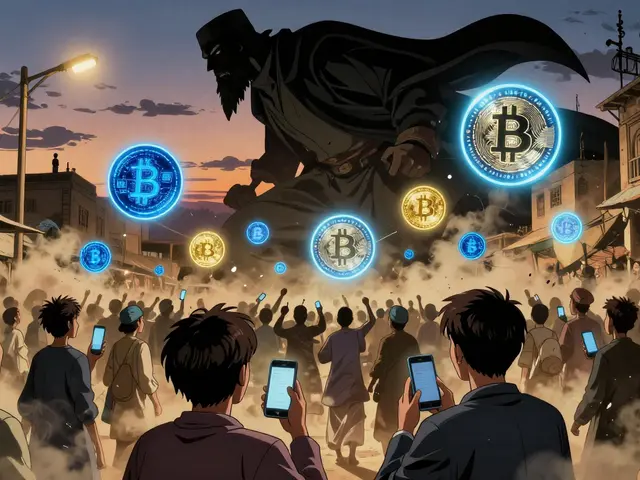
The biggest shock? Most users had no idea their exchange wasn’t licensed.
Coins.ph, the country’s largest licensed platform with over 20 million users, saw a 300% spike in support tickets after the freeze. People were asking: ‘Why is my money stuck?’ ‘Can I get it back?’ ‘Is this a scam?’
Reddit threads exploded. One user posted: ‘My $15k is frozen in Bitget PH-what now?’ It got over 1,200 upvotes. Comments flooded in from people who’d used these platforms for years. Some thought they were safe because the apps looked legit. Others didn’t even know what ‘VASP’ meant.
According to the Association of Cryptocurrency Enthusiasts of the Philippines (ACEP), 78% of users didn’t know the licensing rules. That’s not ignorance-it’s a system failure. The government never made it easy to check if an exchange was approved. No public dashboard. No clear warnings. Just silence until the freeze hit.
Trustpilot reviews for the blacklisted exchanges crashed from 4.2 stars to 1.3 stars in two months. The top complaints? ‘Funds frozen without warning’ and ‘No clear process to recover.’ The Philippine Consumer Welfare Association logged 3,215 formal complaints. Average loss per person? $4,670.
The Recovery Process-And Why Most People Can’t Get Their Money Back
The SEC didn’t just freeze the money. They set up a recovery system. The Crypto Asset Recovery Unit (CARU) launched in April 2025. To get your funds back, you had to:
- Prove your identity with government ID
- Provide blockchain transaction records
- Sign a declaration that your funds weren’t from illegal activity
- Submit everything through a government portal
Simple? Not even close.
Most users didn’t know how to find their transaction hashes. Many didn’t have screenshots of their wallet addresses. Older users-28% of those affected-struggled with digital tools. Some didn’t even have smartphones.
By July 2025, only 12% of affected users (about 3,840 people) had completed the process. Of those who applied:
- 34% were rejected for incomplete paperwork
- 22% were flagged for further investigation
- Only 1 in 8 got anywhere close to a refund
Processing took 47 days on average. Coins.ph, now helping with transfers, said their support team was overwhelmed. Resolution times jumped from 12 hours to 72 hours.
And here’s the cruel twist: even if you got your money back, it might not be the same. The SEC only releases funds to licensed platforms. If your exchange was on the blacklist, your crypto doesn’t magically reappear. You have to transfer it to Coins.ph, Binance, or another approved provider-and even then, there’s no guarantee you’ll get the full amount.
How This Compares to Other Countries
The U.S. froze $150 million in USDT in 2024-but that was tied to sanctioned entities like terrorist groups. The Philippines’ case was different. No international sanctions. No criminal charges. Just unlicensed businesses.
Singapore suspended Tokenize Xchange in July 2025 for mixing customer funds with company money. But they only targeted one platform. The Philippines went after 20 at once.
Meanwhile, in the UAE, exchanges that got kicked out of Singapore just moved their operations. The Philippines didn’t have that luxury. With over 10 million crypto users and a population that relies on digital remittances, the stakes were too high to let the market go unchecked.
What made the Philippines unique? It was one of the top 10 countries in the 2024 Global Crypto Adoption Index. People weren’t just buying crypto-they were using it to pay bills, send money home, and earn income. And now, regulators were forcing them to choose between safety and access.
What’s Next? The Road to Licensing
The BSP’s three-year license freeze was set to end on September 1, 2025. The SEC didn’t wait. They used the freeze to clear the decks.
On July 5, 2025, they announced a ‘Regulatory Sandbox’-a trial program for 10 pre-vetted exchanges to operate under temporary licenses while full rules were finalized. Applications opened September 15, 2025. This wasn’t a softening. It was a reset.
House Bill No. 4792, filed in March 2025, proposed creating the National Council on Digital Assets and Tokenized Investments (NCDATI). If passed, it would give the Philippines its first unified crypto law. Right now, regulation is split between the SEC and BSP. That’s confusing. That’s dangerous.
Industry analysts say the Philippines could become a model for emerging markets-if they handle the recovery well. But Chainalysis warned: if users lose faith, criminals will move in. The country’s crypto crime risk is rising fast.
What Should You Do If Your Crypto Is Frozen?
If you’re one of the thousands affected, here’s what you need to do now:
- Check if your exchange is on the SEC’s blacklist. The list is public on sec.gov.ph.
- Gather every piece of proof: wallet addresses, transaction IDs, screenshots of deposits, ID documents.
- Go to the Crypto Asset Recovery Unit portal (caru.sec.gov.ph). No third-party sites. Only the official one.
- Submit your application. Don’t wait. Deadlines matter.
- If you’re rejected, appeal. Many rejections were due to missing screenshots or typos in wallet addresses.
- Join the ACEP community. They’re offering free help sessions in Manila, Cebu, and Davao.
And if you’re thinking about using a new exchange? Always check the SEC’s list of licensed providers. Don’t trust app store ratings. Don’t follow influencers. Go straight to the regulator’s website.
Is This the End of Crypto in the Philippines?
No. It’s the beginning of a new phase.
People aren’t walking away from crypto. They’re demanding better. The market is still huge-₱6 trillion is not going away. But now, users know: if it’s not licensed, it’s not safe.
Some say the freeze was too harsh. Others say it was long overdue. The truth? Both are right.
Regulation doesn’t kill innovation. Bad regulation does. The Philippines is trying to build rules that protect people without crushing opportunity. It’s messy. It’s painful. But for a country where crypto is used by farmers, overseas workers, and students-it had to be done.
The $150 million frozen isn’t just money. It’s a warning. And a chance.
Why were $150 million in crypto assets frozen in the Philippines?
The Philippine Securities and Exchange Commission (SEC) froze $150 million in crypto assets tied to 20 unlicensed cryptocurrency exchanges that were operating without proper registration under new rules issued in January 2025. These platforms failed to meet requirements for investor protection, asset segregation, and disclosure, prompting the SEC to act against potential financial crimes and consumer harm.
What percentage of the Philippine crypto market was frozen?
The $150 million frozen represented about 0.14% of the total Philippine crypto market, which stood at ₱6 trillion ($107 billion) in early 2025. While small in proportion, the freeze targeted platforms with high user volumes and suspected poor practices, making it a high-impact enforcement action.
Can users get their frozen crypto back?
Yes, but only through a strict verification process managed by the SEC’s Crypto Asset Recovery Unit (CARU). Users must submit government ID, transaction records, and proof that funds weren’t from illegal activity. As of July 2025, only 12% of affected users completed the process successfully. Most rejections were due to incomplete documentation or lack of digital literacy.
Which cryptocurrencies were frozen the most?
Stablecoins made up 68% of the frozen assets, primarily USDT and USDC. Bitcoin accounted for 22%, and altcoins made up the remaining 10%. The assets were spread across Ethereum (45%), Binance Smart Chain (30%), and Tron (15%), based on blockchain network analysis by Chainalysis.
Are crypto exchanges still allowed to operate in the Philippines?
Yes, but only if licensed. The Bangko Sentral ng Pilipinas (BSP) lifted its three-year moratorium on Virtual Asset Service Provider (VASP) licenses on September 1, 2025. The SEC began accepting applications for full licenses on September 15, 2025. Only platforms that pass strict compliance checks can operate legally. Unlicensed exchanges remain blocked.
What’s the difference between the Philippines’ crypto freeze and the U.S. OFAC action?
The U.S. OFAC froze $150 million in USDT in 2024 because it was linked to sanctioned entities like terrorist groups or drug cartels. The Philippines’ action targeted domestic exchanges that never applied for licenses, regardless of whether their funds were criminal. The goal wasn’t sanctions-it was compliance.
How can I avoid having my crypto frozen in the future?
Only use exchanges listed on the official SEC Philippines website as licensed Crypto-Asset Service Providers (CASP). Never trust app store ratings or influencer endorsements. Check the SEC’s public registry before depositing any funds. If an exchange doesn’t show up on the official list, assume it’s not safe.


Comments (19)
Mandy McDonald Hodge
December 28, 2025 AT 21:46 PMI just cried reading this. My cousin in Manila lost her life savings trying to pay for her kid's meds. She didn't even know what a VASP was. People aren't stupid-they just trusted apps that looked like banks. Why didn't anyone warn them? 😔
Adam Hull
December 29, 2025 AT 13:58 PMThe regulatory architecture here is fundamentally flawed. The SEC’s enforcement mechanism exhibits a profound lack of proportional response-freezing assets without a judicial overlay constitutes a de facto expropriation under international customary law. The absence of due process renders the entire action legally indefensible.
Jordan Fowles
December 30, 2025 AT 02:19 AMIt’s sad how innovation always gets crushed under the weight of bureaucracy. People weren’t gambling-they were surviving. The system failed them long before the freeze happened. Now they’re being asked to jump through hoops no one ever told them existed.
Willis Shane
December 31, 2025 AT 02:29 AMThis is exactly why we need federal oversight. You can’t let a developing nation’s regulatory vacuum become a playground for fraud. The SEC did what had to be done-even if it hurt people. Sometimes protection means pain.
Jake West
December 31, 2025 AT 03:27 AMLMAO so now you’re telling me I can’t use Binance because some guy in Manila didn’t file Form 12B? Who cares? It’s crypto. It’s supposed to be wild. If you can’t handle it, go back to your bank account with 0.01% interest.
Kevin Gilchrist
January 1, 2026 AT 23:33 PMThey froze $150M? That’s chump change. Imagine if they’d gone after the real monsters-the whale wallets that pump and dump on retail. Nah, they went for the little guys. Classic. 🤡
Josh Seeto
January 3, 2026 AT 05:31 AMFunny how everyone’s shocked. The SEC’s rules were published in January. The portal was live in February. The blacklist was updated weekly. You had 6 months. You chose ignorance. Now you’re mad? That’s not a failure of regulation. That’s a failure of responsibility.
Shawn Roberts
January 4, 2026 AT 10:21 AMWe need to help these people. I’m organizing a fundraiser for the affected Filipinos. If you’ve got $5 to spare, DM me. Let’s not just talk about the problem-let’s fix it 💪❤️
Steve Williams
January 5, 2026 AT 18:30 PMAs someone from Nigeria, I see the same pattern. People trust apps because they look professional. They don’t check licenses. The government must educate, not punish. But this move? It sends a message. Maybe it’s necessary.
prashant choudhari
January 7, 2026 AT 04:43 AMIn India we had the same thing in 2021. Banks blocked crypto transactions. People panicked. But now we have clear rules. The pain was real. The outcome? Better. This is the same path.
Abhisekh Chakraborty
January 8, 2026 AT 09:03 AMThis is why crypto will never be mainstream. You think you’re free but they come in and take it all. The system is rigged. The rich get protected. The poor get frozen. Wake up people.
SUMIT RAI
January 9, 2026 AT 03:02 AMI mean... 🤷♂️ why are we even surprised? Crypto was always a gamble. If you didn’t check the license, you were playing Russian roulette. No tears. Just logic.
Bruce Morrison
January 10, 2026 AT 13:54 PMPeople need access. But they also need safety. The problem isn’t regulation. It’s communication. If the government had run a TV ad campaign in Tagalog for six months saying 'Check SEC.gov.ph before you deposit,' this wouldn’t have happened.
Elisabeth Rigo Andrews
January 11, 2026 AT 10:36 AMThe 68% stablecoin concentration is the real story. This wasn’t about Bitcoin freedom-it was about laundering via USDT. The SEC didn’t go after the tech. They went after the money laundering vector. Smart move. The rest? Collateral damage.
surendra meena
January 11, 2026 AT 23:22 PMThis is the end of the Philippines as we know it!! The global elites are coming for our digital sovereignty!! They’re coming for your crypto next!! They’ve already hacked the blockchain!! They’re using AI to trace your wallet!!
Gavin Hill
January 12, 2026 AT 19:49 PMI wonder how many of those frozen funds were from overseas workers sending money home. Imagine being a nurse in Saudi Arabia, working 12 hour shifts, sending every peso home so your kid can eat. And then it just vanishes. No call. No email. Just silence.
dina amanda
January 14, 2026 AT 13:37 PMThis is a setup. The U.S. and IMF pushed this. They want to control all crypto so they can track every transaction. Next they’ll freeze your bank account for buying a banana online. Don’t trust them.
Andrea Stewart
January 15, 2026 AT 09:45 AMI got my money back. Took 52 days. Messed up my wallet address once. Got rejected. Resubmitted. Got it. 87% of my funds. Not perfect. But better than nothing.
Andrew Prince
January 16, 2026 AT 14:56 PMThe entire episode underscores a systemic epistemological failure in public financial literacy education, wherein the conflation of technological accessibility with institutional legitimacy has engendered a catastrophic misalignment between user expectation and regulatory reality, resulting in a collective trauma that transcends mere financial loss and enters the realm of sociopolitical disillusionment.