
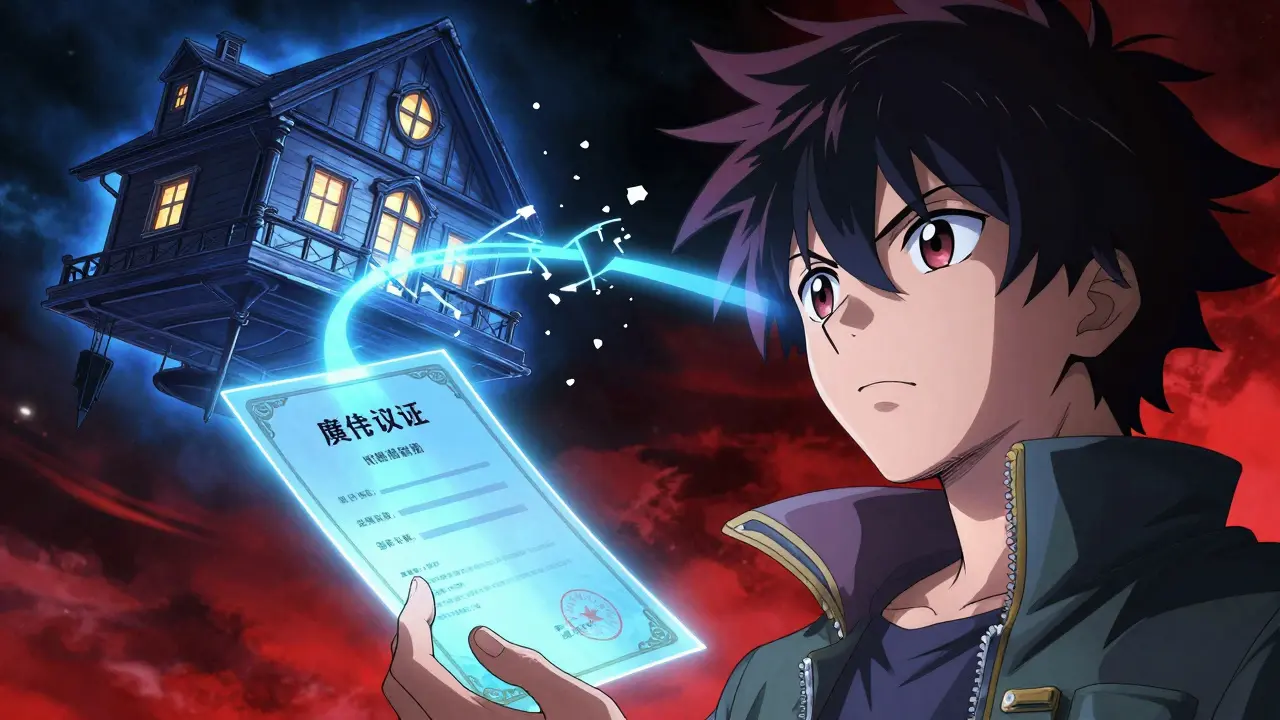
Imagine buying a house deed. You hold the paper that proves you own the property, but the house itself isn't inside the envelope. It sits on a lot somewhere else. Now, imagine if the address on that deed was wrong, or if the house burned down and no one told you. That is exactly what happens when NFT metadata fails.
Most people think buying an NFT means they own the image, video, or music file. They don’t. They own a token-a unique ID number on a blockchain-that points to data describing the asset. This data is called metadata. If the link in that metadata breaks, your expensive digital collectible turns into a blank screen or a broken icon. Understanding how this connection works is the difference between holding a valuable asset and holding a worthless receipt.
The Anatomy of an NFT Token
To understand the link, we have to look at what an NFT actually is. An NFT is not a file. It is a smart contract record on a blockchain, most commonly Ethereum. This record contains very little information directly. It usually just holds the owner’s wallet address and a pointer to where the real details live.
This pointer leads to the metadata. Think of metadata as the label on a jar of pickles. The jar (the blockchain) doesn't contain the pickles (the high-resolution image or audio). The label tells you what's inside, who made it, and where to find the actual jar in the pantry. In technical terms, the NFT standard, such as ERC-721, defines how this label should be structured. It requires fields like 'name,' 'description,' and crucially, 'image' or 'animation_url.'
When you mint an NFT, you are essentially writing this label onto the blockchain. But because blockchains are expensive and slow for storing large files, the actual content-the JPEG, MP4, or GIF-is stored elsewhere. The metadata simply provides the web address or hash code to retrieve that content. If that address changes or disappears, the label still exists, but the jar is gone.
Where Does the Data Actually Live?
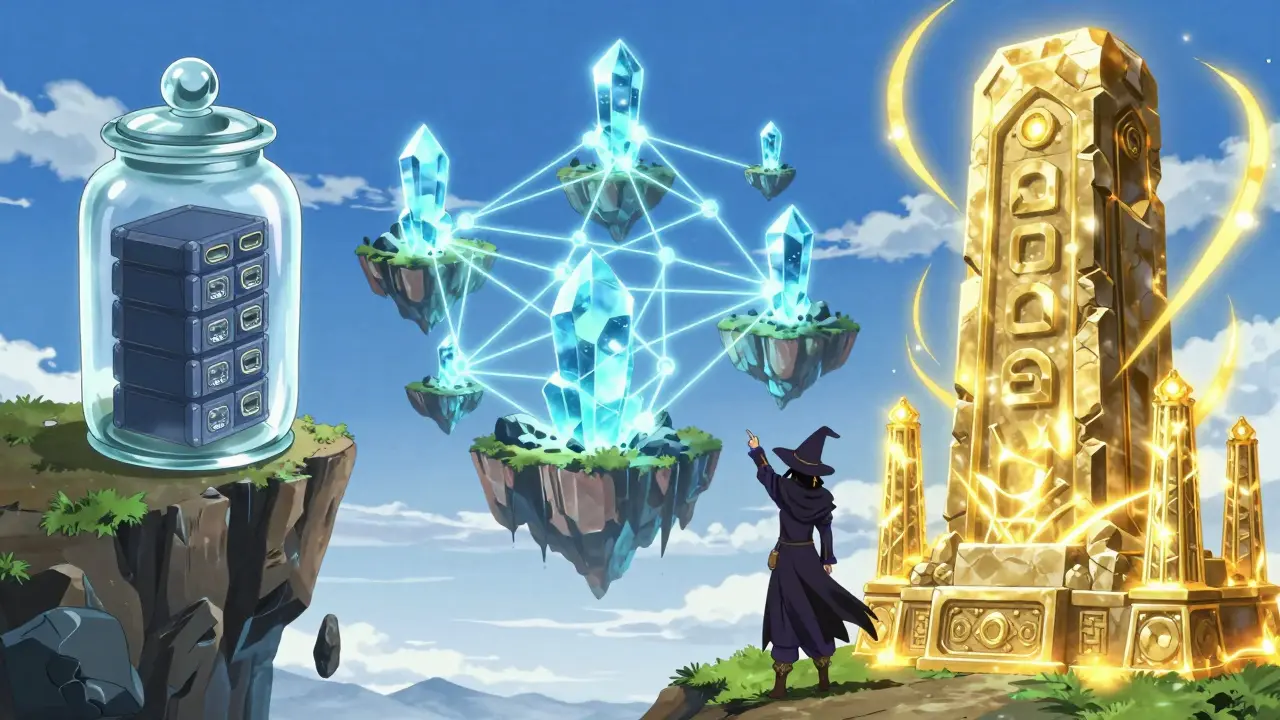
So, if the blockchain doesn't store the image, where does it go? There are three main places, each with different risks and costs.
1. Centralized Servers (HTTP/HTTPS)
This is the simplest but riskiest method. The creator uploads the image to a regular website server (like AWS or a personal hosting site). The metadata points to a URL like www.example.com/image.jpg. If the creator deletes the file, goes bankrupt, or the server crashes, the NFT becomes "broken." We saw this happen in April 2022 when thousands of CloneX NFTs showed blank images due to a temporary server outage. For corporate projects, this is common because it’s easy to manage, but it defeats the purpose of decentralization.
2. InterPlanetary File System (IPFS)
This is the gold standard for most crypto-native projects. Instead of a web address, the file is given a unique cryptographic hash (a long string of characters). This hash acts as a fingerprint for the file. When the metadata points to an IPFS hash, anyone can retrieve the file from any node in the global IPFS network that has a copy. It is decentralized and resistant to censorship. However, IPFS is not automatically permanent. If no one "pins" (stores) the file, it can disappear. Services like Pinata charge fees to keep these files pinned and accessible forever.
3. On-Chain Storage
This is the rarest and most expensive option. The entire image or animation is encoded directly into the smart contract on the blockchain. Projects like Autoglyphs do this. It guarantees permanence because the Ethereum network will never delete it. But it costs a fortune in gas fees. Storing a simple image on-chain can cost hundreds of dollars per mint, compared to cents for off-chain methods. As a result, less than 3% of NFTs use full on-chain storage.
| Storage Method | Cost | Permanence | Risk Level |
|---|---|---|---|
| Centralized (HTTP) | Low | Dependent on Host | High (Server failure) |
| Decentralized (IPFS) | Medium (Pinning fees) | High (If pinned) | Low-Medium |
| On-Chain | Very High | Permanent | None |
The JSON Structure Behind the Scenes
If you look at the raw data of an NFT, you’ll see a JSON (JavaScript Object Notation) file. This is the language the blockchain uses to read the metadata. A typical structure looks like this:
{
  "name": "Cool Cat #1",
  "description": "A cool cat wearing sunglasses.",
  "image": "ipfs://QmYwAPMw...",
  "attributes": [
    {
      "trait_type": "Background",
      "value": "Blue"
    }
  ]
}
The critical line here is "image": "ipfs://QmYwAPMw...". This is the bridge. The blockchain reads this line and fetches the visual content from the IPFS network. If this field contains a centralized HTTP link instead, you are trusting a single company to keep that link alive. Many developers now use hybrid approaches, pinning to IPFS while keeping a backup on Arweave, another permanent storage protocol, to ensure redundancy.
Why Broken Metadata Matters
You might think, "It’s just a picture. Who cares if it breaks?" But metadata carries more than just visuals. It often includes:
- Royalty Information: Ensuring creators get paid on secondary sales.
- Access Rights: Some NFTs act as tickets to events or software. If the metadata breaks, you lose access.
- Provenance: The history of ownership and authenticity.
In 2023, researchers found over 1,200 instances of broken metadata links across major collections. For collectors, this devalues their holdings instantly. For artists, it erases their credit. Legal experts warn that without clear, persistent metadata, claiming copyright infringement becomes nearly impossible. The U.S. Copyright Office has stated that an NFT alone does not convey rights to the underlying work; the metadata must clearly define those rights.
Best Practices for Creators and Collectors
If you are creating NFTs, do not rely solely on centralized servers. Use IPFS and pay for pinning services like Pinata or use Arweave for permanent storage. Always verify that your metadata JSON is publicly accessible before minting. Tools like the NFT Metadata Checker can scan your collection for broken links before launch.
If you are buying, check the contract. Look at the "token URI" in the smart contract. Does it point to IPFS or a generic website? If it’s a generic website, ask yourself: What happens if that company shuts down next year? Premium collections often provide multiple backups. For example, CryptoPunks stores data on IPFS, Arweave, and centralized backups, ensuring zero downtime since 2017.
Understanding this link is vital. The blockchain guarantees the token’s existence, but only robust metadata infrastructure guarantees the asset’s survival.
Does owning an NFT mean I own the copyright to the image?
Generally, no. Unless explicitly stated in the smart contract or accompanying legal documentation, buying an NFT usually only grants you ownership of the token ID, not the intellectual property rights to the underlying artwork. The U.S. Copyright Office has clarified that NFTs do not automatically transfer copyright.
What happens if the IPFS link in my NFT metadata breaks?
If the IPFS content is not pinned by any node, it may become inaccessible, resulting in a "blank" or broken image display on marketplaces. However, IPFS is designed for redundancy. If other users or services have pinned the same hash, the content remains available. Unlike centralized servers, there is no single point of failure, but active pinning is required for guaranteed permanence.
Is on-chain storage better than off-chain storage?
On-chain storage is more secure and permanent because the data is embedded directly in the blockchain transaction. However, it is significantly more expensive due to high gas fees. Off-chain storage (like IPFS) is cheaper and scalable but relies on external services to keep the data accessible. Most projects choose off-chain for cost efficiency.
How can I check if an NFT's metadata is secure?
You can inspect the token URI in the smart contract on a block explorer like Etherscan. If the URI starts with "ipfs://" or "ar://", it is decentralized. If it starts with "http://" or "https://", it is likely hosted on a centralized server, which poses a higher risk of link rot or takedown.
Can NFT metadata be changed after minting?
Yes, if the metadata is stored off-chain and the creator retains control over the storage service. This allows for updates but also introduces risk, as the creator could maliciously alter the asset. On-chain metadata is immutable and cannot be changed once minted. New standards like EIP-6454 aim to lock metadata to prevent post-mint modifications.