

Pump.fun Token Cost Calculator
Token Creation Cost Estimator
Estimate costs to create and trade tokens on Pump.fun platform
Estimated Costs & Returns
Current token price:
$0.000001 SOL
Total cost for 1 tokens:
$0.000001 SOL
Price increases with each additional token purchased
Platform fee:
1% trading fee applies
Potential return:
$0.00
Risk Level: Medium
Note: Pump.fun uses bonding curve pricing where early buyers get better rates. The first buyer pays $0.000001 SOL. By the 10,000th buyer, prices can be 100x higher. Creator can sell tokens anytime.
Ever heard of a token called Pump.fun? It’s not a coin you buy to hold. It’s a platform - and one that’s turned everyday internet users into token creators overnight. If you’ve seen tokens like Fartcoin, Peanut the Squirrel, or Moo Deng explode in price and vanish just as fast, you’ve seen Pump.fun in action. This isn’t some fancy Wall Street tool. It’s more like a digital vending machine for memes that just happened to become a billion-dollar business.
What exactly is Pump.fun?
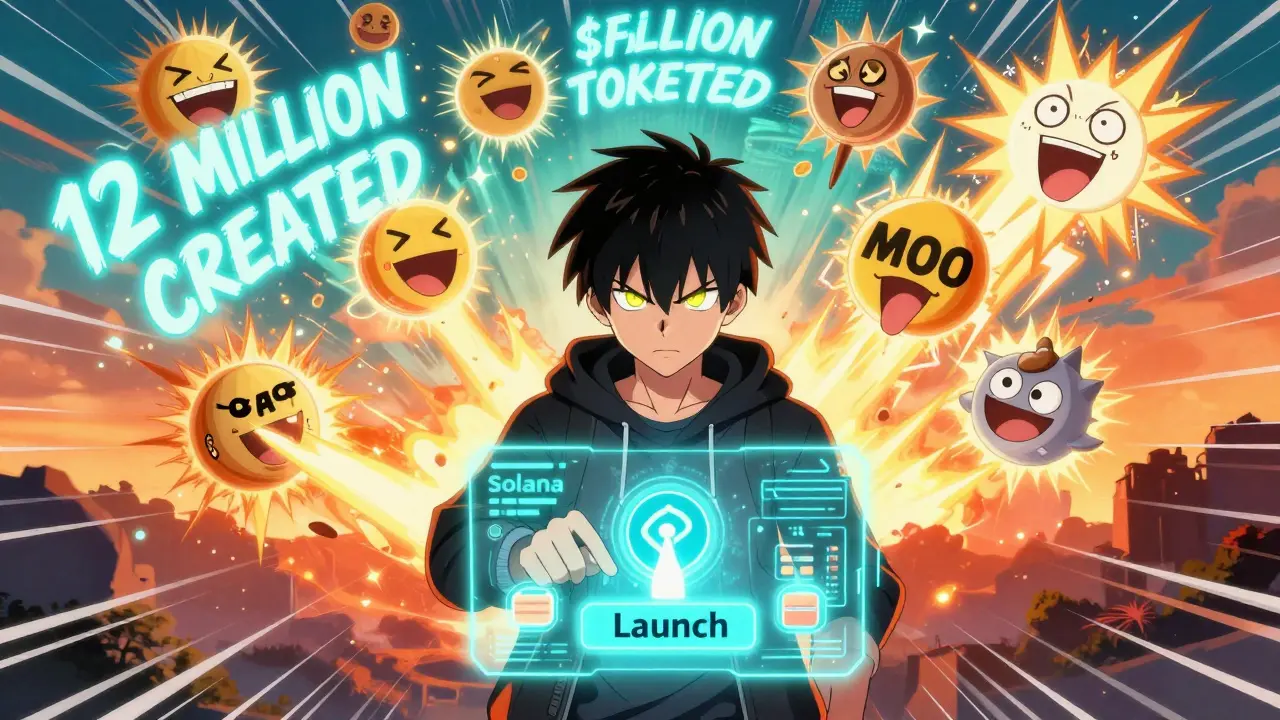
Pump.fun is a crypto launchpad built on Solana that lets anyone create their own cryptocurrency in under 30 seconds. No coding. No lawyers. No waiting for approval. All you need is a Solana wallet like Phantom, a name, a ticker symbol (like $DOG or $PEANUT), and an image. It costs about $1 to $2 in SOL to launch. That’s it. The platform then automatically sets up a trading pair, prices the token using a bonding curve, and lets people start buying and selling right away.
It launched in January 2024, and by mid-2025, over 12 million tokens had been created on it. That’s more than all other meme coin platforms combined. Most of these tokens are jokes, memes, or inside jokes with no real utility - and that’s the point. People aren’t investing in businesses. They’re betting on virality.
How does Pump.fun make money?
Pump.fun doesn’t charge you to create a token. It doesn’t take a cut of your profits. Instead, it makes money every time someone trades. For every swap - whether you’re buying $MOO or selling $CHILL - Pump.fun takes a 1% fee. That adds up fast when millions of trades happen every day.
There’s another revenue stream: graduation. When a token hits a market cap between $69,000 and $90,000, it automatically moves to Raydium, Solana’s main decentralized exchange. To make that happen, the creator pays a 1.5 SOL fee (around $45-$60). That’s not a lot for someone who just made $50,000 from their token - but it’s pure profit for Pump.fun.
By late 2025, Pump.fun had generated nearly $780 million in revenue just from these fees. That’s more than most crypto exchanges make in a year.
What is the PUMP token?
In July 2025, Pump.fun launched its own native token: PUMP. It wasn’t sold in a traditional ICO. It was offered in a public sale that raised $600 million in just 12 minutes. Another $720 million came from private investors. That gave Pump.fun over $1.3 billion in cash reserves - more than most crypto startups ever see.
As of December 2025, PUMP has a market cap of $1.6 billion, making it the 80th largest cryptocurrency in the world. Its price sits around $0.003126, with daily trading volume over $167 million. The token’s purpose? To capture a share of the platform’s revenue. Holders of PUMP get a portion of the fees generated by token trades and graduations - though exactly how that works isn’t fully public.
It’s not a governance token. You can’t vote on changes. You can’t influence the platform. It’s a speculative asset tied directly to Pump.fun’s usage. If more people create tokens, PUMP goes up. If the meme craze dies, it crashes.
How does the bonding curve work?
Most crypto tokens use liquidity pools - like Uniswap - where someone has to put in money to start trading. Pump.fun doesn’t need that. It uses a bonding curve, which means the price of the token automatically rises as more people buy it.
Here’s how it works: The first person to buy $FART gets it at 0.000001 SOL. The next person pays a little more. The tenth person pays more than the first. The 10,000th person pays a lot more. There’s no fixed price. No order book. No market makers. The smart contract adjusts the price in real time based on how many tokens are sold.
This creates a classic pump-and-dump pattern - but it’s built into the system. Early buyers can cash out for big profits. Late buyers often get stuck with a token that’s now worth almost nothing. And because the platform doesn’t require creators to lock their tokens, they can sell their holdings anytime - even if they’re the ones who started the hype.
What’s a ‘graduation’?
Graduation is Pump.fun’s way of moving a token from its own platform to a real exchange - Raydium. When a token hits $69,000-$90,000 in market cap, the system automatically adds liquidity to Raydium and removes it from Pump.fun. The creator pays the 1.5 SOL fee to make this happen.
Why does this matter? Because once a token graduates, it becomes tradable on a more stable, higher-volume exchange. That’s when it can really take off - or crash. Many tokens never graduate. They die on Pump.fun with only a few hundred buyers. Others explode. Peanut the Squirrel hit $120 million in market cap before graduation. MoonRocket? It graduated with no community, no roadmap, and no future.
Why is Pump.fun so controversial?
On one hand, it’s revolutionary. It gives anyone with a joke and a Twitter account a shot at making money. Creators like @CryptoNut made 1,200x returns in 72 hours. On the other hand, it’s a free-for-all. There’s no KYC. No verification. No way to tell if a token is a scam or just a bad idea.
Reddit and Twitter are full of stories. One user lost $85 on a token where the creator slowly sold off their 15% stake over two days - a “soft rug pull.” Another made $5,000 from a token called DogeKiller. Trustpilot reviews show 78% of positive feedback is about how easy it is to use. The negative reviews? 82% say it’s full of scams.
Regulators are watching. The U.S. SEC has called out Pump.fun for enabling token creation without investor protections. The EU’s MiCA rules will likely force changes by early 2026. If Pump.fun has to add identity checks, it loses what makes it unique.
How is Pump.fun different from Uniswap or Raydium?
Uniswap and Raydium are decentralized exchanges. You need to provide liquidity, manage pools, and understand tokenomics. Pump.fun is a launchpad. You don’t need to know any of that. You just click, type, upload, and go.
Uniswap is for serious DeFi projects. Raydium is for Solana-based tokens with real use cases. Pump.fun? It’s for memes. For chaos. For the kind of wild, fast, unpredictable trading that only happens when people aren’t thinking about fundamentals - they’re thinking about viral trends.
Token Tool? It’s for businesses. Pump.fun? It’s for TikTok trends.
Who uses Pump.fun?
Almost no institutions. No hedge funds. No venture capital. It’s 98% retail users - teenagers, night shift workers, crypto enthusiasts, and people who saw a meme and thought, “I could make that.”
The most successful creators aren’t developers. They’re social media marketers. They know how to write a viral tweet. They know how to get a Telegram group buzzing. They know when to post a video of themselves dancing with a token logo behind them. That’s the real skill here.
Bitbond’s analysis found that 92% of the tokens that went viral started with a Twitter post. Not a whitepaper. Not a roadmap. A meme.
What are the risks?
There are no safeguards. No customer support. No chargebacks. If you lose money, it’s gone. If a creator dumps their tokens, you can’t stop them. If the platform goes down, your token might disappear.
Even the “fair launch” model has flaws. Yes, creators can’t hoard tokens before launch - but they can sell them right after. And because everyone sees the wallet addresses, you can track when a creator starts selling. Most people still buy anyway, hoping they’re the last one in.
And then there’s the platform itself. The interface looks like a 4chan board. No logos. No names. Just wallet addresses and nicknames. It’s intentionally chaotic. It’s not designed to be safe. It’s designed to be fast.
What’s next for Pump.fun?
Pump.fun isn’t stopping. It’s expanding. It now supports Ethereum’s Base layer-2 and the Blast blockchain, not just Solana. That means more users, more tokens, more fees.
The team is working on Pump.fun v2, set to launch in Q1 2026. It’s rumored to include basic scam detection - maybe flagging tokens with high creator holdings or suspicious trading patterns. It might even lock a small portion of creator tokens for 24 hours after graduation.
But here’s the catch: if they add too much safety, they lose their edge. The whole point of Pump.fun is that it’s wild, unfiltered, and dangerous. That’s what makes it addictive.
Should you use Pump.fun?
If you want to create a token as a joke - and you’re okay with losing $2 - go ahead. It’s fun. It’s easy. You might even get lucky.
If you want to invest? Don’t. Treat every token like a lottery ticket. Do your own research. Check the creator’s wallet. See how many tokens they still hold. Look at the trading volume. If it’s mostly buy orders from new wallets, it’s probably a pump. If it’s mostly sell orders from one address, it’s probably a rug pull.
And if you’re holding PUMP? You’re betting on Pump.fun’s future. If meme coins keep trending, it could go higher. If regulators shut it down or users move on, it could crash to zero. There’s no middle ground.
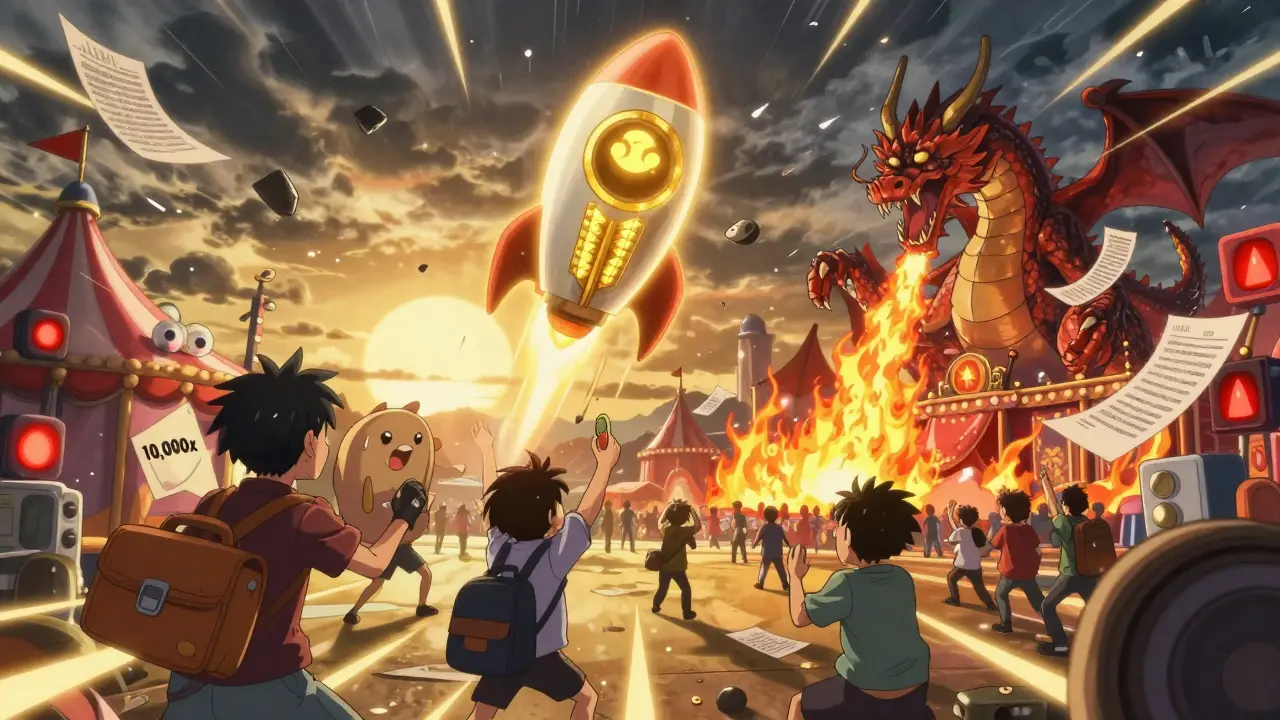
Pump.fun isn’t crypto’s future. It’s crypto’s carnival. It’s loud, messy, and thrilling. And like any carnival, you walk away with either a stuffed animal - or nothing at all.
Is Pump.fun a scam?
Pump.fun itself isn’t a scam - it’s a platform. But almost every token created on it is a gamble. Many are outright scams. The platform doesn’t verify creators, doesn’t stop rug pulls, and doesn’t offer refunds. If you lose money, it’s your risk. Think of it like a vending machine that sells lottery tickets - the machine isn’t rigged, but most tickets are losers.
How do I create a token on Pump.fun?
First, connect a Solana wallet like Phantom. Then, enter a token name (max 20 characters), a ticker symbol (max 8 characters), upload an image (JPG or PNG under 2MB), and add a description. You can also link your Twitter or Telegram. Pay 0.02 SOL (about $0.60-$2) and click launch. Your token is live in under 30 seconds.
What’s the difference between PUMP and other tokens on Pump.fun?
PUMP is the platform’s native token - it’s what Pump.fun created for itself. All other tokens are user-generated memes or projects. PUMP earns a share of the platform’s fees. Other tokens are just digital jokes with no inherent value outside of speculation.
Can I make money on Pump.fun?
Yes - but only if you’re early, lucky, or a skilled marketer. Some people have made 100x, 1,000x, even 10,000x returns on tokens they created or bought early. But most people lose money. The odds are stacked against you. Treat it like gambling, not investing.
Is Pump.fun only on Solana?
No. Pump.fun expanded to Ethereum’s Base layer-2 and the Blast blockchain in early 2025. But Solana is still where 90% of activity happens. If you’re new, start there.
What happens when a token graduates?
When a token hits $69,000-$90,000 in market cap, it automatically moves to Raydium, a major Solana DEX. Liquidity is added there, and the token is removed from Pump.fun. The creator pays a 1.5 SOL fee to make this happen. Graduation means more visibility - and more risk. Many tokens crash after graduation because the hype fades.
Why do people keep using Pump.fun if it’s full of scams?
Because sometimes, it works. One person’s loss is another person’s 50x return. The platform is addictive because it turns everyone into a potential winner. The thrill of creating something from nothing - and seeing it go viral - keeps people coming back. It’s not rational. But it’s human.
Is Pump.fun legal?
It exists in a legal gray area. The U.S. SEC has warned that platforms like Pump.fun enable unregulated token sales that lack investor protections. The EU’s MiCA rules may force changes in 2026. For now, it’s allowed - but that could change fast. If regulators demand KYC, the platform’s core model could collapse.



Comments (17)
Scott Sơn
December 6, 2025 AT 04:01 AMPump.fun is basically the crypto version of a 4chan thread that got a bank account. I love it. $FARTCOIN made me laugh, then made me rich. Then I bought $PEANUT and cried into my ramen. Worth it.
Frank Cronin
December 7, 2025 AT 02:24 AMThis isn't innovation. It's financial anarchy dressed up as a meme. People think they're entrepreneurs when they're just gambling with $2 and a JPEG. The SEC is going to torch this whole thing. And honestly? Good riddance.
Nicole Parker
December 8, 2025 AT 17:14 PMI think what's beautiful about Pump.fun is how it strips away all the gatekeeping. No degrees, no connections, no whitepapers-just a joke and a wallet. I watched my cousin turn a drawing of a cat wearing sunglasses into $14k in 48 hours. She didn't even know what a bonding curve was. But she knew her cat was funny. And that's enough.
Cristal Consulting
December 10, 2025 AT 07:57 AMIf you're new here, just remember: if it sounds too good to be true, it probably is. But if you wanna try it, treat it like a $2 lottery ticket. Have fun. Don't bet your rent.
Elizabeth Miranda
December 10, 2025 AT 21:33 PMI'm from the U.S. but I've watched this explode globally. In Brazil, they're making tokens of soccer players. In Nigeria, it's about local slang. In Japan, people are launching cat memes with haikus. It's not just crypto-it's digital folk art. And it's happening in real time.
Annette LeRoux
December 12, 2025 AT 14:54 PMI keep thinking about how this reflects our culture. We don't trust institutions anymore. We don't believe in long-term planning. We want instant gratification, instant fame, instant cash. Pump.fun doesn't create that-it just mirrors it. And honestly? That's kind of profound. 😅
Jerry Perisho
December 13, 2025 AT 19:11 PMThe bonding curve is genius. No liquidity pools means no front-running bots. No market makers means no manipulation by whales. The price moves purely based on demand. That's the closest thing to true decentralization I've seen in meme coins.
Manish Yadav
December 15, 2025 AT 08:52 AMThis is why America is falling apart. People think they can get rich by making a dumb picture. No discipline. No work. Just click and pray. We need to teach kids real skills, not how to sell $MOO.
Krista Hewes
December 16, 2025 AT 12:16 PMi just lost 80 bucks on a token called ‘i hate my job’ but like… i made a video of me screaming into a pillow with the logo behind me and it got 300k views?? so maybe its worth it?? idk
Noriko Robinson
December 18, 2025 AT 06:48 AMI don’t care if it’s chaotic. I care that it’s alive. People are creating. People are connecting. Even if it’s just memes, it’s still human. And that’s more than I can say for most of Wall Street.
Mairead Stiùbhart
December 19, 2025 AT 01:21 AMOh sweet mother of god, the graduation fee is literally the platform saying ‘you made it, now pay up.’ It’s like a carnival barker handing you a goldfish and then charging you $50 to take it home.
Doreen Ochodo
December 19, 2025 AT 13:34 PMIf you're holding PUMP, you're betting on chaos staying cool. And right now? Chaos is trending.
Yzak victor
December 20, 2025 AT 14:57 PMI used to think crypto was just for tech bros. Then I saw my grandma buy $CHILL because her cat sneezed and she thought it looked like a dragon. Now she checks her wallet every hour. I’m not mad. I’m impressed.
Holly Cute
December 21, 2025 AT 06:37 AMLet’s be real-Pump.fun is a Ponzi scheme with better UX. The only people winning are the ones who sold before the rug pull. Everyone else is just paying for the privilege of being the last sucker. And PUMP? It’s the ticket to the next level of the game. You think you’re an investor? You’re just the fuel.
Josh Rivera
December 23, 2025 AT 02:32 AMThey say ‘don’t be a HODLer’ but then they make a token called $HODL and sell 10 million of them. The irony is thicker than a 2024 meme rug pull. This isn’t finance. It’s performance art for degens.
Neal Schechter
December 24, 2025 AT 21:04 PMThe real genius is how they turned scamming into a public spectacle. Everyone knows it’s risky. Everyone knows creators can dump. And yet people still show up. It’s not about money-it’s about the story. The drama. The chase. That’s the real product.
Lore Vanvliet
December 25, 2025 AT 05:23 AMI don't care if it's a scam or not-I made $2,000 off $FARTCOIN and I'm going to spend it on a new laptop and a trip to Iceland. If you're mad, you're mad at the system that let me do it. Not the platform. 🤷♀️💸