

Social Token Value Calculator
Estimate your potential token value based on current market conditions
Your Potential Value
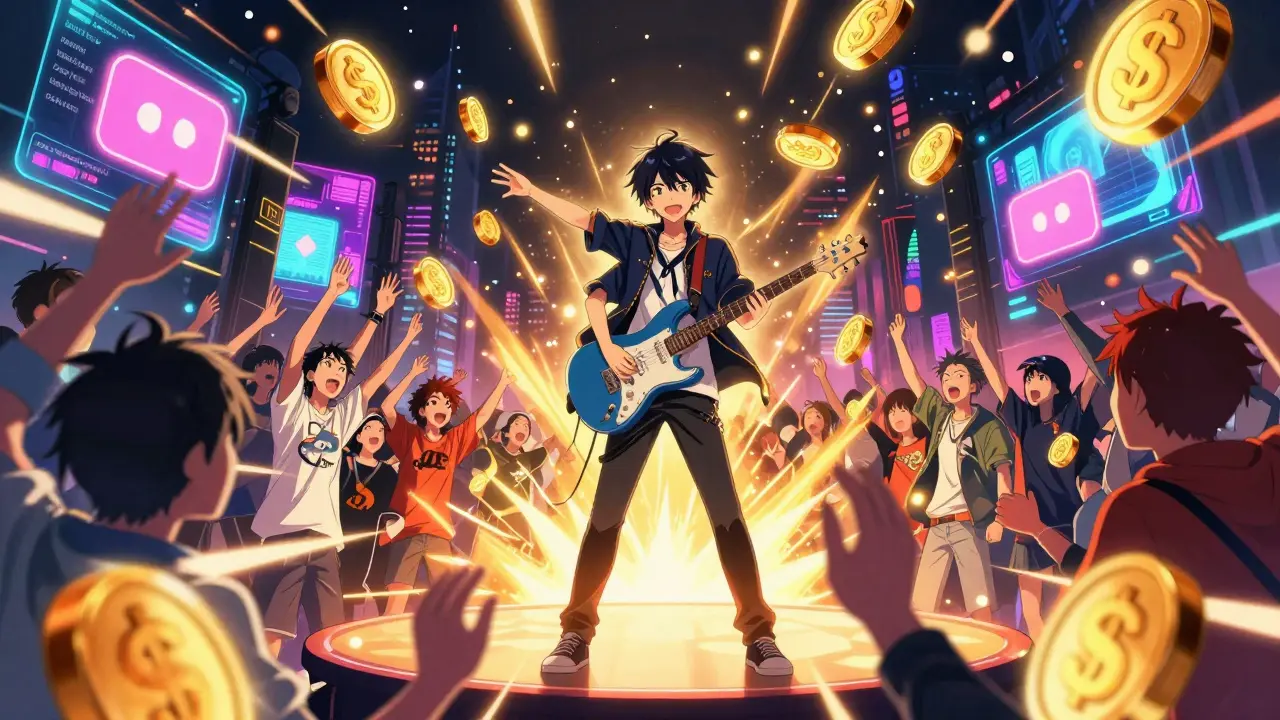
Imagine being a fan of your favorite musician, podcaster, or artist - and instead of just buying their merch or streaming their content, you actually own a piece of their digital world. That’s what social tokens do. They’re not just another type of crypto. They’re your ticket into a creator’s inner circle, with real benefits, voting power, and even profit potential.
What Exactly Are Social Tokens?
Social tokens are digital coins built on blockchains like Ethereum, Solana, or Polygon. Unlike Bitcoin or Ethereum, which are general-purpose cryptocurrencies, social tokens are created by individuals - artists, influencers, podcasters, athletes - to represent their personal brand or community. They’re sometimes called creator coins or community tokens. All three terms mean the same thing.
These tokens are issued directly by the creator, not a company or exchange. You buy them not just to speculate on price, but to unlock access. Think of them like a membership card, but powered by blockchain. Once you hold the token, you’re not just a follower - you’re a participant.
How Do Social Tokens Work?
Here’s how it works in practice:
- A creator decides to launch a social token - say, $JAM for a musician or $POD for a podcast host.
- They announce it to their audience, explaining what holders will get: early access to songs, private Discord chats, voting rights on album art, or limited-edition NFTs.
- Fans buy the tokens on decentralized exchanges (DEXs) like Uniswap or centralized ones like Coinbase.
- Tokens are stored in crypto wallets like MetaMask or Phantom.
- As more people buy in, the token’s value can rise - and the creator earns from sales and ongoing transactions.
Unlike traditional fan clubs that charge monthly fees, social tokens are open, transparent, and tradable. You can hold them, sell them, or use them to access perks. And because they’re on the blockchain, there’s no middleman taking a cut.
What Can You Do With Social Tokens?
It’s not just about money. Social tokens unlock real experiences:
- Exclusive content: Early releases, behind-the-scenes footage, unreleased tracks.
- Community access: Private Discord servers, Telegram groups, or live AMAs only for token holders.
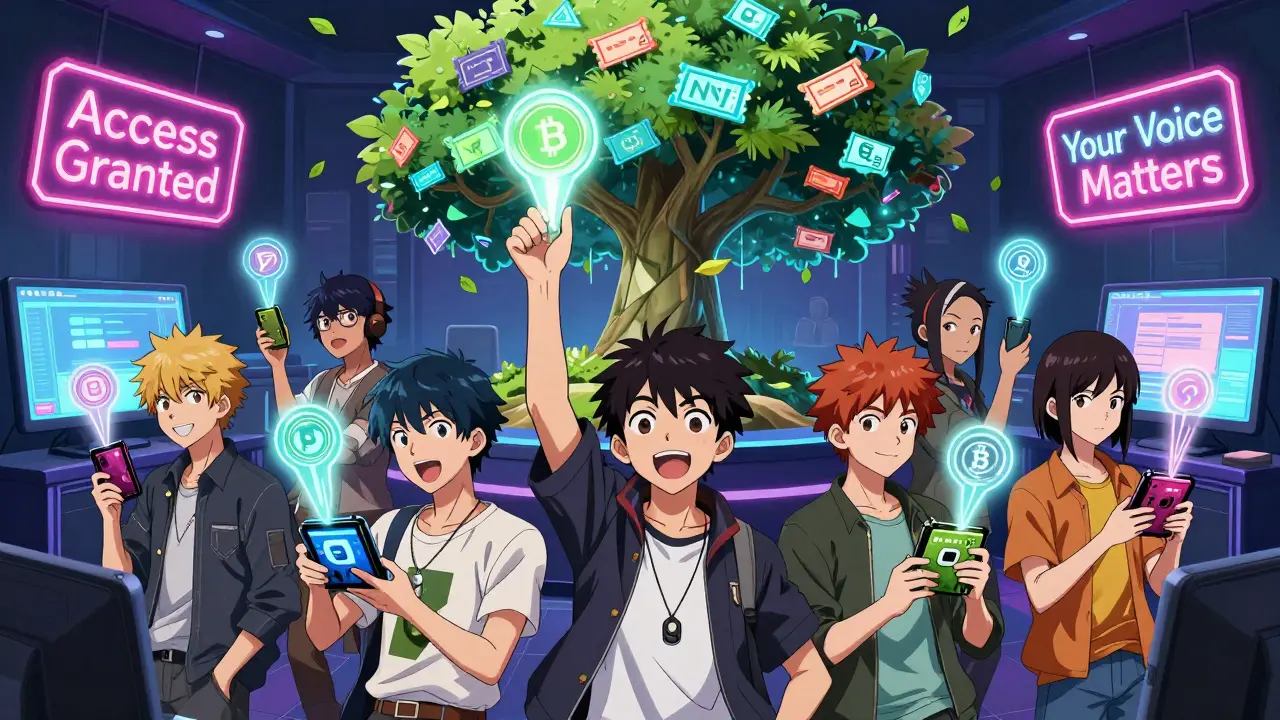
- Governance: Vote on next single, tour locations, merchandise designs - your opinion literally shapes the creator’s work.
- Merch and NFTs: Discounted or early access to physical goods or digital collectibles.
- Event perks: Raffles for concert tickets, backstage passes, or meet-and-greets.
One real example: a New Zealand-based indie band launched $BAND tokens. Holders got first dibs on tickets to their Auckland show, voted on setlist order, and unlocked a bonus EP only available to token owners. Within three weeks, the token price doubled as demand grew.
Why Are Social Tokens Different From NFTs?
People often mix up social tokens and NFTs. They’re related, but not the same.
NFTs are unique digital items - one-of-a-kind art, collectibles, or access passes. Think of them like limited-edition posters. Social tokens are more like shares in a community. You can own 100 of them. They’re divisible, interchangeable, and meant to be used regularly.
Think of it this way: social tokens are the foundation. NFTs are the special upgrades. A creator might give token holders the right to mint an NFT - like a signed digital album cover - but only if they hold a minimum number of tokens. The token gives you entry. The NFT gives you something rare.
Who Can Create a Social Token?
You don’t need to be famous. You don’t need a big team. Platforms like Rally and Roll make it easy for anyone to launch a token in minutes. A local artist in Wellington, a gaming streamer in Christchurch, even a small business owner with a loyal customer base - all can create their own token.
The key is having a community that cares. It’s not about follower count. It’s about connection. If you’ve got 500 people who genuinely engage with your content, you’ve got the start of a token economy.
What’s the Value? Is It Just Speculation?
Yes, social tokens can go up in value. But that’s not the only value.
Many early adopters treat them like a loyalty program with financial upside. If you buy $100 worth of tokens and get access to a private podcast, early merch, and voting rights - that’s value right there. If the token price rises to $150, you’ve got a bonus. If it drops, you still got the perks.
Creators also earn from secondary sales. Every time someone resells a token, the original creator gets a cut - usually 5-10%. That means their income keeps growing as their community expands.
Is This Legal? What About Regulation?
Regulators are still catching up. In places like the U.S. and EU, social tokens could be classified as securities if they promise financial returns. That’s why many creators avoid saying things like “invest in my token” and instead focus on “support my work” and “get access.”
Platforms like Rally have built their systems to comply with existing rules by limiting token sales to accredited investors in some regions. In New Zealand and other countries, the rules are still evolving, but most small-scale creator tokens haven’t triggered legal action - as long as they’re framed as community access, not investments.
What’s the Future of Social Tokens?
Social tokens are still early. But the shift is real. Instead of relying on YouTube ads, Spotify payouts, or Patreon subscriptions, creators are building their own economies.
Imagine a future where:
- A teacher in Dunedin launches $EDU tokens, giving students access to extra lessons and grading feedback.
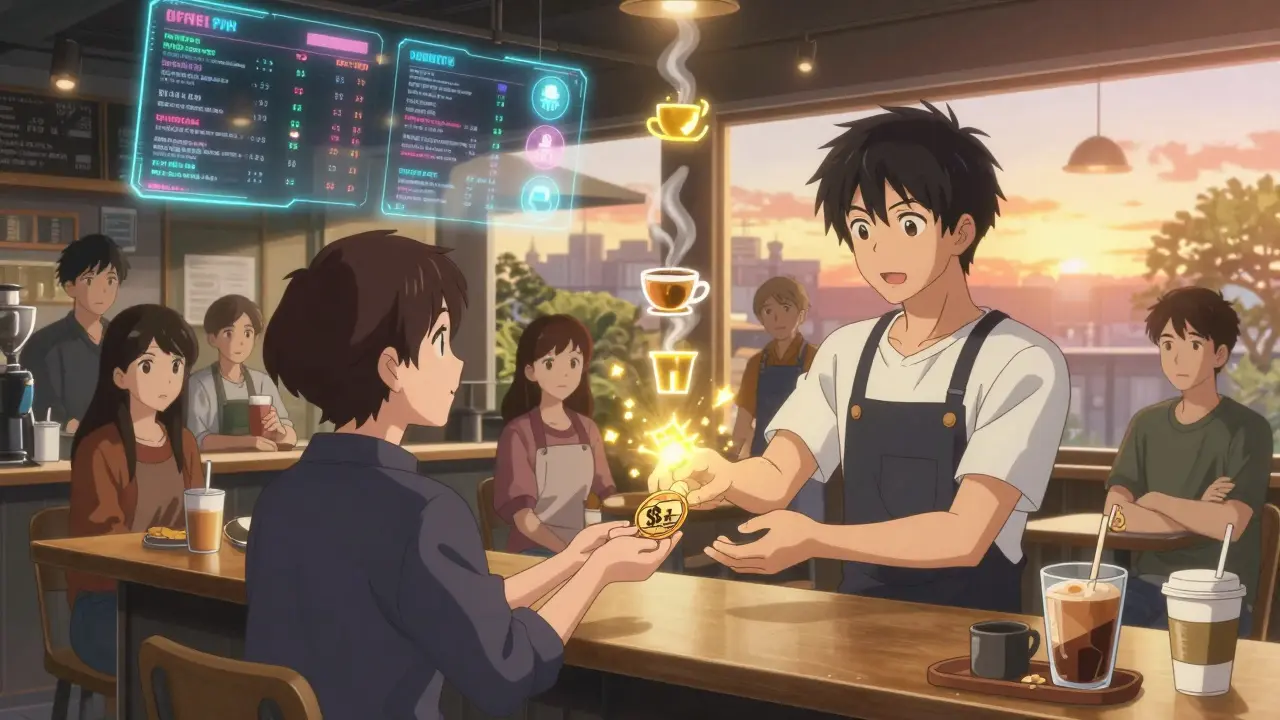
- A local coffee shop in Auckland issues $COFFEE tokens, letting regulars vote on new blends and get free drinks.
- A writer in Auckland releases a novel, with token holders choosing the cover design and getting a signed hardcopy.
This isn’t sci-fi. It’s happening now. And it’s not just for big names. It’s for anyone who has built trust, consistency, and connection with their audience.
How to Get Started
If you’re a fan: Look for creators you love who’ve launched tokens. Check their Twitter, Discord, or website. Buy a few tokens on a DEX like Uniswap or a CEX like Kraken. Store them in a wallet you control. Join their community. Use the perks.
If you’re a creator: Start small. Use a platform like Rally or Roll. Define what your token gives people. Don’t overpromise. Build trust first. Launch with clear benefits - not just “this will make you rich.”
Social tokens aren’t about getting rich quick. They’re about building something real - a community where everyone has a stake.
Are social tokens the same as NFTs?
No. Social tokens are divisible, interchangeable digital coins used for access and governance. NFTs are unique, non-fungible assets - like digital art or collectibles. Social tokens are the foundation of a community; NFTs are special rewards or upgrades within that community.
Can anyone create a social token?
Yes. Platforms like Rally and Roll let anyone with a following create a token in minutes. You don’t need technical skills. What you need is a loyal audience willing to support you beyond likes and shares.
How do I buy social tokens?
Buy them on decentralized exchanges (DEXs) like Uniswap or centralized exchanges like Coinbase or Kraken. You’ll need a crypto wallet like MetaMask or Phantom. First, buy Ethereum, SOL, or USDC, then swap it for the social token you want.
Do social tokens make money for holders?
They can. If demand grows, the token price rises, and you can sell for profit. But the real value is in the perks: exclusive content, voting rights, merch discounts, and events. Many holders don’t sell - they use the tokens to stay engaged.
Are social tokens safe?
The blockchain technology behind them is secure. But scams exist. Never send crypto to someone who DMs you offering “free tokens.” Only buy from official links posted by the creator. Always check the contract address on their verified social media.


Comments (13)
Anselmo Buffet
December 11, 2025 AT 10:00 AMSocial tokens are just loyalty points with blockchain glitter on them.
JoAnne Geigner
December 12, 2025 AT 10:14 AMI love how this flips the script-instead of platforms taking 30% of your earnings, the community becomes the infrastructure. It’s not just crypto, it’s relational economics. You’re not buying a token, you’re buying into someone’s heartbeat. And that’s rare in a world where everything’s monetized but nothing’s meaningful. I’ve held $POD for six months now, and yes, the price dipped once-but I got to vote on the podcast’s theme song, and that was worth more than any profit margin. It’s the difference between consuming content and co-creating it. We’re not fans anymore. We’re collaborators. And that shift? It’s quiet, but it’s seismic.
PRECIOUS EGWABOR
December 14, 2025 AT 00:24 AMOh please, another ‘creator economy’ fairy tale. You think a guy with 12k followers on TikTok launching $TIKTOK is building an economy? He’s just trying to pump and dump before his cat video views drop. This isn’t innovation-it’s capitalism with a blockchain costume. Real value isn’t in tokens, it’s in labor. And no, your Discord access doesn’t replace a living wage.
amar zeid
December 14, 2025 AT 16:52 PMWhile the conceptual framework of social tokens is commendable, one must consider the macroeconomic implications of decentralizing creator monetization. The absence of regulatory clarity may lead to systemic vulnerabilities, particularly in jurisdictions with nascent financial oversight frameworks. Furthermore, the psychological contract between holder and creator must be carefully delineated to avoid fiduciary misalignment. In essence, while the mechanism is elegant, its scalability remains contingent upon institutional maturation.
Claire Zapanta
December 15, 2025 AT 09:03 AMWho funded these platforms? Big Tech? Because if so, this is a Trojan horse. They’re not empowering creators-they’re harvesting your data under the guise of ‘community.’ You think you’re owning something? You’re just giving them more behavioral data to sell to advertisers. And don’t get me started on how this benefits the U.S. dollar’s dominance in crypto. This isn’t liberation-it’s surveillance with a loyalty card.
Jessica Eacker
December 17, 2025 AT 05:55 AMIf you’re a creator reading this, start small. Don’t overcomplicate it. Just give your people something real-a shoutout, a sneak peek, a voice. That’s the magic. The token is just the vehicle. The real asset is trust.
Jessica Petry
December 17, 2025 AT 19:27 PMOf course the ‘community’ gets to vote on album art. But what about the people who don’t have $500 to burn on a token? This isn’t inclusion-it’s gated elitism dressed up as empowerment. The rich get richer, and the fans who can’t afford the entry fee are left watching from the outside, pretending they’re part of something revolutionary. It’s just a new form of classism with a whitepaper.
Scot Sorenson
December 19, 2025 AT 16:12 PMSo let me get this straight-you’re telling me a guy who makes ASMR videos can now ‘launch a token’ and get 10% of every resale? And we’re supposed to be impressed? Next he’ll be minting NFTs of his sneezes. This isn’t the future of creativity, it’s the death of value. If your art needs a token to be worth something, maybe it’s just noise.
Ike McMahon
December 20, 2025 AT 05:27 AMStart with a Discord. Build trust. Then add a token. Don’t launch the token first. People smell desperation. Also, always disclose the contract address. Always.
Jeremy Eugene
December 21, 2025 AT 06:24 AMIt is imperative to underscore that the legal classification of social tokens remains an evolving domain under both U.S. Securities and Exchange Commission guidelines and international financial regulatory frameworks. While the utility-based narrative is compelling, the potential for classification as an investment contract cannot be disregarded without rigorous legal counsel. Caution is advised.
Nicholas Ethan
December 22, 2025 AT 21:20 PM90% of social tokens are scams. The rest are just vanity projects. The blockchain doesn’t make bad ideas good. It just makes them harder to trace. And the creators who think this is empowerment? They’re just delusional entrepreneurs with a wallet.
Lloyd Cooke
December 22, 2025 AT 22:56 PMThere is a metaphysical layer here we ignore: the token is not currency. It is a covenant. It is the physical manifestation of a shared belief that art deserves to be sustained, not extracted. When you hold $JAM, you are not holding a coin-you are holding a promise. A promise that creativity matters more than clicks. That connection matters more than conversion. That the artist is not a product, but a person. And in a world that reduces everything to metrics, isn’t that worth something? Even if the price crashes tomorrow? Even if the server goes down? The covenant remains. The bond was real.
Kurt Chambers
December 23, 2025 AT 08:09 AMthey want u 2 think this is freedom but its just another way for big tech to own ur soul. they dont care about ur fav podcaster they care about ur data. and dont even get me started on how this is just a tax dodge for rich guys in cali. the whole thing is a scam. and the people who buy it? theyre the ones who still think the moon is made of cheese. lol