

When you hear regulated crypto exchange, a cryptocurrency trading platform licensed and monitored by a government financial authority. Also known as licensed crypto platform, it’s the difference between trading in a guarded vault and a back-alley deal. Not every exchange that says it’s "secure" is actually watched by anyone. A true regulated crypto exchange answers to regulators like the Dutch DNB, the UAE’s VARA, or the U.S. SEC. These bodies demand real audits, customer fund protection, KYC checks, and transparent operations. If an exchange doesn’t have a public license number or can’t name its supervising agency, it’s not regulated—it’s just hoping you don’t check.
Regulation isn’t just about safety—it’s about accountability. Look at SATOS, licensed by the Dutch Central Bank. It holds euros in segregated accounts, reports to DNB, and only serves users in the Netherlands. That’s regulation with teeth. Contrast that with Uzyth, which has no website, no team, and no license—yet still tricks people into depositing funds. Regulation also shapes what you can do. In Georgia, you can own crypto and pay 0% tax, but if you run a service that moves digital assets, you need a VASP license—or your Bitcoin ATM gets shut down. Meanwhile, the UAE has built a full framework for DeFi, NFTs, and trading, giving businesses clear rules to follow. This isn’t bureaucracy. It’s infrastructure.
But here’s the catch: regulation doesn’t mean perfection. Bitfinex is used by pros for its deep liquidity, but it doesn’t insure customer funds. SATOS keeps your money safe but charges 1% fees—higher than unregulated platforms. A regulated exchange won’t stop you from losing money on a bad trade, but it will make sure the platform itself can’t vanish overnight. That’s why users in the Netherlands, UAE, and parts of Europe prefer them: they trade knowing there’s a legal backstop if things go wrong. Meanwhile, exchanges like CoinEx or MEXC may offer more coins and lower fees, but if they’re not licensed where you live, you have zero legal recourse if they freeze withdrawals or get hacked.
What you’ll find below are real reviews of platforms that either meet these standards—or don’t. Some are licensed in Europe. Others pretend to be. Some have clear rules. Others are ghost towns with fake trading volume. We’ve dug into the paperwork, the licenses, the enforcement actions, and the user experiences. No fluff. Just what’s real, what’s risky, and what you should avoid.
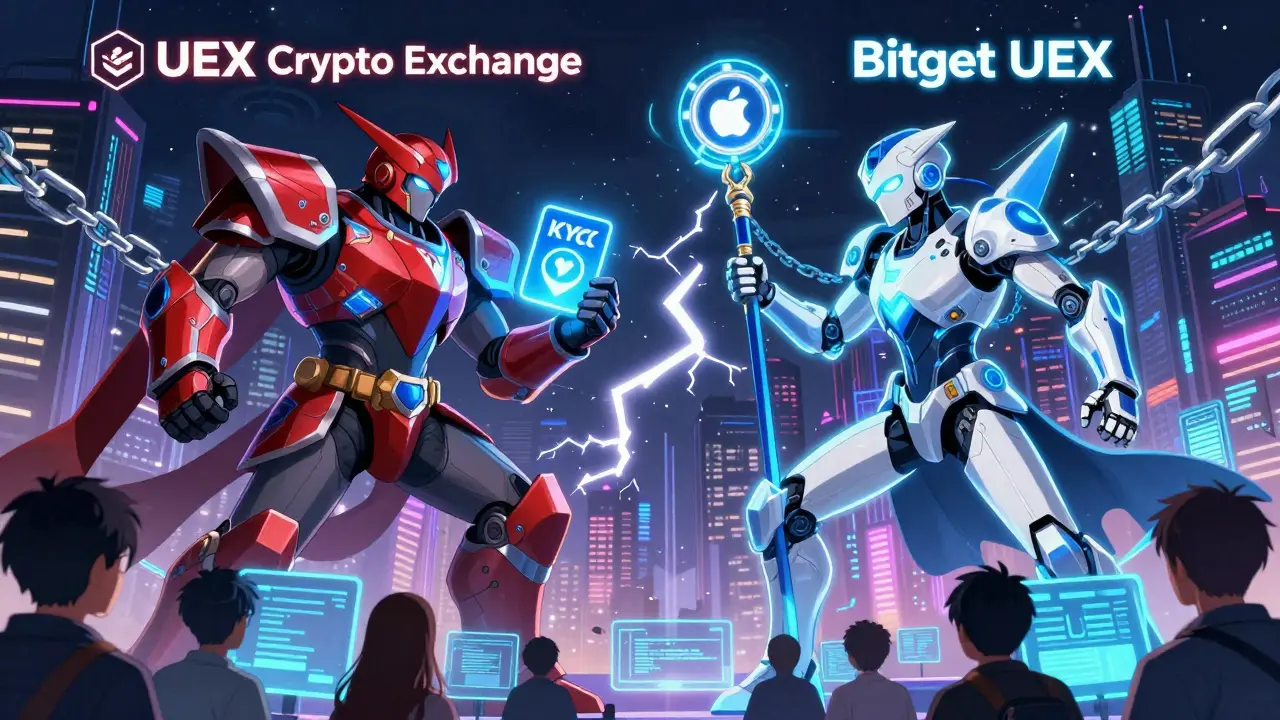
A clear review of the two different platforms called UEX: one is a U.S.-regulated crypto exchange, the other is Bitget's universal finance platform. Know which one suits your needs.