


For years, crypto traders lived in a state of constant anxiety. One day Bitcoin was a commodity; the next, it felt like a security waiting to trigger an SEC lawsuit. That fog lifted dramatically in 2025 with the passage of landmark legislation that fundamentally rewrote the rules for digital assets. The Investment and Securities Act 2025, encompassing the GENIUS Act and the proposed CLARITY Act, brought the first clear federal framework for crypto in U.S. history.
If you are trading crypto today, these laws are not just background noise. They dictate which platforms you can trust, how your assets are held, and what taxes or fees might apply. The days of "regulation by enforcement" are over, replaced by a structured system that separates commodities from securities. This shift opens doors for institutional money while demanding higher compliance standards from everyone involved.
The Three-Pillar Classification System
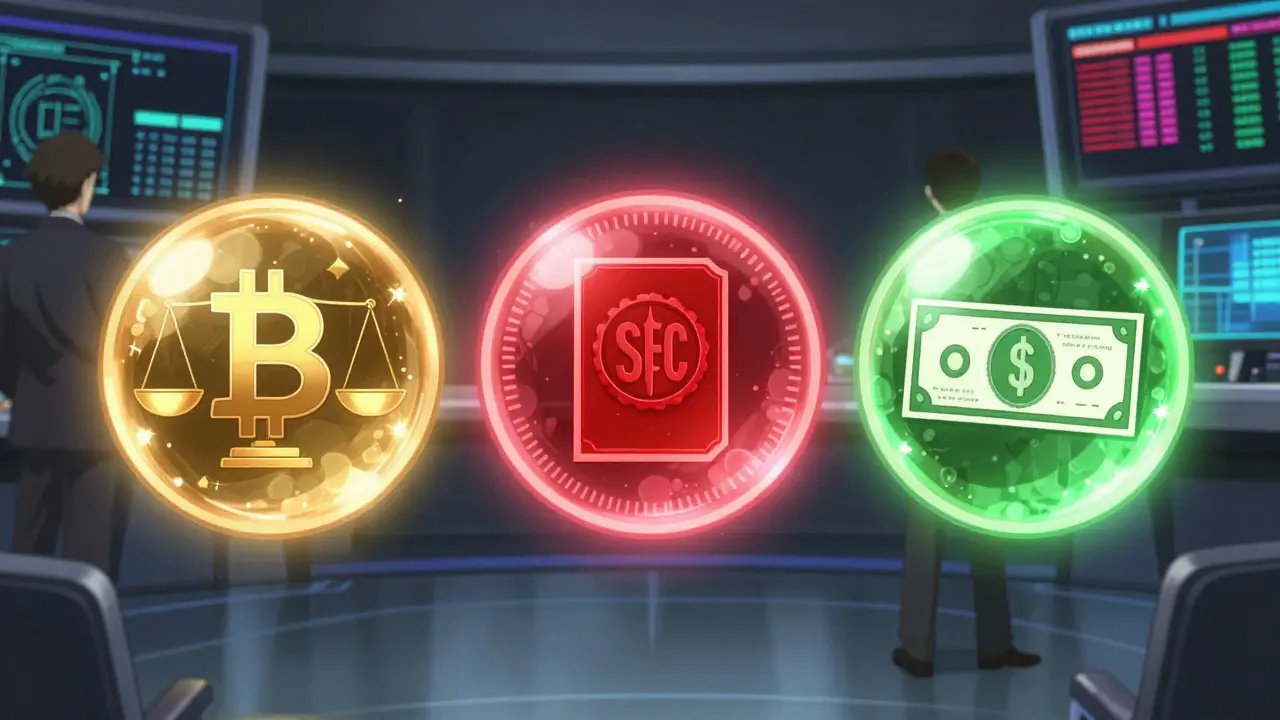
The core of the new regulatory environment is the classification system introduced by the CLARITY Act. Before 2025, regulators often used the vague Howey Test to decide if a token was a security, creating chaos for exchanges and investors alike. The new law divides all crypto assets into three distinct buckets, each with its own regulator and rulebook.
- Digital Commodities: Assets like Bitcoin and Ethereum fall here. They are overseen by the Commodity Futures Trading Commission (CFTC). This means they are treated similarly to gold or oil, focusing on market integrity rather than investor protection disclosures typical of stocks.
- Investment Contract Assets: Tokens that clearly function as securities remain under the jurisdiction of the Securities and Exchange Commission (SEC). These require strict registration and disclosure, much like traditional IPOs.
- Permitted Payment Stablecoins: USD-backed stablecoins are regulated under the GENIUS Act. This creates a specific lane for tokens pegged to the dollar, ensuring they have adequate reserves and oversight without being lumped in with volatile speculative assets.
This separation matters because it tells you exactly who is watching your trade. If you buy Bitcoin, you look to CFTC rules. If you buy a utility token from a new project, you need to check if it’s registered with the SEC. For most retail traders, this clarity reduces the risk of buying an asset that gets delisted overnight due to regulatory ambiguity.
Stablecoins Get a Federal Home
The GENIUS Act specifically targets USD-backed payment stablecoins. Before this law, stablecoins operated in a gray area, with some issuers facing scrutiny and others flying under the radar. Now, there is a comprehensive federal oversight mechanism.
Why does this affect your trading? Stablecoins are the lifeblood of crypto markets. They allow you to move value quickly between exchanges without converting back to fiat currency. With the GENIUS Act, issuers must maintain transparent reserves and undergo regular audits. This reduces the risk of a stablecoin "de-pegging" unexpectedly, which has happened in the past and wiped out trader profits.
As a trader, you should only use stablecoins that comply with the GENIUS Act standards. Look for issuers that publish monthly reserve attestations. This doesn't guarantee safety, but it provides a layer of accountability that didn't exist before. The act also encourages banks to hold stablecoin reserves, integrating them more closely with the traditional banking system and making deposits and withdrawals smoother.
Institutional Money Enters the Chat
One of the biggest changes for the average trader is the influx of institutional capital. For years, big banks and pension funds stayed away from crypto because the legal risks were too high. The Investment and Securities Act 2025 changed that calculus.
Registered broker-dealers and national securities exchanges can now trade and custody digital commodities and permitted stablecoins without fear of losing their licenses. This means major financial institutions like State Street and Fidelity are building dedicated crypto desks. For you, this translates to better liquidity, tighter spreads, and more reliable trading platforms.
You will see more crypto products integrated into traditional brokerage accounts. Instead of going to a specialized crypto exchange, you might soon be able to buy Bitcoin directly through your existing stock trading app. These platforms will adhere to stricter consumer protection rules, including better customer service and clearer dispute resolution processes. However, expect slightly higher fees compared to unregulated offshore exchanges, as these institutions need to cover their compliance costs.
| Feature | Pre-2025 Era | Post-2025 Era |
|---|---|---|
| Regulatory Clarity | Vague, enforced via lawsuits | Clear statutory definitions |
| Custody Options | Limited, mostly self-custody or risky third parties | Bank-grade custody available via qualified trust companies |
| Stablecoin Safety | Variable, minimal oversight | Federal oversight under GENIUS Act |
| Institutional Access | Restricted, high legal risk | Open, integrated with traditional finance |
| Tax Reporting | Manual, error-prone | Standardized forms for digital commodities |

What This Means for Your Wallet
The practical impact on your daily trading habits is significant. First, custody is no longer a wild west. The SEC issued a no-action letter in September 2025 allowing registered advisers to hold crypto assets with qualified state trust companies. This means if you use a managed account, your assets are likely held in a secure, regulated environment rather than sitting on an exchange's hot wallet.
Second, tax reporting is becoming easier. By classifying Bitcoin and similar assets as commodities, the IRS and CFTC can standardize reporting requirements. You won't have to guess whether a token swap is a taxable event in the same confusing way as before. Brokers will provide clearer statements, similar to how stock brokers report dividends and sales.
However, don't get complacent. Compliance costs for exchanges are rising, and those costs may be passed on to users in the form of higher trading fees. Also, decentralized finance (DeFi) protocols face new challenges. Since DeFi often lacks a central entity to regulate, it falls into a tricky space. Traders using pure DeFi interfaces should be aware that they may have fewer consumer protections than those using centralized, registered platforms.
Navigating the New Compliance Landscape
To stay safe and compliant, follow these steps when choosing where to trade:
- Check Registration: Ensure your exchange is registered as an Alternative Trading System (ATS) or national securities exchange if it lists security tokens. For commodities, verify CFTC registration.
- Verify Stablecoin Issuers: Only use stablecoins that explicitly state compliance with the GENIUS Act. Avoid obscure tokens without clear reserve backing.
- Understand Custody: Ask your platform where your assets are stored. Prefer platforms that use qualified state trust companies for cold storage.
- Review Fee Structures: Be prepared for slightly higher fees due to compliance overhead. Compare total cost of ownership, not just the headline trading fee.
The Investment and Securities Act 2025 is not perfect, but it is a massive step forward. It brings legitimacy to an industry that was once viewed with skepticism. As a trader, your job is to adapt to these new norms. Embrace the clarity, demand transparency from your providers, and keep an eye on how the SEC and CFTC refine their rules in the coming months. The era of uncertainty is over; the era of responsible innovation has begun.
Does the Investment and Securities Act 2025 ban any cryptocurrencies?
No, the act does not ban any specific cryptocurrencies. Instead, it categorizes them into digital commodities, investment contracts, or permitted stablecoins. Each category has different regulatory requirements, but none are outright prohibited for trading.
Which agency regulates Bitcoin under the new law?
Bitcoin is classified as a digital commodity and is primarily regulated by the Commodity Futures Trading Commission (CFTC). This distinguishes it from security tokens, which fall under the Securities and Exchange Commission (SEC).
How does the GENIUS Act affect stablecoin traders?
The GENIUS Act imposes strict reserve and audit requirements on USD-backed stablecoins. For traders, this means greater confidence that their stablecoins are fully backed by cash or equivalent assets, reducing the risk of de-pegging events.
Can I still trade on decentralized exchanges (DEXs)?
Yes, you can still trade on DEXs. However, they operate in a less defined regulatory space compared to centralized exchanges. You may have fewer consumer protections, such as recourse for lost funds or hacked contracts, so extra caution is advised.
Will trading fees increase after the 2025 Act?
Likely yes, at least initially. Exchanges and custodians must invest in compliance infrastructure, legal teams, and technology upgrades to meet the new standards. These costs are often passed on to users in the form of higher trading or custody fees.