

Most people searching for SonarWatch want to know one thing: is this coin worth their time or money? The short answer is that it’s a very niche utility token built for the Solana ecosystem. It doesn’t do much on its own; instead, it acts as a key to unlock advanced features on a specific portfolio tracking dashboard. If you aren’t deep into Solana DeFi yield farming, this project might not be relevant to you. But if you are, understanding what SONAR actually does-and where it stands in 2026-is crucial before you even consider holding it.
Key Takeaways
- SonarWatch ($SONAR) is a utility token used to access premium analytics features on the sonar.watch platform.
- The project is exclusively built on the Solana blockchain using SPL standards, meaning it has no value outside of Solana-based apps.
- As of early 2026, the token faces significant challenges with extremely low trading volume and a market cap under $100,000.
- It competes with larger multi-chain trackers like DeBank but differentiates itself by focusing solely on Solana-native protocols like Raydium and Orca.
- Risk levels are high due to minimal liquidity, lack of public security audits, and a steep price decline from its all-time high.
What Exactly Is SonarWatch?
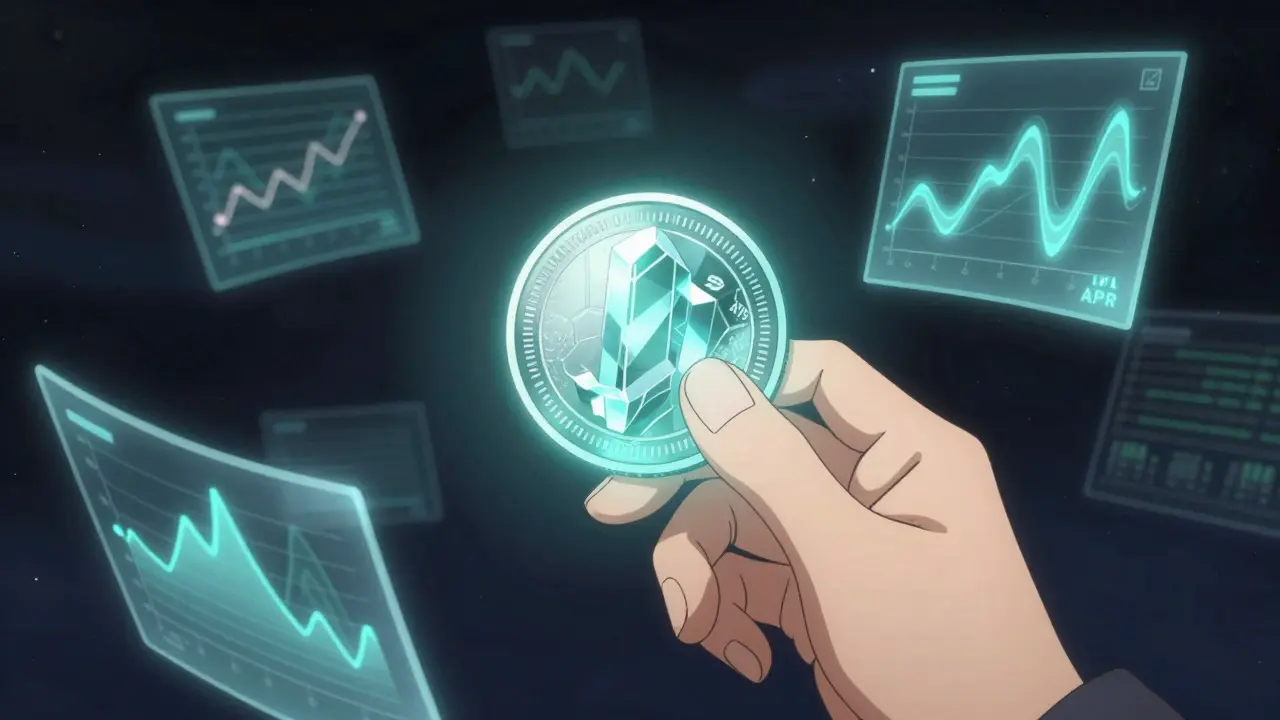
To understand the coin, you first need to understand the product. SonarWatch is a blockchain analytics dashboard designed specifically for users of the Solana network. Think of it as a specialized financial calculator for decentralized finance (DeFi) activities. While general wallets show you how many tokens you have, SonarWatch digs deeper. It tracks your Total Value Locked (TVL), Annual Percentage Rate (APR) from liquidity pools, and historical performance charts.
The SONAR token serves as the fuel for this system. You don’t just buy it to speculate on price; you hold it to unlock "PRO" features on the dashboard. These features include multi-wallet support, which lets you view several Solana wallets in one place, and an impermanent loss calculator that helps you understand the risks of providing liquidity. Without the token, the platform offers basic tracking, but the detailed insights require SONAR holdings.
This model is similar to other utility tokens in the crypto space, where the asset’s value is tied directly to the usage of the underlying service. If more people use the dashboard and need those PRO features, they need to buy or hold SONAR. However, unlike tokens that generate revenue through transaction fees, SONAR’s value proposition relies heavily on user adoption of the analytics tool itself.
Technical Specs and Tokenomics
From a technical standpoint, SonarWatch operates strictly within the Solana ecosystem. It uses the Solana Program Library (SPL) standard, which is the default for most tokens on this chain. This means transactions are fast and cheap, inheriting the benefits of Solana’s high throughput architecture.
| Attribute | Value/Detail |
|---|---|
| Blockchain | Solana |
| Token Standard | SPL (Solana Program Library) |
| Max Supply | 100,000,000 SONAR |
| Circulating Supply | ~22,000,000 SONAR (self-reported) |
| Primary Use Case | Unlocking PRO dashboard features |
| Supported Protocols | Raydium, Orca, Serum |
| Audits | None publicly listed on major trackers |
The supply structure is fixed at 100 million tokens. As of January 2026, roughly 22 million are in circulation, according to self-reported data on CoinMarketCap. The remaining supply is likely held by the team, investors, or locked in smart contracts, though exact vesting schedules aren't prominently documented in public whitepapers. This concentration can impact price volatility if large holders decide to sell.
One notable gap in the technical documentation is the absence of third-party security audits. Major tracking platforms like CoinGecko and KuCoin list the "Audited By" field as empty. For a project handling wallet connections and financial data, this is a point of caution. While the risk might be lower than for a lending protocol since it's primarily an analytics tool, the lack of verified code reviews adds a layer of uncertainty.
How It Compares to Other Tools
You might wonder why you’d choose SonarWatch over bigger names. The crypto analytics space is crowded. Giants like Nansen and DeBank offer multi-chain support, allowing you to track assets across Ethereum, BNB Chain, and Solana simultaneously. DeBank, for instance, has a market cap in the hundreds of millions, reflecting widespread adoption.
SonarWatch takes a different approach: specialization. It doesn’t try to be everything to everyone. Instead, it focuses deeply on Solana-specific metrics. If you only trade on Solana, the interface might feel less cluttered than a multi-chain giant. It integrates natively with popular Solana DEXs like Raydium and Orca, providing tailored views for liquidity pool performance.
However, this focus is also its biggest weakness. With 78% of DeFi users now active across multiple chains, a single-chain tool limits its potential audience. If you hold assets on Ethereum, SonarWatch won’t help you there. This creates a "concentration risk"-if Solana loses market share to other blockchains, SonarWatch’s relevance drops immediately, whereas multi-chain tools can pivot.
Current Market Status and Risks
Let’s talk numbers, because they tell a stark story. As of early 2026, the SONAR token trades at significantly lower prices compared to its peak. Data from CoinGecko shows an all-time high of $1.64 in November 2021. By January 2026, the price had settled around $0.005, representing a drop of nearly 99.6%. This massive erosion of value suggests that initial hype did not translate into long-term sustained demand.
Liquidity is another critical factor. Trading volume is negligible, often ranging between $1 and $128 per day across all exchanges. Most activity happens on Raydium and Orca. Such low volume means that buying or selling even a moderate amount of SONAR could cause significant price slippage. For serious investors, this makes exiting a position difficult without moving the market against yourself.
The community size reflects this reality. There are approximately 6,270 unique token holders. While that sounds like a few thousand people, in the context of global crypto markets, it’s tiny. More importantly, social media engagement on Twitter (@Sonarwatch) and Facebook is minimal, with few substantive discussions or user testimonials found on forums like Reddit. This silence often indicates that active users are either satisfied enough not to complain, or simply haven't adopted the tool yet.

Who Should Care About SONAR?
So, who is this actually for? If you are a casual investor looking for the next big moonshot, SONAR probably isn't it. The risk-to-reward ratio is skewed heavily toward risk due to low liquidity and unclear growth trajectory.
However, if you are a power user of Solana DeFi, specifically someone who farms yields on Raydium or Orca and struggles with tracking complex positions across multiple wallets, the dashboard might save you time. In that scenario, you might hold SONAR not as an investment, but as a subscription fee paid in crypto. You’d be paying for the convenience of consolidated data and advanced metrics like NFT floor price evaluation.
For these users, the question isn't "will the price go up?" but "is the tool worth the cost of entry?" If the PRO features save you hours of manual calculation, the token has utility value regardless of its market cap. For everyone else, it remains a speculative asset with limited fundamental backing.
Frequently Asked Questions
Is SonarWatch (SONAR) a good investment in 2026?
It is considered a high-risk asset. With a market cap under $100,000 and daily trading volumes often below $100, liquidity is very low. The token has dropped over 99% from its all-time high. Unless you actively use the dashboard for professional DeFi management, the speculative upside is limited by the project's small user base.
Where can I buy SONAR token?
SONAR is primarily traded on decentralized exchanges within the Solana ecosystem, specifically Raydium and Orca. Some centralized exchanges like KuCoin have listed it, but liquidity there may vary. Always check current pair availability before attempting a trade.
Does SonarWork work for Ethereum or Bitcoin?
No. SonarWatch is built exclusively for the Solana blockchain. It does not currently support multi-chain tracking for networks like Ethereum, BNB Chain, or Bitcoin. If you hold assets on other chains, you would need a different tool like DeBank or Zapper.
What features require holding the SONAR token?
The "PRO" tier of the sonar.watch dashboard requires SONAR holdings. Features include multi-wallet aggregation, historical portfolio valuation charts, detailed NFT floor price analysis, and reduced transaction fees for certain actions on the platform.
Has SonarWatch been audited by a third party?
As of early 2026, major tracking platforms like CoinGecko and KuCoin do not list any specific third-party security audits for the SONAR token contract. Users should exercise caution and verify the contract address themselves when interacting with the token.