

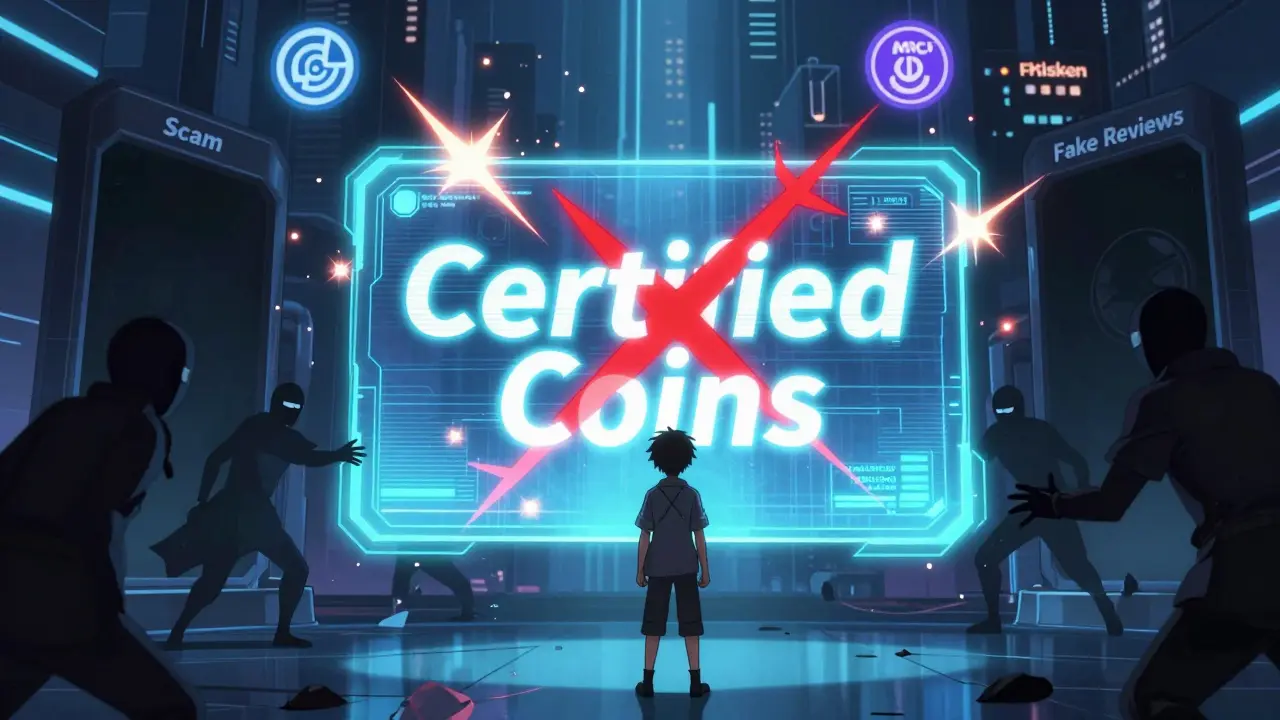
There is no such thing as a crypto exchange called Certified Coins. If you’re searching for it, you’re not alone - many people have stumbled across this name online, thinking it’s a new or hidden gem in the crypto trading world. But after checking every major review site, regulatory database, and industry report from 2025, there is zero evidence that Certified Coins operates as a real cryptocurrency exchange. It doesn’t appear on any official list of licensed platforms, it has no trading volume, no user reviews on Trustpilot or Reddit, and no regulatory filings with FinCEN or the SEC.
Why You’re Hearing About Certified Coins
The confusion likely comes from mixing up two different things: crypto exchanges and certified coins. The term "certified coins" sounds official - like a seal of approval. But in crypto, "certified" doesn’t refer to an exchange. It refers to ISO 20022-compliant tokens, a financial messaging standard used by banks and payment systems to make transactions faster and more transparent. Tokens like XRP, XLM, and IOTA are built with ISO 20022 compliance. That means they can communicate smoothly with traditional banking networks. This is a big deal for institutional adoption. But it has nothing to do with an exchange named "Certified Coins." You can trade these tokens on real exchanges like Kraken, Coinbase, or Crypto.com - but you won’t find them on a platform called Certified Coins because it doesn’t exist.What Real Crypto Exchanges Look Like in 2026
If you want to trade crypto safely and reliably, you need to stick with platforms that are actually licensed, audited, and tracked. Here are the top three that consistently show up in 2025 reviews:- Coinbase: Founded in 2012, publicly traded on NASDAQ, and used by over 100 million users worldwide. It offers a simple interface for beginners, 235+ cryptocurrencies, and 98% of funds stored in cold storage. Fees range from 0% on bank transfers to 3.99% on card purchases.
- Kraken: Known for its advanced trading tools and high liquidity. It supports 350+ cryptocurrencies, processes $45 billion in trading volume quarterly, and carries $1.1 billion in insurance for hot wallet assets. Its verification process takes 24-48 hours, but you can trade up to $1,000/day while waiting.
- Gemini: Built with compliance as its core focus. It’s one of the few exchanges fully registered with the SEC and NYDFS. It’s a top pick for users who care about regulatory oversight, especially after the 2023-2024 crackdown on unlicensed platforms.
These exchanges all require KYC (Know Your Customer) verification. That’s not a bug - it’s a feature. In 2025, the SEC cracked down on 142 fraudulent platforms that used names similar to real ones. Certified Coins could easily be one of them.

The Danger of Fake Exchange Names
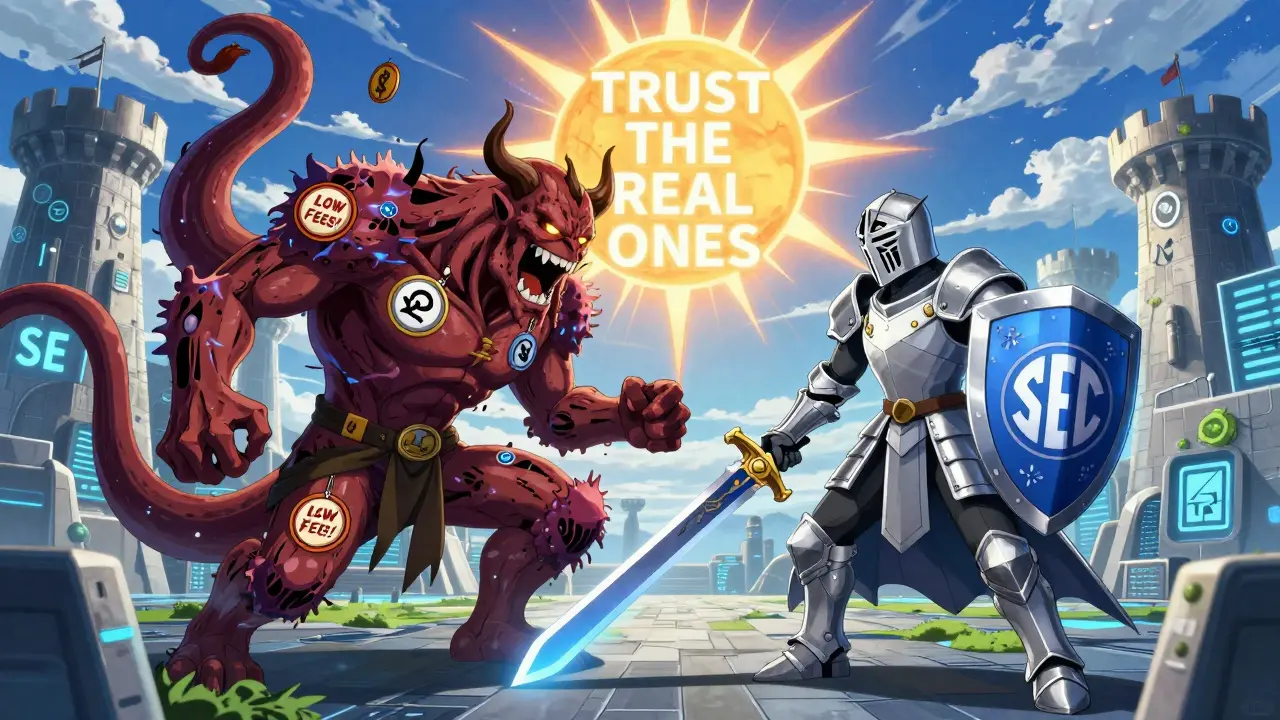
The crypto space is full of copycat names. You’ve got "Coinbase Pro" (real), "Coinbase Wallet" (real), and then there’s "Certified Coins," "CryptoCertified," "CoinSafe," and "SecureTrade" - all fake. These sites often look professional. They use stock photos of people trading on laptops, fake testimonials, and even fake "verified" badges.The SEC reported 142 such spoofing incidents in Q3 2025 alone. Most of them promise "low fees" or "instant approval" to lure you in. Once you deposit funds, they disappear. Or they lock your account and demand more money to "release" it. There’s no customer service. No refund policy. No legal recourse.
If you’re unsure whether an exchange is real, check these three things:
- Is it listed on CoinMarketCap or CoinGecko as a licensed exchange?
- Does it have a public MSB (Money Services Business) registration with FinCEN?
- Are there real user reviews on Trustpilot, Reddit, or the App Store - not just glowing testimonials on its own website?
If the answer to any of these is "no," walk away.
What to Do Instead
Don’t waste time chasing ghosts. If you’re new to crypto trading, start with one of the established platforms:- For beginners: Coinbase - clean UI, free educational content, and easy bank linking.
- For active traders: Kraken - low fees, deep order books, and advanced charting tools.
- For security-focused users: Gemini - fully regulated, insured assets, and transparent audits.
All of them offer staking, crypto-to-fiat withdrawals, and mobile apps with biometric login. None of them require you to guess whether their name is real.
Why ISO 20022 Matters (And Why It’s Not an Exchange)
Let’s clear this up once and for all: ISO 20022 is a financial messaging standard. It’s used by banks, payment processors, and some cryptocurrencies to standardize how transaction data is formatted. Think of it like the universal language for digital money.Coins like XRP and XLM use it because it helps them connect with banks. That’s why Ripple (XRP) is working with banks in Europe and Asia - not because it’s "certified," but because it speaks the same financial language.
But no exchange is called "Certified Coins" because of this. You don’t trade ISO 20022 tokens on a platform with that name. You trade them on Kraken, Coinbase, or Crypto.com - the same places you’d trade Bitcoin or Ethereum.
Final Warning: If It Sounds Too Good to Be True...
There’s a reason you don’t hear about Certified Coins on Bloomberg, CNBC, or even crypto YouTube channels with millions of subscribers. Because it’s not real. The entire crypto industry - from regulators to analysts to users - agrees on the top exchanges. There’s no mystery here.If someone is pushing you toward Certified Coins, they’re either misinformed… or trying to scam you. Don’t send any crypto. Don’t give your ID. Don’t download their app. Block the site. Report it to the FTC. And stick with platforms that have been around for years, with real financial backing and public regulatory filings.
Is Certified Coins a real crypto exchange?
No, Certified Coins is not a real crypto exchange. There is no evidence it exists as a licensed, operational platform. All major review sites, regulatory databases, and industry reports from 2025 confirm its absence. It’s likely a scam site or a confusion with ISO 20022-compliant tokens.
What’s the difference between Certified Coins and ISO 20022?
Certified Coins is not an exchange - it’s a made-up name. ISO 20022 is a real financial messaging standard used by cryptocurrencies like XRP, XLM, and IOTA to make transactions compatible with banks. You trade ISO 20022 tokens on real exchanges like Kraken or Coinbase - not on a platform called Certified Coins.
Can I trust an exchange just because it looks professional?
No. Many scam exchanges use professional websites, fake testimonials, and even fake security badges. Always verify: Is it listed on CoinMarketCap? Does it have a FinCEN MSB registration? Are there real user reviews on Trustpilot or Reddit? If any of these are missing, it’s not safe.
Which crypto exchanges are safest in 2026?
As of 2026, the safest exchanges are Coinbase, Kraken, and Gemini. All are fully regulated in the U.S., carry insurance for user funds, have transparent security practices, and are listed on major financial platforms. Coinbase has 98% of assets in cold storage, Kraken has $1.1 billion in hot wallet insurance, and Gemini is fully compliant with the SEC and NYDFS.
Why don’t I see Certified Coins on CoinMarketCap?
Because it doesn’t exist as a trading platform. CoinMarketCap only lists exchanges that have verified trading volume, regulatory compliance, and operational infrastructure. Certified Coins has none of these. If you see it listed anywhere, it’s either a fake listing or a phishing site trying to mimic a real exchange.








Comments (14)
Florence Pardo
March 24, 2026 AT 01:13 AMI’ve been in crypto since 2017, and I’ve seen every flavor of fake exchange under the sun. Certified Coins? Yeah, I got a DM last month from someone claiming it was ‘the next Coinbase’ with ‘exclusive access.’ I laughed so hard I spilled my coffee.
But here’s the thing - it’s not just about the name. It’s about the vibe. Real platforms don’t need to whisper ‘trust me’ in ads. They show their licenses, their audits, their team photos. Certified Coins? No team. No office. No history. Just a .xyz domain and a stock photo of a guy in a hoodie staring at three monitors.
I reported it to the FTC. Took 12 minutes. If you see it, do the same. No one’s coming to save you. You gotta save yourself.
Also, side note: ISO 20022 isn’t a coin. It’s a protocol. Like HTTP for money. Stop treating it like a brand. It’s not a product. It’s plumbing.
Dheeraj Singh
March 25, 2026 AT 17:54 PMlol certified coins lmao u think u r so smart with ur fincen and sec shits. i trade on binance and kucoin and i dont need ur 'regulated' babysitting. real crypto is decentralized as f*ck. u think u r safe? ur coins are still in ur wallet or ur custodial prison? lol. certified coins might be fake but ur fear is real. lol
Mike Yobra
March 26, 2026 AT 07:38 AMSo let me get this straight - we’ve got a whole 2000-word essay on something that doesn’t exist… and we’re treating it like a public service announcement?
It’s almost poetic. We’re not warning people about scams. We’re building a shrine to them. Certified Coins is the ghost in the machine of crypto’s collective delusion. We fear the fake because we’re terrified the real might be gone too.
Also, Kraken has $1.1B in insurance? That’s cute. Until your $50k vanishes and they say ‘terms of service, Section 14.3: User assumes all risk of existential fraud.’
Regulation doesn’t make you safe. It just makes you slower at realizing you’ve been scammed.
Mansoor ahamed
March 28, 2026 AT 00:36 AMISO 20022 = financial messaging standard. Not a coin. Not an exchange. Just a way banks talk to crypto. XRP, XLM use it. That’s it. No 'Certified Coins' platform exists. Stick to Coinbase, Kraken, Gemini. Done.
Domenic Dawson
March 28, 2026 AT 21:48 PMJust wanted to say - thank you for this. I’m 22, just got my first crypto wallet, and I was about to fall for a site that looked *exactly* like Certified Coins. The fake testimonials, the 'verified by blockchain' badge, the countdown timer saying 'limited spots left' - I almost clicked.
But then I googled it. Found this post. Took me 3 minutes. Saved me hours of panic.
If you’re new, please don’t trust looks. Trust history. Trust regulation. Trust CoinMarketCap. And if something feels off? Walk away. You’re not dumb for almost falling for it. You’re smart for asking questions.
Also - I just signed up for Coinbase. First deposit tomorrow. Nervous but excited. Thanks for the clarity.
Pradip Solanki
March 29, 2026 AT 10:21 AMRegulation is a trap. All these 'licensed' exchanges are just gatekeepers for the banks. Coinbase is a fintech subsidiary of a bank. Kraken? They work with JPMorgan. Gemini? SEC puppet. Real crypto is on-chain. Not in some corporate vault with KYC.
ISO 20022? That’s just SWIFT with better grammar. You think you’re modernizing? You’re just rebranding fiat. Certified Coins might be fake but at least it doesn’t ask for your SSN.
Go trade on Uniswap. Or better yet - learn to run a node.
Brad Zenner
March 30, 2026 AT 14:01 PMGood breakdown. One thing to add: the fake exchanges often use the same logo templates. I’ve seen 7 different 'Certified Coins' variants - all with the same blue-and-silver swirl, same font, same '24/7 support' banner.
They’re all cloned from one template on Fiverr. I checked the metadata on their images. Same creator. Same upload date.
Scam-as-a-service. It’s real. And it’s cheap.
Don’t just check CoinMarketCap. Check the image source. If it’s a stock photo with a fake logo overlay - run.
Tony Phillips
April 1, 2026 AT 02:44 AMI appreciate how clear this is. I’ve been trying to explain this to my mom for weeks. She got a text saying 'Certified Coins is now accepting USDC deposits with 5% daily returns.'
She almost sent $3k.
I showed her this post. She said, 'So it’s like those Nigerian prince emails but with better graphics?'
Exactly.
Now she’s using Coinbase to buy a little Bitcoin every month. Slow and safe. I’m proud of her.
Keep making stuff like this. We need more of it.
Abhishek Thakur
April 1, 2026 AT 07:08 AMStop calling it ISO 20022 tokens. There is no such thing. Tokens are tokens. ISO 20022 is just data format. XRP uses it. So what? That doesn't make XRP special. It makes transactions smoother. Big deal. You're overcomplicating. Just trade on good platforms. Avoid scams. End of story.
Jackie Crusenberry
April 2, 2026 AT 14:24 PMUgh. Another lecture on crypto regulation. I just want to buy some coin and chill. Why does everything have to be so serious? Certified Coins? Maybe it's real and they're just quiet. Maybe they don't need to advertise. Maybe you're just jealous because you didn't think of it first.
YANG YUE
April 3, 2026 AT 20:56 PMThere’s a weird beauty in how we build myths around things that don’t exist.
Certified Coins is a ghost story for the digital age - a cautionary tale wrapped in a logo and a .com domain. We don’t fear the scam. We fear the possibility that maybe, just maybe, we were the ones who forgot to look.
The real tragedy isn’t that Certified Coins is fake.
It’s that we still want it to be real.
Because if it’s not… then what else is?
Anna Lee
April 4, 2026 AT 01:33 AMOMG THANK YOU FOR THIS!! I was about to sign up for Certified Coins bc the website looked so legit!! I saw the 'verified' badge and thought 'oh cool!' 😅
Thank u for the Coinbase/Kraken/Gemini recs!! I just signed up for Coinbase and got $10 in free BTC!! So excited!! 💕 You saved me!! 🙏
Alice Clancy
April 4, 2026 AT 13:56 PMUSA is soft. You people need to wake up. Real crypto is in China, Russia, Iran. They don't need SEC. They don't need KYC. They just mine and trade. Certified Coins? Maybe it's a Chinese project you're too scared to understand. You think you're safe? You're just caged.
Shana Brown
April 4, 2026 AT 15:27 PMThis is why I love this community. You don’t just say ‘don’t do it’ - you explain why, how, and what to do instead.
I’m a single mom of two. I started crypto to save for my kids’ college. I’ve lost money before. But now? I only use Coinbase. I’ve got a notebook. I check every platform like it’s a job interview.
Thank you for making me feel less alone. You’re not just sharing info - you’re giving people peace of mind. ❤️