


There’s no verified information about a decentralized exchange called Polyient Games Decentralized Exchange. If you’re searching for it, you’re not alone - many people have tried to find details about this platform, only to hit dead ends. No official website, no whitepaper, no blockchain explorer listings, and no community forums exist under that name. This isn’t just a lack of information - it’s a complete absence of digital footprint.
Some users think Polyient Games DEX is a real crypto trading platform because they saw it mentioned in a Discord group, a YouTube video, or a sketchy Telegram channel. Those posts often promise high yields, low fees, or exclusive token sales. But here’s the truth: none of those claims are backed by public records. Major crypto data sites like CoinGecko, CoinMarketCap, DeFiLlama, and DEX Screener don’t list anything under that name. Even the official Polyient Games website - which is a known blockchain gaming company - doesn’t mention a decentralized exchange.
Polyient Games itself is real. It’s a game studio that builds blockchain-based titles like Chronicles of Elyria and My Neighbor Alice. They’ve launched their own token, $PG, and run NFT marketplaces. But they’ve never built or launched a DEX. Their focus has always been on gaming ecosystems, not trading infrastructure. So when someone says "Polyient Games Decentralized Exchange," they’re mixing two separate things: a game developer and a non-existent trading platform.
Why This Confusion Exists
The crypto space is full of names that sound similar. You’ve got Uniswap, SushiSwap, PancakeSwap - all well-known DEXs with clear branding. Then there are names like "Polyient" that sound like they belong in that group. It’s easy to assume "Polyient Games DEX" is just another swap platform, especially if you’re new to crypto. But names alone don’t make something real.
Scammers know this. They create fake websites that copy the look of real projects. They use logos that look like Polyient Games’ official ones. They post fake Twitter accounts with green checkmarks bought from shady sellers. They even make YouTube videos showing fake trading interfaces with fake profits. All to trick you into connecting your wallet and sending crypto.
One user in New Zealand lost $8,700 last year after clicking a link that said "Join Polyient Games DEX Early Access." The site looked professional. It had testimonials, a live price chart, and a "Connect Wallet" button. But once connected, the scammer drained his wallet. He later found out the domain was registered two weeks before, with no company behind it.
How to Spot a Fake Crypto Exchange
If you’re ever unsure whether a DEX is real, check these five things:
- Official website - Does it have a clean, professional domain? Does it link to verified social media? Polyient Games’ real site is polyientgames.com. Anything else is suspect.
- Smart contract audit - Real DEXs publish audit reports from firms like CertiK or Hacken. Search for "Polyient Games DEX audit" - you’ll get zero results.
- Blockchain activity - Use Etherscan or Solana Explorer. Look for the contract address. If you can’t find it, the platform doesn’t exist on-chain.
- Community size - Real projects have thousands of active users on Discord and Telegram. Fake ones have bots, vague messages, and no history.
- Team transparency - Who runs it? Are their names, LinkedIn profiles, or past projects listed? Polyient Games has a public team. The "DEX" has no team.
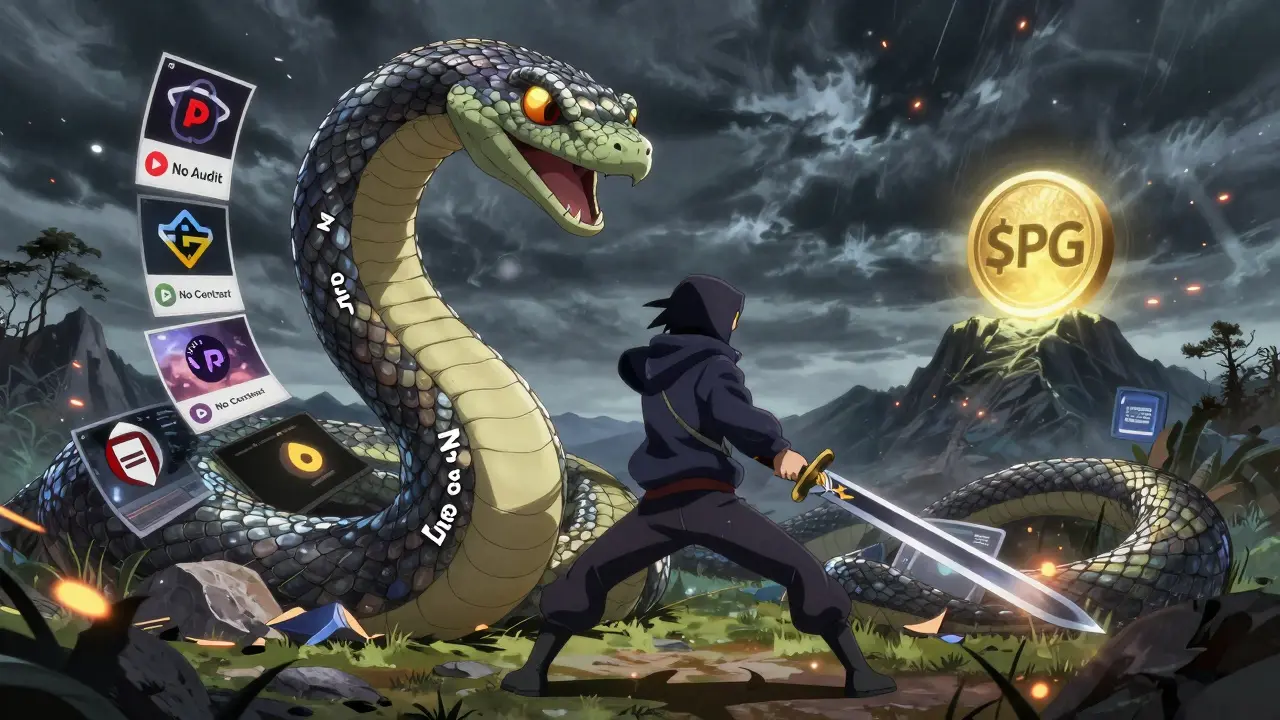
What You Should Do Instead
If you’re looking for a decentralized exchange to trade crypto, stick to the real ones. Here are a few trusted options:
- Uniswap - The largest Ethereum DEX, with billions in daily volume.
- PancakeSwap - Popular on BNB Chain, great for low-fee swaps.
- Raydium - Leading DEX on Solana, fast and cheap.
- Curve - Best for trading stablecoins with minimal slippage.
All of these have public code, audits, active communities, and years of track record. You can check their TVL (Total Value Locked) on DeFiLlama. You can see every transaction on the blockchain. You can’t do that with Polyient Games DEX - because it doesn’t exist.

What About Polyient Games’ Real Crypto Offerings?
While there’s no DEX, Polyient Games does have real crypto assets. They issued the $PG token, which is used inside their games to buy land, characters, and items. You can trade $PG on real exchanges like Gate.io and KuCoin. But those are centralized exchanges - not decentralized ones. If you want to trade $PG, use those platforms. Never use a site claiming to be "Polyient Games DEX."
Also, Polyient Games runs an NFT marketplace where you can buy and sell in-game assets. That’s a separate system from any trading platform. Don’t confuse the two.
Final Warning
If you’re being pushed to "invest early" in Polyient Games DEX, run. No legitimate project asks you to join before launch. No real DEX hides its contract address. No trusted team uses anonymous Telegram groups to promote their product.
There’s no such thing as Polyient Games Decentralized Exchange. It’s either a scam, a misunderstanding, or a hoax. Don’t lose money trying to find something that isn’t there. Stick to the known, audited, and transparent platforms. Your wallet will thank you.







Comments (24)
Sherry Kirkham
March 9, 2026 AT 19:51 PMThis isn't just a scam-it's a symptom. People don't lose money because they're dumb. They lose it because they're lonely. They want to belong to something that feels exclusive, cutting-edge, real. Scammers don't sell DEXs. They sell hope wrapped in a whitepaper-shaped lie.
Sharon Tuck
March 10, 2026 AT 20:10 PMI love how you laid this out. So clear. So calm. I’ve seen so many newbies get swept up in these fake DEXs because they don’t know where to look. This should be pinned. Seriously.
Jennifer Pilot
March 12, 2026 AT 18:58 PMI'm sorry, but this piece is... underwhelming. The prose lacks gravitas. One would expect a more nuanced exploration of the epistemological vacuum that constitutes 'Polyient Games DEX'-not a bullet-pointed pamphlet. The rhetorical structure is... pedestrian.
Bonnie Jenkins-Hodges
March 14, 2026 AT 08:32 AMAMERICA DOESN'T NEED FAKE DEXES 😤 WE GOT UNISWAP AND THAT'S ENOUGH. STOP LETTING FOREIGN SCAMMERS RUIN CRYPTO! 💪🇺🇸
Melissa Ritz
March 15, 2026 AT 00:00 AMI mean... I get it. But honestly? I stopped reading after 'no whitepaper.' If you can't even write a 10-page doc, why should I trust you? 🤷♀️
Cerissa Kimball
March 16, 2026 AT 04:24 AMThe absence of a smart contract audit is the most telling sign because it reveals a fundamental lack of technical accountability which is non negotiable in decentralized systems
Emily Pegg
March 17, 2026 AT 22:09 PMI just lost $3k to something that looked just like this. I thought it was legit. The site had a countdown timer. It even had fake testimonials with real names. I'm still mad. 😔
Christina Young
March 19, 2026 AT 14:43 PMThis is why crypto fails. Not because of regulation. Because amateurs confuse branding with legitimacy. Polyient Games = real. Polyient Games DEX = a Google Ads campaign with a .xyz domain.
Steven Lefebvre
March 21, 2026 AT 07:54 AMI’ve been in crypto since 2017. This kind of thing keeps happening. But here’s the thing-every time someone falls for it, they become a warning for the next person. That’s not nothing.
Leah Dallaire
March 21, 2026 AT 23:45 PMWhat if this is all a government psyop to discredit DeFi? Think about it. The real DEXs are getting audited. The fake ones? They’re everywhere. Coincidence? Or a controlled demolition of trust?
prasanna tripathy
March 22, 2026 AT 12:05 PMI saw this in a WhatsApp group in Mumbai. Someone said 'Polyient Games DEX' and linked to a site. I checked the domain WHOIS-registered 12 days ago. No company. No team. Just a guy with a Canva template. I warned them. They said 'you’re just jealous.'
James Burke
March 24, 2026 AT 09:46 AMI think the real issue here isn't the scam-it's the expectation that everything in crypto should be 'official.' We're in a Wild West. You don't need a website to be real. But you do need a contract. And this one? Zero.
Bill Pommier
March 25, 2026 AT 21:19 PMThe fact that this article exists is proof that the crypto community is still in its adolescence. We are not yet capable of discerning authenticity from aesthetic. We mistake polish for legitimacy. This is a cultural failure.
Issack Vaid
March 25, 2026 AT 23:50 PMI love how Americans act like they invented blockchain. Meanwhile, in Berlin, Tokyo, and Lagos-people are building real infrastructure. This 'Polyient Games DEX' nonsense? It’s a U.S.-centric delusion. Global crypto doesn’t care.
Austin King
March 27, 2026 AT 17:46 PMYou’re right. And I’m glad someone finally said it. I’ve been trying to explain this to my cousin for weeks. She thinks if it’s on YouTube, it’s real. This post? Perfect for her.
Bryanna Barnett
March 28, 2026 AT 00:54 AMi mean... i get why ppl get confused. polyient games is legit. so why not a dex? it sounds right. but yeah. no contract. no audit. nothin. just vibes.
Josh Moorcroft-Jones
March 28, 2026 AT 05:16 AMI’ve spent over 200 hours researching fake crypto projects, and I can tell you this: the pattern is always the same. A name that sounds like a real one. A logo stolen from a legitimate project. A Discord with 5000 bots and three real people. A promise of 5x returns before the ‘private sale.’ And then-poof. The team vanishes. The website becomes a 404. The Telegram group gets deleted. The whole thing is designed to exploit cognitive dissonance: ‘I know this sounds too good to be true… but what if it’s not?’ That’s the trap. And Polyient Games DEX? It’s textbook.
Rachel Rowland
March 29, 2026 AT 04:24 AMThis is why I always say: if you can’t find the contract on Etherscan, it doesn’t exist. End of story. No need for whitepapers. No need for hype. Just check the chain.
Jane Darrah
March 30, 2026 AT 06:50 AMI just want to say-I cried when I lost my money. I thought I was part of something revolutionary. I posted memes. I told my friends. I even started a Twitter thread. And then… silence. The site went dark. The Discord went silent. The guy who ran it? No LinkedIn. No past projects. Just a guy with a name that sounded like a tech bro from Silicon Valley. I’m still embarrassed. But now I help others avoid it. That’s my redemption.
Denise Folituu
March 31, 2026 AT 12:57 PMI KNOW THIS IS A SCAM BUT I DID IT ANYWAY. I’M NOT SORRY. I WANTED TO BELIEVE. AND IF I LOSE MONEY, THEN SO BE IT. CRYPTO IS A GAME. AND I PLAYED.
jack carr
April 1, 2026 AT 07:27 AMThis is why I only use Uniswap and Pancake. Simple. Clean. No drama. No fake names. Just code.
Eva Gupta
April 3, 2026 AT 02:04 AMIn India, we call this ‘jugaad’-a hack, a workaround, a temporary fix. But crypto isn’t meant to be jugaad. It’s meant to be trustless. And when you fake a DEX, you’re not hacking the system. You’re breaking the entire promise of blockchain.
Nancy Jewer
April 4, 2026 AT 02:44 AMThe real tragedy isn’t the lost funds. It’s the erosion of trust in legitimate DeFi. When people get burned by fake DEXs, they start doubting real ones. That’s the real win for the scammers.
Ken Kemp
April 5, 2026 AT 14:21 PMI tried to warn my brother. He said 'you don't understand web3.' I sent him the Etherscan link. He still sent 0.5 ETH. Now he says 'I'm not mad, just disappointed.' Dude. You just got rug pulled.