
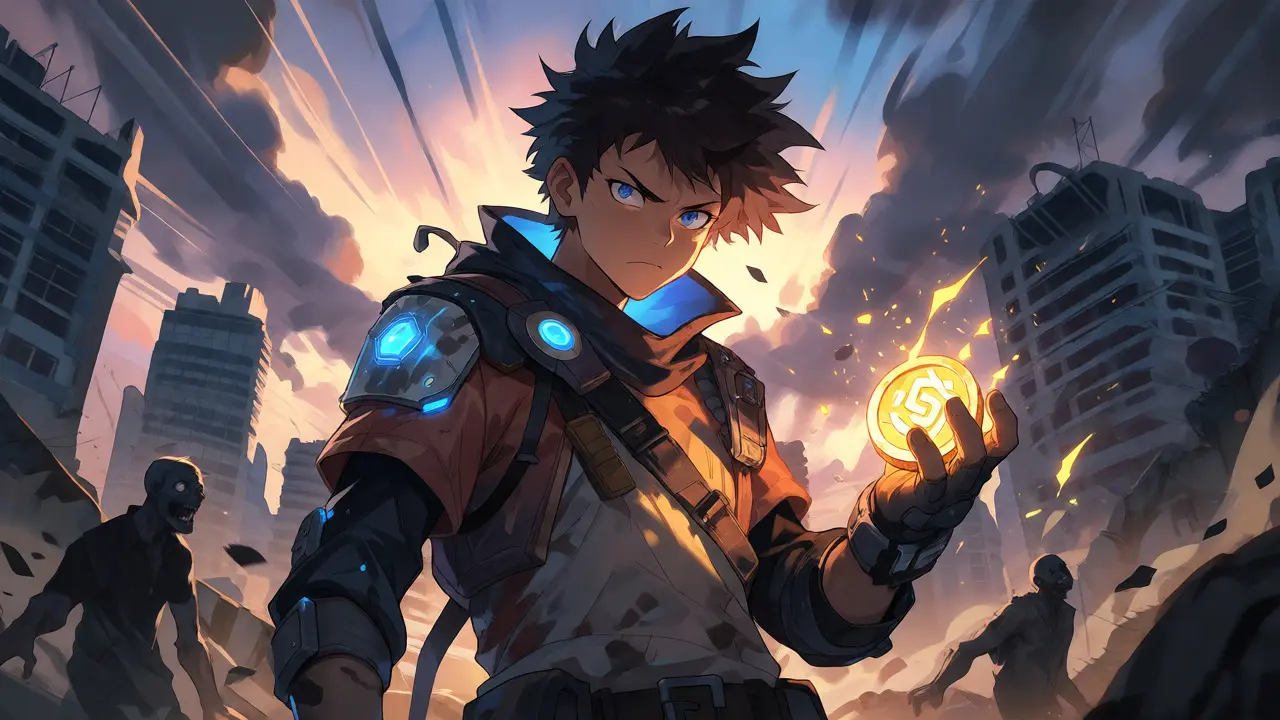
Imagine surviving a zombie apocalypse where your loot isn't just pixels on a screen, but actual assets you can trade, stake, and govern. That’s the pitch behind Undeads Games (UDS). It’s not just another meme coin; it’s the utility token powering a Web3 survival MMORPG. But with so many gaming tokens flooding the market since 2021, why should you care about UDS in late 2026? Is it a viable investment, or just another hype cycle that missed the boat?
This guide breaks down exactly what UDS is, how its economy works, and whether the project has legs beyond the initial launch buzz. We’ll look at the hard data-contract details, supply metrics, and real-world usage-to help you decide if this zombie-themed metaverse deserves a spot in your portfolio.
The Core Concept: Zombie Survival Meets Blockchain
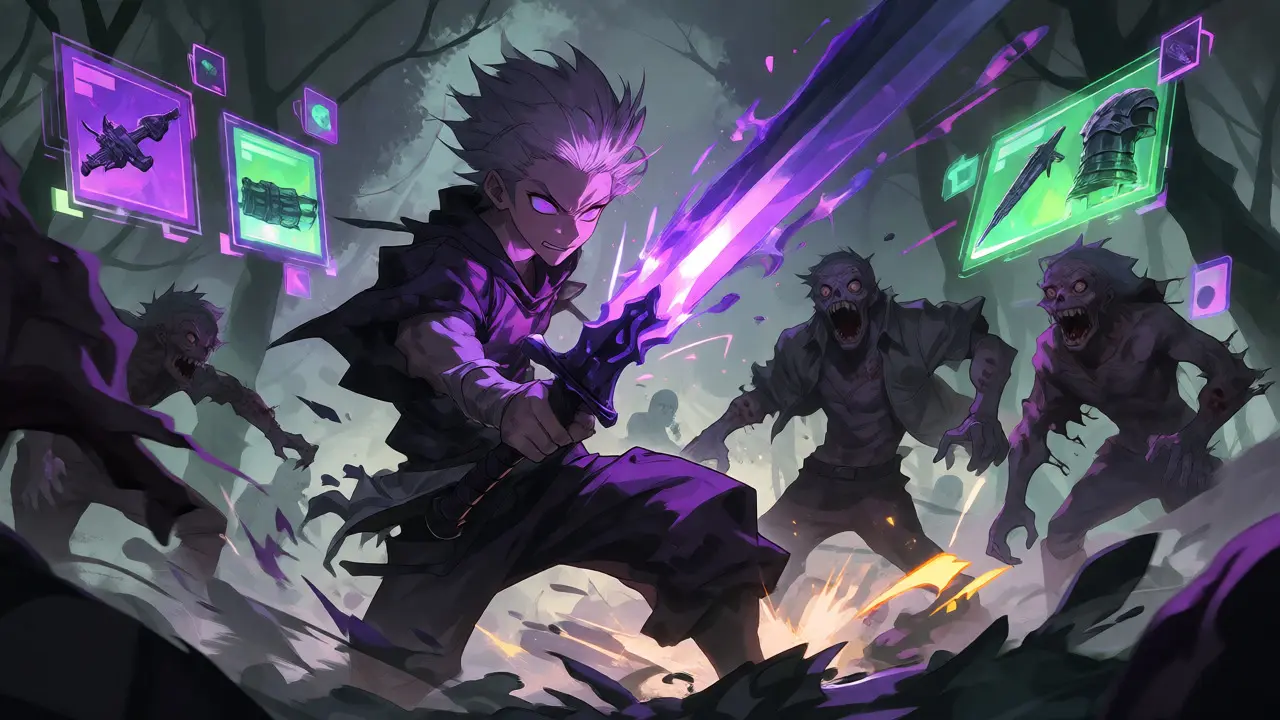
At its heart, Undeads Games is an open-world MMORPG set in a post-apocalyptic universe overrun by zombies. Unlike traditional games where you buy skins with credit cards, Undeads integrates blockchain technology directly into the gameplay loop. Players explore, fight, and build in a shared world where every significant asset-from weapons to land plots-is represented as a Non-Fungible Token (NFT).
The UDS token acts as the lifeblood of this ecosystem. It is an ERC-20 utility token deployed on the Ethereum network. Its primary job is to facilitate transactions within the game, reward players for participation, and allow holders to vote on key development decisions. Think of it less like a stock certificate and more like arcade tokens that also give you a say in which new levels get built next.
It’s crucial to understand that buying UDS doesn’t make you a shareholder in the studio. You aren’t entitled to dividends from game sales. Instead, you’re buying into the economic engine of the game. If the game grows and more players need UDS to craft items or enter tournaments, demand for the token theoretically rises. If the player base shrinks, the token struggles. This direct link between game health and token value is the defining feature of most GameFi projects.
Technical Specifications and Tokenomics
Before diving into price charts, let’s look under the hood. Technical clarity is often lacking in crypto projects, but Undeads has maintained consistent metadata across major aggregators like CoinGecko and CoinMarketCap.
The token operates on the Ethereum mainnet, leveraging the security of one of the largest blockchains. The contract address is 0x712bd4beb54c6b958267d9db0259abdbb0bff606. While some early marketing materials mentioned BNB Chain, the definitive technical deployment is ERC-20. This matters because Ethereum offers high liquidity and compatibility with popular wallets like MetaMask, though it comes with higher gas fees compared to Layer 2 solutions or alternative chains.
| Metric | Value | Notes |
|---|---|---|
| Token Type | Utility (ERC-20) | Not equity; no direct revenue share |
| Max Supply | 250,000,000 UDS | Capped supply model |
| Circulating Supply | ~124.6 Million UDS | Approximately 49.8% of max supply |
| Launch Price | $0.50 USD | Public sale launched May 2, 2024 |
| Current Price Range | $0.11 - $0.13 USD | Trading near historical lows |
| Primary Exchanges | Gate.io, Bitget, MEXC | Centralized exchange focus |
One area of confusion involves supply numbers. Some older sources cite a 100 million cap, likely referring to an initial tranche or a specific allocation bucket. However, the consensus among major data providers and the official tokenomics page confirms a maximum supply of 250 million units. As of September 2026, roughly half of these tokens are in circulation. The remaining tokens are locked in vesting schedules for the team, advisors, and ecosystem rewards. This controlled release prevents sudden dumping but means long-term holders must watch for unlock events that could pressure the price.
How Does UDS Work Inside the Game?
Owning the token is one thing; using it is another. Undeads Games employs a dual-asset system involving UDS and NFTs. Here is how players actually interact with the economy:
- In-Game Transactions: Players use UDS to buy crafting materials, repair gear, or access premium zones. This creates constant sell pressure as players cash out earnings, but also buy pressure as they reinvest.
- Staking Rewards: This is a major draw. Undeads introduced a "paired staking" mechanism. You don’t just stake UDS alone; you pair it with Undeads NFTs. The rarity of your NFT boosts your staking yield. During promotional periods, top stakers have competed for prize pools worth up to 10 ETH, adding a speculative layer to passive income.
- Governance: Token holders can vote on critical updates. Should a new weapon be nerfed? Which region gets expanded next? These votes happen on-chain, giving the community tangible control over the game’s direction.
- Airdrops: Active players and loyal holders often receive free token distributions. These airdrops serve as retention tools, rewarding users who stay engaged rather than those who just buy and hold.
The integration of NFTs adds complexity. You aren’t just managing a wallet balance; you’re managing inventory. If you want to maximize staking returns, you might need to acquire rarer NFTs, which requires additional capital. This creates a barrier to entry for casual players but deepens the engagement for hardcore gamers.
Market Performance: From Hype to Reality
Let’s talk numbers. Undeads Games launched its public token sale in May 2024 at $0.50 per token. Early enthusiasm pushed the price to a peak of around $1.06 in August 2024. For a few months, it looked like a winner.
Fast forward to September 2026, and the picture is different. UDS trades in the $0.11 to $0.13 range. That’s a decline of roughly 75% from its launch price and nearly 90% from its all-time high. This trajectory mirrors many second-wave GameFi tokens that launched after the initial 2021 boom had cooled off.
Liquidity remains moderate. Daily trading volumes hover between $10,000 and $110,000 depending on the day and the aggregator. Gate.io currently hosts the most active UDS/USDT pairs. While this volume is sufficient for small to medium trades, large institutional buyers might face slippage. The project ranks around #700-#800 by market cap, placing it firmly in the mid-tier of crypto assets-too big to be a micro-cap gamble, but too small to be considered a blue-chip gaming token like Axie Infinity (AXS) or The Sandbox (SAND).
Competitive Landscape: Where Does Undeads Fit?
The GameFi sector is crowded. To evaluate UDS, you have to compare it against the giants.
Undeads vs. Axie Infinity: Axie pioneered the play-to-earn model. It has a larger user base and higher liquidity. However, Axie’s economy suffered heavily from inflation. Undeads enters later, aiming to learn from those mistakes with a capped supply and paired staking mechanics designed to reduce sell pressure.
Undeads vs. The Sandbox: The Sandbox focuses on virtual real estate and creation. It appeals to builders and brands. Undeads is strictly a survival RPG. It targets gamers who want combat and progression loops, not just social hangouts. This niche focus helps differentiate it, but limits its total addressable market.
Undeads vs. Newer L2 Projects: Many newer games launch on Immutable X or Polygon to save on gas fees. Undeads sticking to Ethereum mainnet is a double-edged sword. It benefits from Ethereum’s robust security and broad wallet support, but high transaction costs can deter casual mobile gamers.
Risks and Considerations
No crypto investment is without risk, and Undeads has specific hurdles:
- User Retention: The biggest threat to any GameFi token is churn. If players stop playing, they stop buying UDS. There is limited public data on daily active users (DAU), making it hard to gauge true organic growth versus incentivized activity.
- Vesting Unlocks: With only ~50% of the supply circulating, future unlocks will increase the available tokens. If demand doesn’t grow proportionally, price dilution is inevitable.
- Regulatory Uncertainty: While UDS is labeled a utility token, regulators globally are scrutinizing whether gaming tokens constitute securities. Any adverse regulatory ruling could impact trading availability.
- Competition: AAA-quality Web3 games are entering the market. Undeads needs to maintain high graphical standards and engaging gameplay to compete with titles backed by massive studios.
Final Verdict
Undeads Games (UDS) is a legitimate project with verified smart contracts and a clear use case within its own ecosystem. It isn’t vaporware. However, it faces the harsh reality of a saturated GameFi market. The token’s price correction reflects broader market trends and potentially slower-than-hoped adoption rates.
If you are a gamer interested in zombie survival mechanics and want to participate in governance, UDS offers a functional way to do so. If you are looking for a quick flip based on past performance, the historical data suggests caution. The path forward depends entirely on the studio’s ability to deliver compelling content that keeps players logging in, week after week.
Is Undeads Games (UDS) a good investment?
This depends on your risk tolerance. UDS is a mid-cap gaming token with high volatility. It has seen significant price declines since its 2024 launch. Potential upside exists if the game gains mainstream traction, but risks include low user retention and token dilution from vesting schedules. It is generally considered a speculative asset rather than a stable store of value.
Where can I buy UDS tokens?
You can purchase UDS on several centralized exchanges, including Gate.io, Bitget, and MEXC. Gate.io typically shows the highest trading volume for the UDS/USDT pair. Since it is an ERC-20 token, you can also trade it on decentralized exchanges (DEXs) like Uniswap if you prefer self-custody via a wallet like MetaMask.
Does holding UDS give me ownership of the company?
No. UDS is a utility token, not an equity share. Holding UDS does not entitle you to dividends, profits, or legal ownership of the Undeads Games studio. Your rights are limited to using the token within the game ecosystem and participating in on-chain governance votes regarding game development.
What is the maximum supply of UDS?
The confirmed maximum supply of Undeads Games (UDS) is 250,000,000 tokens. Some earlier sources incorrectly cited 100 million, likely due to referencing initial allocations before full tokenomics were finalized. As of late 2026, approximately 124.6 million tokens are in circulation.
Can I stake UDS to earn rewards?
Yes, staking is a core feature. Undeads uses a "paired staking" model where you stake UDS alongside Undeads NFTs. The rarity of your NFTs influences your reward multipliers. This mechanism encourages players to engage deeply with the game’s asset economy rather than just holding the token passively.