

Imagine an AI assistant that doesn't just answer questions but plays games with you, manages your NFT portfolio, and chats on social media-all while living on the blockchain. That is the pitch behind Keira (KEIRA), a cryptocurrency project attempting to bridge the gap between casual gamers and the complex world of Web3. But beneath the glossy marketing lies a micro-cap token with significant data discrepancies, extreme volatility, and a high-risk profile that demands careful scrutiny before you even think about buying.
If you have stumbled upon KEIRA in your feed or heard whispers in Telegram groups, you are likely wondering if this is the next big thing in AI crypto or just another speculative bubble. The short answer? It is complicated. KEIRA sits at the intersection of two massive trends-artificial intelligence agents and gaming tokens-but it currently lacks the infrastructure, liquidity, and transparency that serious investors look for. Let's break down what KEIRA actually is, how it works, and whether it has any real value beyond hype.
The Core Concept: An AI Personality on Blockchain
At its heart, KEIRA is not just a currency; it is a utility token for an AI agent. Unlike traditional cryptocurrencies that serve primarily as store-of-value assets or mediums of exchange, KEIRA powers a specific digital persona. This persona is designed to interact with users across multiple platforms, including Twitch, Instagram, and Reddit.
The project was launched on the Virtuals Protocol, a platform dedicated to creating autonomous AI agents on-chain. The idea is that KEIRA remembers your interactions, learns your preferences, and provides personalized assistance. For example, if you are playing League of Legends or Fortnite, KEIRA can offer real-time tips or strategic advice. It also claims to help manage your NFT and token portfolios, tracking assets across different networks.
This "personality-driven" approach is KEIRA's main differentiator. Most AI crypto projects focus on backend infrastructure-like training models or processing data. KEIRA focuses on the frontend user experience, aiming to make Web3 feel less like coding and more like chatting with a friend. However, this novelty comes with a catch: the technology is still experimental, and the actual utility depends heavily on the underlying protocol's stability.
Technical Reality Check: Base vs. Solana Confusion
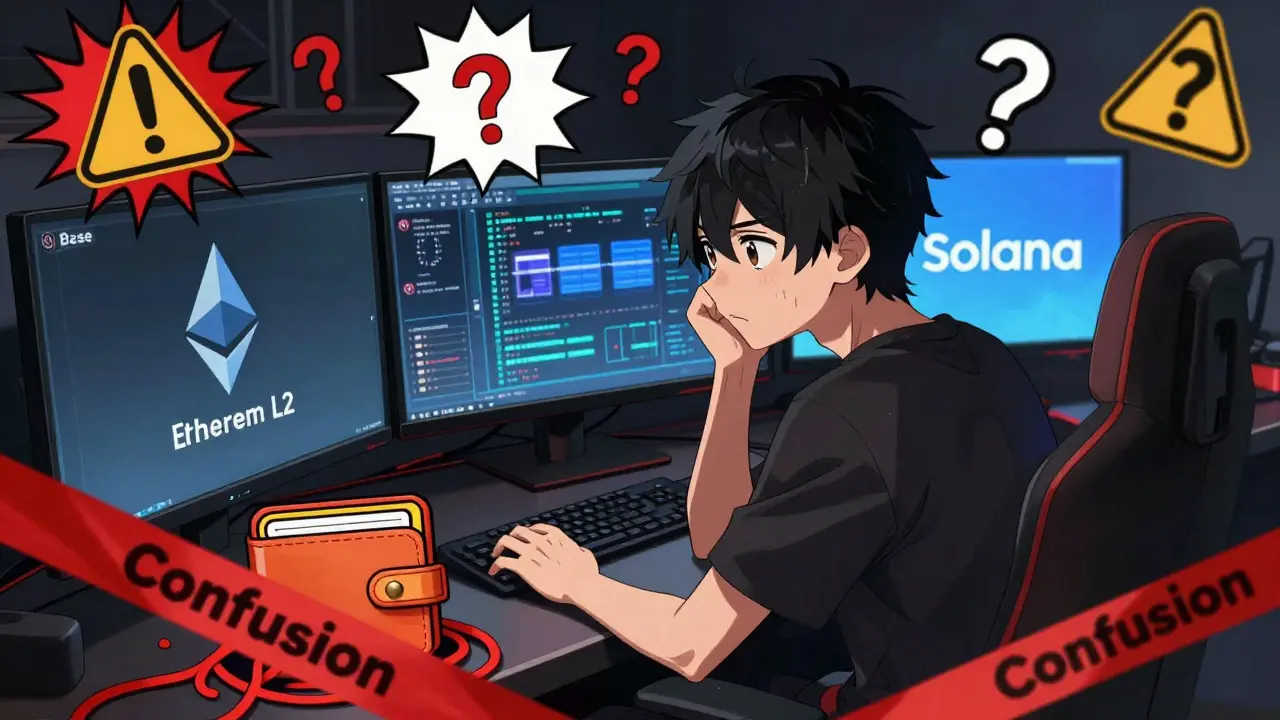
One of the first red flags for any crypto investor is inconsistent technical information. When researching KEIRA, you will encounter conflicting reports about which blockchain it runs on. This confusion is critical because it affects transaction costs, speed, and security.
| Feature | Claimed by Cryptorank/Coincarp | Claimed by CoinSwitch | Verified Status |
|---|---|---|---|
| Primary Blockchain | Base (Ethereum L2) | Solana | Unclear / Disputed |
| Token Standard | ERC-20 (implied via Base) | SPL Token | Requires Wallet Verification |
| Launch Platform | Virtuals Protocol | N/A | Confirmed |
| Smart Contract Address | Not publicly listed in major docs | Not provided | Missing Critical Data |
Cryptorank.io and Coincarp.com identify Base, an Ethereum Layer 2 solution, as KEIRA's home. Base is known for low fees and fast transactions, making it popular for gaming apps. However, CoinSwitch.co lists KEIRA on Solana, a completely different blockchain with distinct architecture. If KEIRA were truly on Solana, you would need a Phantom wallet; if on Base, you need MetaMask or Coinbase Wallet. This discrepancy suggests either poor documentation or potential misinformation.
Furthermore, the absence of a published smart contract address on major aggregators is a significant oversight. In crypto, "code is law," and without verifying the contract on Etherscan or Basescan, you cannot confirm the token's supply mechanics or check for hidden vulnerabilities. Always verify the contract address directly from the project's official channels before connecting your wallet.
Tokenomics and Market Data: A Micro-Cap Warning
Let's talk numbers, because they tell a stark story. KEIRA is a micro-cap asset, meaning its market capitalization is tiny compared to established players. As of late 2025, KEIRA's market cap hovered around $132,500. To put that in perspective, Fetch.ai ($FET) has a market cap exceeding $1 billion, and SingularityNET ($AGIX) sits around $750 million. KEIRA represents less than 0.001% of the total AI crypto sector.
Here are the key metrics you need to know:
- Total Supply: 1.00 billion KEIRA tokens.
- Circulating Supply: Approximately 536.49 million tokens.
- All-Time High (ATH): $0.00662 (recorded in early 2025).
- Current Price Range: Highly volatile, fluctuating between $0.0002 and $0.002 depending on the exchange.
- Liquidity: Extremely low. Daily trading volume often stays under $30,000.
The price action shows a classic pattern of high speculation followed by sharp declines. After hitting its ATH, KEIRA dropped over 96%, a common trajectory for meme-inspired or novelty tokens that lack fundamental adoption. The low liquidity means that even small buy or sell orders can cause massive price swings. If you try to sell a large amount of KEIRA, you might face significant slippage, getting much less than the displayed price.
Data inconsistencies also plague the token's listing. Binance.com once showed a circulating supply of zero, while other trackers reported hundreds of millions. These errors indicate that KEIRA is not yet integrated into major financial data pipelines, reinforcing its status as an obscure, high-risk asset.
Utility vs. Hype: Does KEIRA Actually Do Anything?
A crypto project's value ultimately rests on its utility. What can you actually do with KEIRA? According to the project's roadmap and community feedback, the primary use cases include:
- Gaming Assistance: KEIRA provides real-time tips for popular games. Users report that basic advice helped them rank up in titles like League of Legends. However, the AI's depth is limited compared to specialized gaming bots.
- Portfolio Tracking: The agent monitors NFT and token holdings across Ethereum, Base, and Solana. Users complain about delays, with alerts arriving 15+ minutes late, rendering it useless for active traders.
- Social Interaction: KEIRA engages with users on Twitch and Instagram, building a brand presence. This is more of a marketing tool than a functional utility for most holders.
User feedback is mixed. On Reddit, some casual gamers praise the game tips as "legit useful." On Telegram, however, frustration mounts over slow response times and technical glitches. The learning curve is rated as "moderate," requiring users to understand Web3 wallets, gas fees, and decentralized exchanges (DEXs). For someone new to crypto, interacting with KEIRA involves connecting a wallet to the Virtuals Protocol dApp, funding it with ETH for Base network fees, and navigating a sparse interface.
Support quality is lacking. With only a basic FAQ on the Virtuals website and no dedicated knowledge base, users are left to figure things out themselves. Community surveys rate support at 2.8 out of 5, highlighting a gap between the project's ambitions and its operational reality.
Risks and Red Flags: Why Experts Are Skeptical
If KEIRA sounds too good to be true, it probably is. Several expert analyses raise serious concerns about the project's long-term viability.
1. Extreme Centralization: On-chain data reveals that 73% of all KEIRA tokens are held in the top 10 wallets. This concentration gives a small group of insiders immense control over the token's price. They could dump their holdings at any time, crashing the market for retail investors.
2. Regulatory Risk: With a market cap under $1 million and personality-driven marketing, KEIRA faces higher scrutiny from regulators like the SEC. Attorney John Deaton noted in a 2025 article that such tokens often resemble unregistered securities. Without clear utility documentation, the project could face legal challenges.
3. Lack of Transparency: The contradictory blockchain claims (Base vs. Solana) and missing whitepaper links suggest poor governance. CoinTelegraph highlighted these issues as "red flags for project transparency." Additionally, the future-dated All-Time High record points to potentially manipulated market data.
4. Illiquidity Trap: Delphi Digital's 2025 micro-cap report predicted a 78% probability of KEIRA becoming illiquid within 18 months. With negligible enterprise adoption and reliance on retail hype, the token may struggle to maintain trading pairs on DEXs like Uniswap.
How to Buy KEIRA (If You Still Want To)
If you decide to take the risk, here is the practical process for acquiring KEIRA. Remember, this involves using decentralized exchanges, which carry their own risks.
- Set Up a Compatible Wallet: Since most credible sources point to Base, download MetaMask or Coinbase Wallet. Configure it to connect to the Base network.
- Fund Your Wallet: Purchase ETH on a centralized exchange like Coinbase or Binance. Transfer the ETH to your wallet address on the Base network. Keep enough for gas fees (averaging $1.20 per transaction during congestion).
- Find the Correct Contract Address: Verify the KEIRA contract address from the official Virtuals Protocol website or trusted community channels. Double-check it against Etherscan/Basescan to avoid scams.
- Use a Decentralized Exchange: Connect your wallet to a DEX like Uniswap. Paste the KEIRA contract address to load the token pair.
- Adjust Slippage Tolerance: Due to low liquidity, set your slippage tolerance to 1-3% to ensure your swap goes through. Be prepared for price impact.
- Execute the Swap: Trade your ETH for KEIRA. Confirm the transaction in your wallet.
Once you hold KEIRA, you can interact with the AI agent through the Virtuals Protocol dApp. Start with small amounts to test the functionality before committing more capital.
Future Outlook: Can KEIRA Survive?
KEIRA's future hinges on its ability to execute its roadmap and attract genuine users. The project is preparing for integration with Virtuals Protocol v2, scheduled for Q1 2026, which promises faster AI responses and broader gaming integrations. A partnership announcement with Yield Guild Games caused a temporary 23.7% price surge, showing that news still drives interest.
However, experts remain bearish. The Crypto Research Collective categorizes KEIRA as a "high-risk novelty token." To achieve sustainable liquidity, KEIRA needs to grow its active user base from ~1,200 to over 50,000-a steep climb given its current engagement rates. Twitter engagement sits at 2.1%, below the industry average of 3.5%.
For now, KEIRA remains a speculative experiment rather than a robust investment. It offers a glimpse into the future of AI-driven Web3 interfaces, but it lacks the foundation to compete with established players. Treat it as entertainment, not wealth preservation.
Is KEIRA coin a scam?
While there is no definitive proof of a scam, KEIRA exhibits many characteristics of high-risk speculative assets, including extreme centralization, data inconsistencies, and low liquidity. The lack of transparent documentation and verified team identities raises caution levels. Always do your own research (DYOR) and never invest more than you can afford to lose.
Which blockchain does KEIRA run on?
Most reliable sources, including Cryptorank and Coincarp, state that KEIRA operates on the Base blockchain (an Ethereum Layer 2). However, some platforms like CoinSwitch incorrectly list it on Solana. This discrepancy suggests poor data synchronization or unclear project communication. Verify the contract address on Basescan to be sure.
What is the total supply of KEIRA tokens?
The maximum total supply of KEIRA is 1.00 billion tokens. As of late 2025, approximately 536.49 million tokens are in circulation. The remaining tokens may be locked, reserved for development, or held by early investors, contributing to the high centralization risk.
How do I interact with the KEIRA AI agent?
You can interact with KEIRA through the Virtuals Protocol dApp. First, connect a compatible Web3 wallet (like MetaMask) funded with ETH for Base network fees. Then, access the KEIRA interface to receive gaming tips, portfolio updates, or engage in social chat. Note that response times may vary due to network congestion.
Is KEIRA listed on major exchanges like Binance?
No, KEIRA is not listed on major centralized exchanges like Binance or Coinbase. It is primarily traded on decentralized exchanges (DEXs) like Uniswap. Some data aggregators may show placeholder listings, but actual liquidity is fragmented and low, making trades difficult and expensive.
What is the all-time high price of KEIRA?
KEIRA reached an all-time high of $0.00662 in January 2025. Since then, the price has declined by over 96%, reflecting the typical volatility of micro-cap AI tokens. Current prices fluctuate significantly based on low trading volumes and market sentiment.
Who created the KEIRA token?
KEIRA was launched on the Virtuals Protocol, a platform for AI agents. While the CTO of Virtuals Protocol, Alex Johnson, has defended the project, detailed information about the specific team members behind KEIRA is scarce. This anonymity adds to the regulatory and trust risks associated with the token.