


Solo mining Bitcoin is effectively dead. If you’re still trying to mine on your own with a single rig, you are likely spending more on electricity than you’ll ever earn in rewards. The reality of the mining pool industry is a networked ecosystem where individual miners combine computational power to share block rewards proportionally has shifted from a convenience to an absolute necessity. As we move through 2026, the landscape is no longer just about who has the most hash rate; it’s about who offers the best technology, security, and financial flexibility.
The industry has matured rapidly. What started as small groups of enthusiasts sharing resources has evolved into a multi-billion-dollar infrastructure sector dominated by sophisticated entities like AntPool, F2Pool, ViaBTC, and newer challengers like Neopool. For miners-whether you are running a few home rigs or managing a warehouse-scale operation-understanding these shifts is critical to staying profitable.
From Solo Struggles to Pool Dominance
Let’s look at why this shift happened. In the early days of Bitcoin, anyone with a decent computer could find blocks. Today, the network difficulty adjusts constantly to keep block times around ten minutes, regardless of how much total computing power joins the network. This means that as more powerful machines join, the odds of any single machine finding a block drop precipitously.
Mining pools solve this by aggregating hash rate. When the pool finds a block, the reward is split among all participants based on their contribution. This turns a volatile, high-risk activity into a steady income stream. By 2025, major pools controlled over 90% of the global hash rate. This centralization of power raised concerns, but it also created a stable environment for institutional investors to enter the space. The barrier to entry wasn’t removed; it was professionalized.
For the average miner, this means you can’t ignore the pool you choose. Your choice of pool directly impacts your uptime, payout consistency, and even your exposure to regulatory risks. A pool with poor server infrastructure might reject valid shares, costing you money. A pool without proper compliance might get delisted from exchanges, making your earnings harder to cash out.
Technological Evolution: Beyond Raw Hash Rate
In 2024 and 2025, the conversation shifted from "how fast" to "how efficient." The introduction of next-generation ASICs, such as the Antminer S23 Hyd and S23 Immersion, marked a turning point. These machines don’t just compute faster; they use liquid cooling to drastically reduce energy consumption per terahash.
This hardware evolution forced pools to upgrade their infrastructure. Old pools relying on basic stratum protocols struggled to handle the massive throughput of modern ASICs efficiently. Newer pools introduced optimized stratum variants and intelligent load-balancing algorithms. For example, Neopool is a mining pool provider known for its low-fee structure and advanced algorithmic efficiency gained traction by focusing on reducing latency and maximizing share acceptance rates. Their CEO, Andrei Kapeikin, emphasized that staying ahead requires continuous technical innovation, not just marketing.
Efficiency isn’t just about speed; it’s about stability. Downtime costs money. Modern pools now offer redundant server locations across multiple continents. If one data center goes offline due to a power outage or cyberattack, your rig automatically switches to another node without losing work. This level of reliability was rare five years ago but is now a baseline expectation.
The Rise of Hybrid Revenue Models
One of the biggest changes in 2025 was the diversification of revenue streams. Traditional mining pools only paid out in the native coin being mined (usually BTC). Today, leading pools are integrating staking services and cross-chain capabilities.
F2Pool is one of the oldest and largest cryptocurrency mining pools, supporting multiple algorithms partnered with stake.fish to allow miners to stake tokens like ETH, SOL, and CFX alongside their mining operations. This is particularly relevant with the rise of Babylon Network is a protocol enabling Bitcoin staking by leveraging Bitcoin's security for other chains. Miners can now lock up their Bitcoin holdings to secure other networks while continuing to mine, earning dual rewards. This transforms idle assets into productive capital.
This hybrid model appeals to institutional players who want yield generation without selling their core holdings. It also helps pools retain users during bear markets when mining profits dip. Instead of leaving the ecosystem, miners stay engaged through staking yields. This creates a stickier user base and reduces churn.

Security and Compliance: The New Trust Metrics
As mining becomes more institutional, trust is no longer built on reputation alone. It’s built on audits. In 2025, ViaBTC is a prominent mining pool that emphasizes transparency and compliance standards passed the SOC 2 Type I audit. This certification verifies that their internal controls for security, availability, and confidentiality meet rigorous international standards.
Why does this matter to you? Because if a pool gets hacked or mishandles funds, you lose everything. Audited pools provide proof that their systems are secure. They also demonstrate compliance with anti-money laundering (AML) regulations, which is crucial if you plan to withdraw large amounts of crypto to fiat exchanges. Exchanges are increasingly requiring proof of clean source-of-funds, and mining from a compliant pool makes that process smoother.
Don’t overlook this factor. A pool with slightly lower fees but no security audit is a risky bet. The cost of a hack far outweighs the savings from a 1% fee difference.
| Pool Name | Key Strength | Payout Method | Compliance/Audit | Unique Feature |
|---|---|---|---|---|
| AntPool | Largest Market Share | FPPS | Standard | Zero-fee promotions for new hardware |
| ViaBTC | Security & Transparency | PPLNS/FPPS | SOC 2 Type I Certified | Community engagement events |
| F2Pool | Multi-Algorithm Support | PPLNS | Standard | Integrated Staking (ETH, SOL, BTC) |
| Neopool | Low Fees & Efficiency | FPPS | Transparent Ledger | Advanced Load Balancing Algorithms |
Energy Sustainability and Green Mining
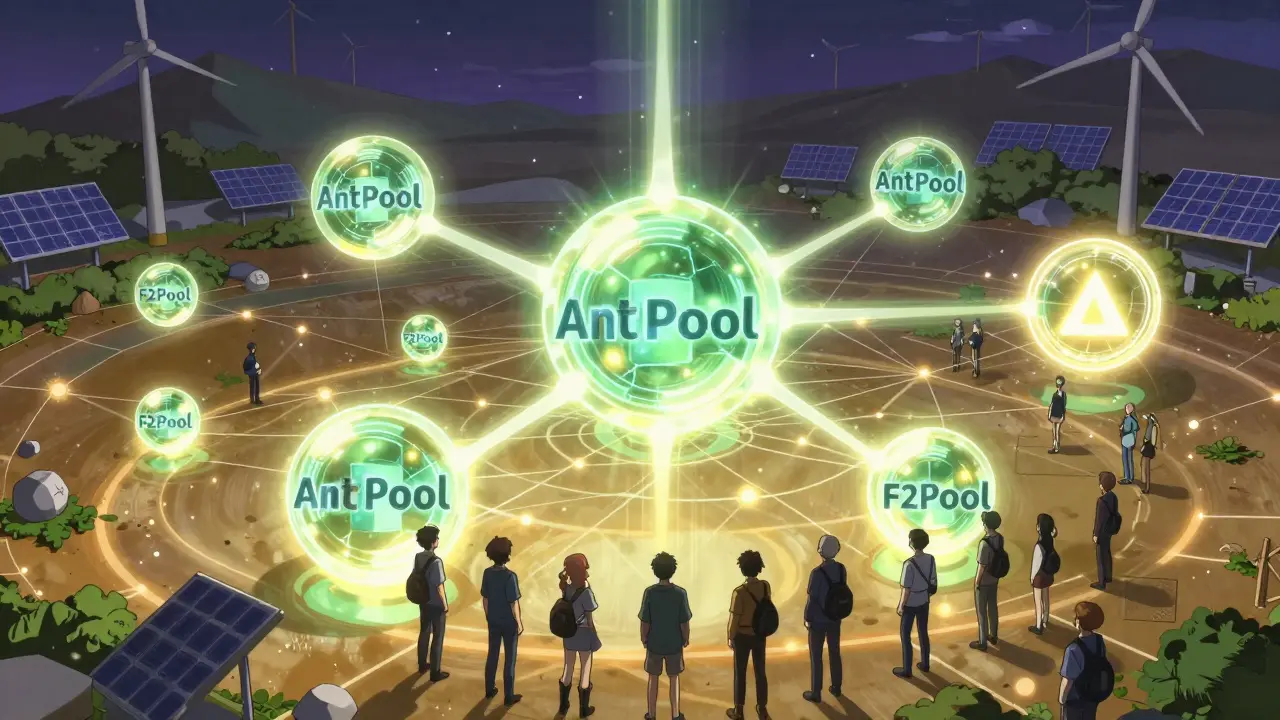
The environmental impact of mining remains a hot topic. However, the narrative is shifting from "mining is bad" to "mining can be green." Many pools are now partnering with renewable energy providers. Some even offer incentives for miners using solar, wind, or hydroelectric power.
This isn’t just PR. It’s economic. Renewable energy often provides cheaper long-term power contracts. Pools that help miners access these resources gain a competitive edge. Additionally, carbon-neutral mining certificates are becoming valuable assets for corporate clients who want to mine Bitcoin without damaging their ESG (Environmental, Social, and Governance) scores.
If you’re setting up a new farm, consider the energy source carefully. Regions with abundant geothermal or hydro power, like Iceland or parts of Canada, are seeing renewed interest. But proximity matters too. Transporting heat from immersion-cooled miners to nearby greenhouses or district heating systems can create additional revenue streams, offsetting operational costs.
Decentralization vs. Centralization Tensions
A persistent concern is the concentration of hash rate in a few large pools. If one pool controls more than 51% of the network, it could theoretically double-spend transactions. While no pool has come close to this threshold, the top three pools often control over 40% combined. This raises systemic risk.
To counter this, smaller, decentralized pools are emerging. They may have higher fees or less robust infrastructure, but they contribute to network health by distributing power. Some miners intentionally rotate between large and small pools to support decentralization. Others use software that automatically switches pools based on performance metrics.
The future likely holds a hybrid model. Large pools will continue to dominate due to economies of scale, but niche pools specializing in specific regions, currencies, or ethical standards will carve out loyal followings. Diversifying your pool participation can mitigate both financial and network-level risks.
What Should You Do Next?
Your strategy depends on your scale. If you’re a hobbyist with one or two rigs, prioritize ease of use and reliable payouts. Look for pools with good mobile apps and clear documentation. Don’t chase the lowest fee if it means dealing with constant downtime.
If you’re running a medium-sized operation (10-100 rigs), focus on efficiency and automation. Choose a pool with API access so you can monitor performance in real-time. Consider pools offering staking options to boost overall yield. Test different pools for a month each to see which performs best with your specific hardware and internet connection.
For large-scale operators, compliance and security are paramount. Ensure your pool partners have audited systems and clear legal frameworks. Negotiate custom fee structures if possible. Invest in redundancy-have backup pools ready to switch to instantly if your primary pool fails.
The mining pool industry is evolving fast. Stay informed, test rigorously, and never put all your hash rate in one basket. The miners who thrive in 2026 and beyond will be those who treat mining as a tech-driven business, not a lottery ticket.
Is solo mining still viable in 2026?
No, solo mining Bitcoin is virtually impossible for anyone without industrial-scale equipment. The network difficulty is too high, meaning the probability of finding a block alone is near zero. Most solo miners would wait years, if ever, to receive a reward, while paying electricity bills continuously. Joining a mining pool is essential for consistent returns.
Which mining pool is best for beginners?
For beginners, pools with simple interfaces and frequent payouts are ideal. F2Pool and AntPool are popular choices because they support many cryptocurrencies and have extensive guides. Look for pools using PPLNS (Pay Per Last N Shares) or FPPS (Full Pay Per Share) payout methods, as these are easier to understand. Avoid pools with complex minimum withdrawal thresholds or hidden fees.
How do mining pool fees affect my profits?
Mining pool fees typically range from 1% to 3%. While a lower fee seems better, it’s not the only factor. A pool with a 1% fee but high downtime or rejected shares will cost you more than a 2% fee pool with 99.9% uptime. Calculate your net profit after accounting for electricity, hardware depreciation, and actual received shares, not just advertised rewards.
Can I switch mining pools easily?
Yes, switching pools is usually straightforward. You simply change the stratum server address and worker name in your mining software configuration. However, be aware that some pools have unpaid balances that take time to reach the minimum payout threshold. Plan your switch around these cycles to avoid losing pending earnings. Also, ensure your wallet address is correct in the new pool to prevent sending funds to the wrong place.
What is the role of staking in modern mining pools?
Staking allows miners to earn additional rewards by locking up cryptocurrencies like Ethereum or Solana to validate transactions on Proof-of-Stake networks. Pools like F2Pool integrate this service, letting you mine Bitcoin and stake other tokens simultaneously. This diversifies income sources and improves overall profitability, especially during periods when Bitcoin mining rewards decrease due to halving events.