

Have you ever tried to save a digital file permanently on the blockchain, only to get hit with a gas fee that costs more than the file itself? That’s the exact problem The Immutable Network was built to solve. It uses its native token, DARA, to create a system where basic data storage is free, while premium features cost very little. But if you’ve been looking at the charts recently, you might be wondering: what happened to this project? Why is the price so different from what it was in 2021?
This guide breaks down exactly what Immutable (DARA) is, how its unique freemium model works, and what the current market reality looks like for investors. We’ll look past the hype and focus on the mechanics, the risks, and the actual utility of holding DARA today.
Key Takeaways
- DARA is a utility token for The Immutable Network, used for governance, paying for premium storage, and receiving profit shares.
- The core innovation is a freemium model: Basic IPFS storage is free; storing hashes on Ethereum or BSC costs small fees paid in DARA.
- Price volatility is extreme: DARA has dropped over 99% from its all-time high of $0.24 in late 2021, trading now in the fractions of a cent.
- Liquidity is low: Trading is mostly limited to PancakeSwap (DARA/WBNB), making large buys or sells difficult without slippage.
- Data discrepancies exist: Be careful when checking supply and market cap, as different trackers report conflicting numbers due to low activity.
What Is The Immutable Network?
To understand the coin, you first have to understand the platform. The Immutable Network is a decentralized infrastructure project focused on knowledge preservation and affordable data storage. Unlike many blockchain projects that charge users every time they interact with the network, Immutable flips the script. It offers a "freemium" structure similar to software services like Spotify or Dropbox, but applied to decentralized storage.
Here is how it works in practice:
- Free Tier: You can upload creative content-photos, text, artwork-to the InterPlanetary File System (IPFS) for free. This ensures your data is preserved globally without immediate cost.
- Premium Tier: If you want stronger proof of ownership or immutability, you can pay a small fee to store the IPFS hash on a major blockchain like Ethereum (ETH) or Binance Smart Chain (BSC).
This approach tackles one of the biggest barriers to blockchain adoption: complexity and cost. Most people don’t need enterprise-grade security for every photo they take, but they do want it for important documents or rare digital art. By letting users choose their level of security, Immutable makes blockchain accessible to everyday creators, not just tech experts.
The Role of the DARA Token
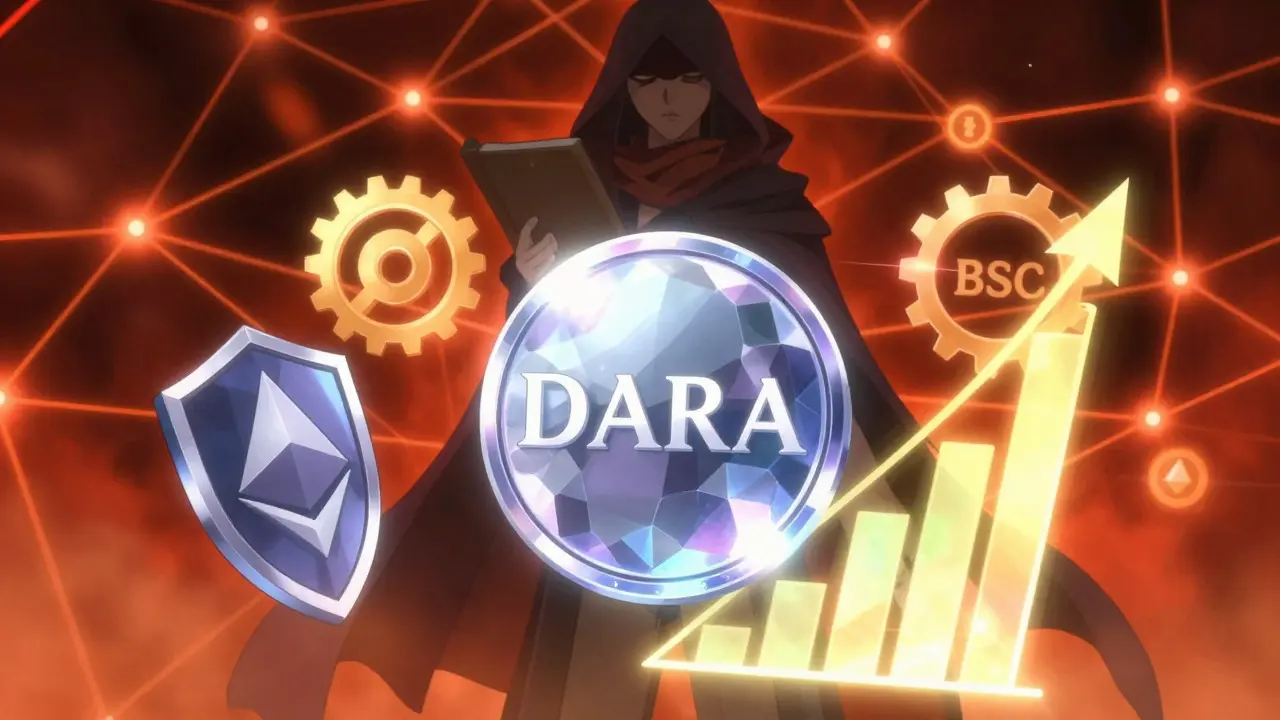
DARA is the native utility token of The Immutable Network. It isn’t just a speculative asset; it powers the ecosystem’s economy. Here are the three main jobs DARA does:
- Paying for Services: When you use the premium features mentioned above, you pay in DARA. This keeps transaction costs predictable and low, unlike ETH gas fees which can spike unpredictably.
- Governance Voting: The project runs as a Decentralized Autonomous Organization (DAO). DARA holders vote on new product developments, protocol updates, and fund allocations. Your stake gives you a say in the network’s future.
- Profit Sharing: Holders can receive rewards based on the network’s performance. This aligns the interests of the community with the success of the platform.
Additionally, the DAO manages a fund that starts with 10% of the total tokens vested over 12 months. This money pays for IPFS cluster infrastructure and funds third-party developers building on the network. In short, DARA acts as both fuel for the engine and the steering wheel for the direction.
DARA Price History and Market Reality
If you’re looking at DARA as an investment, you need to face the raw data. The token has experienced a dramatic decline since its peak. Let’s look at the numbers.
| Metric | Value / Status | Note |
|---|---|---|
| All-Time High (ATH) | $0.246577 | Recorded Nov 7, 2021 |
| Current Price Range | $0.0015 - $0.0032 | Varies by exchange (Binance vs. Dropstab) |
| Decline from ATH | ~99.36% | Significant loss of value |
| Recent Trend (30-90 days) | +10% to +28% | Modest recovery from lows |
| Market Cap Rank | #1899 - #14665 | Low ranking indicates niche status |
The discrepancy in current prices across platforms is a red flag for liquidity. On Binance, data shows DARA trading around $0.0032, while other aggregators like Dropstab list it closer to $0.0016. This gap exists because there aren’t enough buyers and sellers to stabilize the price across venues. Most volume happens on PancakeSwap (v2) via the DARA/WBNB pair. In fact, some reports show daily volumes as low as $3 USD on certain trackers, which means even a small trade could move the price significantly.
Why did it drop so much? The 2021 bull run saw many utility tokens priced on hope rather than usage. As the market cooled, projects without massive user adoption saw their valuations correct sharply. DARA’s recent slight uptick (around 28% over 90 days on some metrics) suggests some stabilization, but it remains far below its historical highs.
Supply, Liquidity, and Where to Buy
Before buying, you need to know where the token lives and how many exist. The official maximum supply is 42 million DARA tokens. However, some data sources report circulating supplies in the billions. This confusion often stems from data errors on smaller tracking sites or differences between circulating and total supply definitions. Always verify against primary sources or reputable aggregators like CoinGecko or CoinMarketCap, though even they may struggle with low-volume tokens.
Where can you actually buy it? Major centralized exchanges like Binance and Crypto.com currently do not list DARA for trading. This pushes most users to decentralized exchanges (DEXs). The primary venue is PancakeSwap on the Binance Smart Chain. You’ll need a wallet like MetaMask or Trust Wallet, some BNB for gas fees, and a way to swap WBNB for DARA.
The lack of CEX (Centralized Exchange) listing is a double-edged sword. It reduces accessibility for beginners, but it also means the token isn’t subject to the listing fees and delisting risks associated with smaller CEXs. However, it does mean you bear the full risk of smart contract interactions on the DEX.

Risks and Challenges for Investors
No crypto investment is without risk, and DARA presents several specific challenges you should weigh carefully.
- Low Liquidity: With thin order books, selling large amounts can cause significant slippage. You might sell at a price much lower than you expected.
- Bearish Sentiment: Technical analysis tools show DARA underperforming against BTC, ETH, and other DAO tokens. This suggests broader market confidence is still low.
- Data Transparency: Conflicting reports on market cap and supply make it hard to assess true valuation. Are there hidden wallets? Has inflation occurred? Without clear, unified data, due diligence is harder.
- Competition: The decentralized storage space is crowded. Projects like Arweave, Filecoin, and Ceramic offer similar solutions with deeper liquidity and larger ecosystems. Immutable must prove its freemium model attracts enough users to compete.
Furthermore, detailed information about the core development team’s current activity, GitHub commit frequency, or recent security audits is scarce in public records. For a mature project, this level of transparency is usually expected. Its absence doesn’t mean the project is dead, but it does mean you’re investing in vision more than visible momentum.
Is DARA Still Worth It?
That depends entirely on your goal. If you’re looking for a quick flip, the low liquidity and bearish trends make DARA a risky bet. The potential for gains is offset by the difficulty of exiting positions smoothly.
However, if you believe in the concept of accessible, permanent data storage, DARA offers a compelling utility. The freemium model solves a real pain point for creators who want blockchain benefits without blockchain headaches. If The Immutable Network successfully grows its user base and integrates more third-party developers through its DAO fund, the demand for DARA could rise organically.
For now, treat DARA as a high-risk, high-reward speculative play on decentralized infrastructure. Only invest what you can afford to lose, and always check the latest live data before executing any trades.
What is the current price of DARA?
As of mid-2026, DARA trades in a volatile range between $0.0015 and $0.0032 USD. Prices vary significantly depending on whether you check centralized aggregators or decentralized exchanges like PancakeSwap. Always check multiple sources before trading.
Can I buy DARA on Binance?
No, DARA is not currently listed on Binance for spot trading. Most users acquire it via PancakeSwap using Wrapped BNB (WBNB) on the Binance Smart Chain network.
What is the total supply of DARA tokens?
The official maximum supply is 42 million DARA tokens. However, some data trackers report higher circulating figures due to reporting errors or differing definitions of supply. Verify with primary project documentation.
How does The Immutable Network differ from Filecoin or Arweave?
Unlike Filecoin or Arweave, which typically charge for all storage operations, The Immutable Network uses a freemium model. Basic IPFS storage is free, while optional blockchain verification (hash storage on ETH/BSC) incurs small fees paid in DARA. This aims to lower the barrier to entry for casual users.
Is DARA a good long-term investment?
DARA carries high risk due to low liquidity, significant price depreciation from its all-time high, and strong competition. It may be suitable for long-term believers in decentralized storage infrastructure who can tolerate volatility, but it is not considered a stable or blue-chip asset.
What happens to the DARA tokens held by the DAO?
10% of the token supply is vested over 12 months into a DAO Fund. These tokens are used to pay for IPFS infrastructure costs and to fund new products proposed by third-party developers, acting as a decentralized incubator budget.