

Have you ever wondered how traditional financial assets could live entirely on the blockchain? That’s the core promise behind DEUS Finance, a decentralized fintech platform designed to bridge real-world assets with digital currency. But what exactly is the DEUS token, and why does it matter in today’s crypto landscape?
Unlike many projects that rely on hype, DEUS Finance operates on a unique fractional reserve model. It uses two tokens-DEUS and DEI-to create a self-sustaining ecosystem for asset tokenization, trading, and governance. If you’re looking to understand whether this project has staying power, you need to look past the price charts and into the mechanics of how these tokens interact.
The Core Concept: Asset Tokenization
At its heart, DEUS Finance isn’t just another meme coin or speculative asset. It’s infrastructure. The platform aims to help users transpose any digitally verifiable asset securely onto the blockchain. Think of things like invoices, intellectual property rights, or even physical commodities represented by digital certificates.
This process is called asset tokenization. By turning these assets into ERC20 tokens, they become tradable, divisible, and accessible to anyone with an internet connection. DEUS Finance provides the base-layer contracts and SDK readiness for third-party developers to build upon this infrastructure. This means exchanges, DeFi protocols, and financial service providers can integrate directly into the DEUS layer without building everything from scratch.
Understanding the Two-Token Model: DEUS and DEI
The most critical part of understanding DEUS Finance is recognizing that it relies on a dual-token system. These aren’t separate projects; they are deeply interconnected gears in the same machine.
DEI is the stablecoin of the ecosystem. It’s denominated with fractional-reserve backing from both USDC (a major fiat-backed stablecoin) and DEUS tokens. DEI serves as collateral for third-party instruments and money markets built on the protocol. Its goal is stability and utility across chains.
DEUS is the native currency and liquidity provider. It functions as the volatile, appreciating asset within the system. Here is where it gets interesting: DEUS represents the fractional portion of DEI. This relationship creates a deflationary mechanism for DEUS holders.
| Feature | DEUS Token | DEI Stablecoin |
|---|---|---|
| Primary Role | Governance, Liquidity, Value Store | Collateral, Trading Medium, Stability |
| Backing | Fractional reserve of DEI + Market Demand | USDC and DEUS tokens |
| Supply Dynamics | Deflationary (Burned when DEI is minted) | Elastic (Minted/Redeemed based on demand) |
| Volatility | High (Subject to market forces) | Low (Targeted stability) |
How the Deflationary Mechanism Works
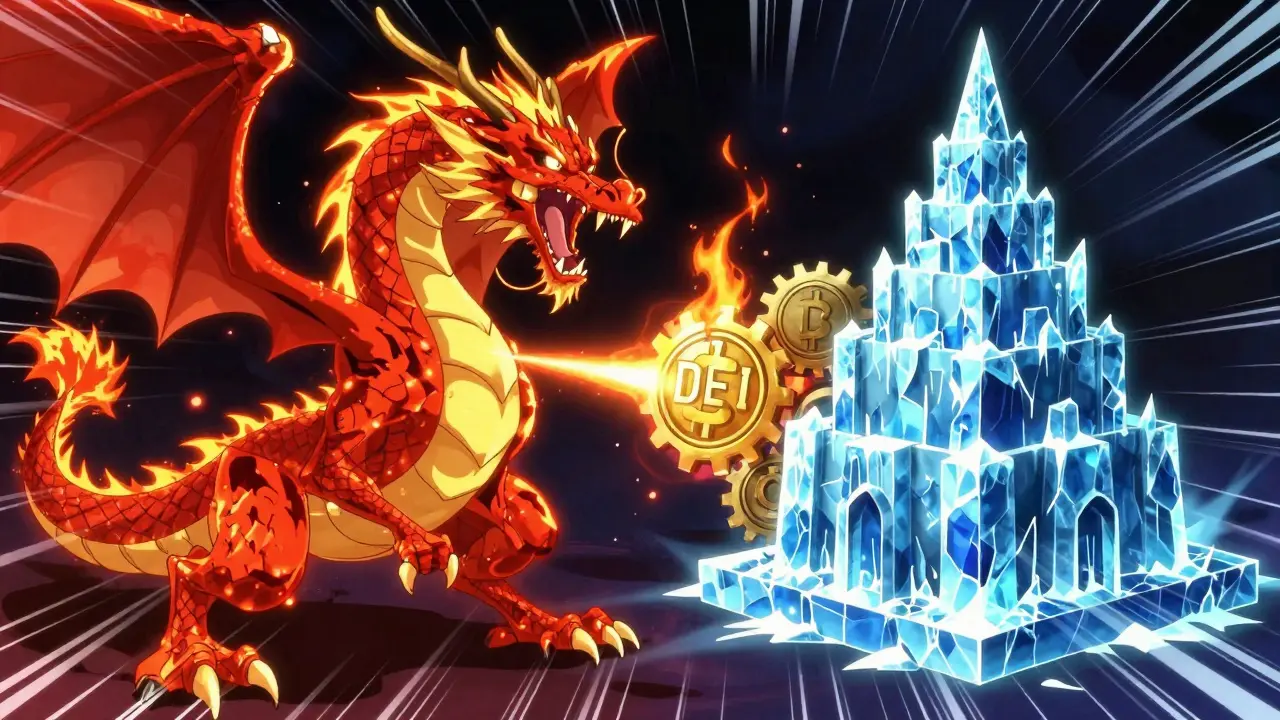
You might be asking, "Why does DEUS burn when DEI is minted?" This is the engine of the project’s economics. When users want to enter the ecosystem, they mint DEI stablecoins. To do this, they must provide collateral, which includes DEUS tokens. A portion of those DEUS tokens is permanently burned.
Conversely, when users redeem their DEI back into underlying assets, new DEUS tokens are minted. However, the design intent is for demand for DEI to scale as more financial instruments are built on the platform. As more people use DEI for trading, lending, and payments, more DEUS is burned than minted. This creates upward pressure on the value of DEUS over time, assuming the ecosystem grows.
This inverse relationship ties the success of the stablecoin directly to the scarcity of the governance token. It aligns incentives: if you hold DEUS, you benefit from the growth of the entire DEUS Finance network.
Governance and veDEUS: Power Through Locking
In decentralized finance, who controls the protocol matters. DEUS Finance uses a Decentralized Autonomous Organization (DAO) to govern development, security, and operational expenses. But not all token holders have equal say.
To participate in governance, you need veDEUS. This is a vested version of the DEUS token. You get veDEUS by locking your DEUS tokens for a specific period, ranging from one day up to four years. The longer you lock, the more voting power and rewards you receive.
Why would someone lock their tokens? There are two main benefits:
- Voting Rights: veDEUS holders vote on major protocol decisions, including fee structures, treasury management, and future upgrades.
- Fee Sharing: Locking tokens gives you exposure to platform fees. This acts as a protection against dilution and provides a passive income stream for long-term believers.
This mechanism encourages long-term commitment rather than quick speculation. It ensures that those making decisions about the protocol’s future have a significant stake in its success.
The Roadmap: Apollo, Athena, and Vulcan
A project’s roadmap tells you where it’s going. DEUS Finance has outlined several key iterations that show a clear path toward becoming a comprehensive financial infrastructure layer.
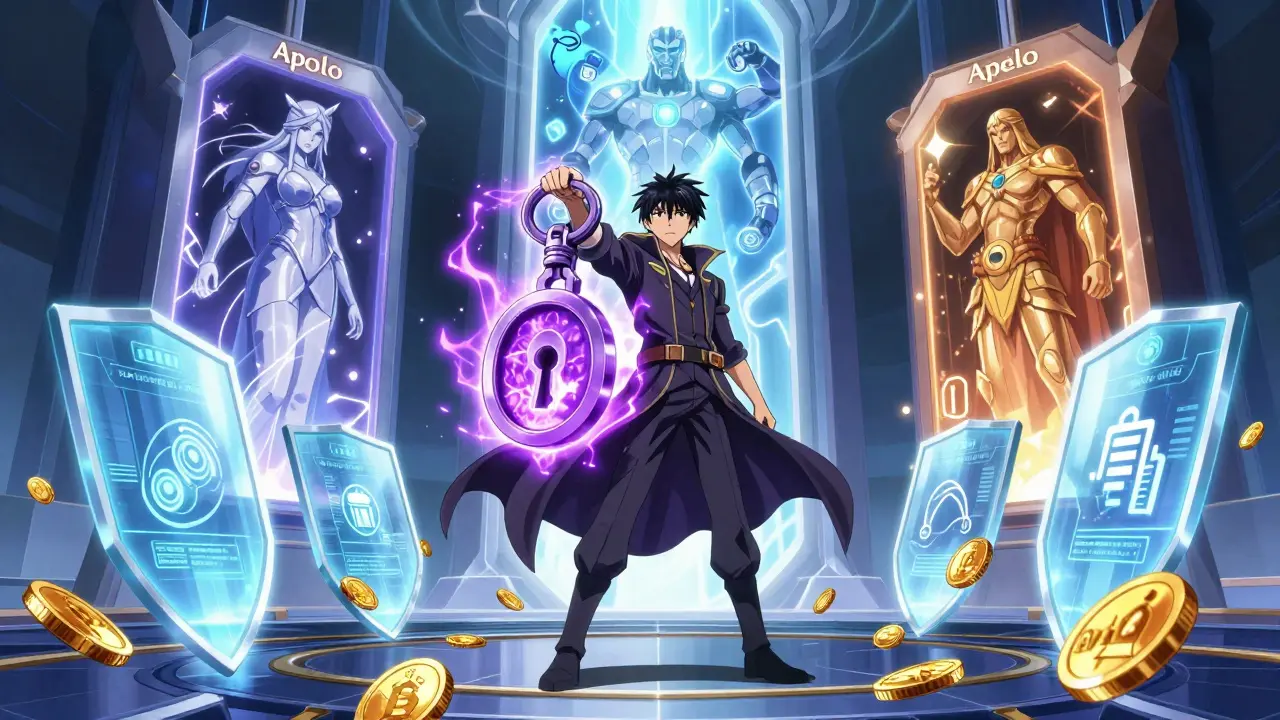
Version 2: Apollo focuses on expansion. It introduces DEI as a cross-chain stablecoin with a unified native bridge. This allows users to farm DEI/Stablecoin pairs on multiple chains, offering high APY without the risk of impermanent loss common in other DeFi pools. It also converges DEUS tokens across different environments.
Version 3: Athena brings automation. This release includes automated counter-trading and auto-rebalancing features to optimize yields. Crucially, it introduces a liquidation system with keeper bots. In DeFi, liquidations happen when collateral values drop too low. Keeper bots automate this process, improving capital efficiency and reducing the burden on individual users.
Version 4: Vulcan targets incentives and leverage. It implements a targeted incentive system allowing partners to integrate reward-sharing programs. This includes customizable referral systems and payout mechanisms. Most importantly, it enables advanced leverage trading with stop-loss and limit orders, integrating with third-party exchange brokers. This moves DEUS Finance closer to traditional trading experiences while maintaining decentralization.
Decentralized FIX and Third-Party Integration
One of the most technical but powerful aspects of DEUS Finance is the Decentralized FIX protocol. FIX stands for Financial Information eXchange, a standard used in traditional banking for trade execution.
By creating a decentralized version of this, DEUS Finance allows third-party exchanges, market makers, and traders to issue Master Agreements on the blockchain. This enables a permissionless, modular, peer-to-peer over-the-counter derivatives market. Essentially, it allows professional-grade financial instruments to be traded openly and transparently using smart contracts.
This infrastructure is what makes the "tokenization" promise real. It’s not just about storing assets; it’s about enabling complex financial interactions around them.
Price Volatility and Market Context
As with any cryptocurrency, the price of DEUS can be volatile. Data from early 2026 showed significant fluctuations, with prices ranging between $2.70 and $9.00 depending on the exchange and timing. Longer-term trends indicated declines over 60 and 90-day periods, reflecting broader market corrections.
It’s important to note that DEUS has a static phase mechanism. This was designed to act as an appreciation bonus for early supporters and allow new buyers to evaluate the project without immediate pressure from rising prices. The market price is algorithmically determined based on the quantity of Ethereum locked in the DEUS treasury.
Don't confuse DEUS Finance with Deus X Pay. Deus X Pay is a separate, regulated institutional solution for processing crypto transactions for businesses. They share a similar name but operate in completely different spaces. DEUS Finance is a public, decentralized protocol; Deus X Pay is a private B2B service.
Is DEUS Finance Right for You?
If you are interested in deep tech, governance participation, and the intersection of traditional finance with blockchain, DEUS Finance offers a compelling structure. The deflationary tokenomics and veDEUS governance model reward patience and active involvement.
However, it requires more than just buying a token. To fully benefit, you need to understand how to mint DEI, how to lock DEUS for governance, and how to navigate the risks associated with leveraged trading and smart contract dependencies. Always do your own research and consider starting with small amounts to test the waters before committing significant capital.
What is the difference between DEUS and DEI?
DEUS is the volatile governance and liquidity token of the ecosystem, while DEI is the stablecoin backed by USDC and DEUS. DEUS is burned when DEI is minted, creating a deflationary effect for DEUS holders.
How do I earn rewards with DEUS Finance?
You can earn rewards by locking DEUS tokens to receive veDEUS, which grants you a share of platform fees. Additionally, you can provide liquidity through DEUS Vaults or farm DEI/Stablecoin pairs on supported chains.
Is DEUS Finance safe?
DEUS Finance uses audited smart contracts and oracle-verified infrastructure. However, all DeFi projects carry inherent risks, including smart contract vulnerabilities and market volatility. Always verify current audit status and never invest more than you can afford to lose.
What is veDEUS?
veDEUS is the vested form of the DEUS token obtained by locking DEUS for a set period (up to 4 years). It serves as the governance token, allowing holders to vote on protocol changes and receive a portion of the platform's fees.
Can I trade DEUS on centralized exchanges?
Where can I buy DEUS tokens?
DEUS tokens are available on various decentralized exchanges (DEXs) and some centralized platforms. You typically acquire them by swapping Ethereum or other supported assets via open-source smart contracts or through partnered exchanges.




Author
I'm a blockchain analyst and active trader covering cryptocurrencies and global equities. I build data-driven models to track on-chain activity and price action across major markets. I publish practical explainers and market notes on crypto coins and exchange dynamics, with the occasional deep dive into airdrop strategies. By day I advise startups and funds on token economics and risk. I aim to make complex market structure simple and actionable.