


Remember when everyone said artificial intelligence and decentralized finance were going to merge into something magical? That was the promise of DeFAI, a term that became shorthand for using AI agents to automate trading, staking, and yield farming. It sounded like the future. But not every project in this space made it.
DeFAIRewards (DEFAI) is one such project. It launched with big claims about autonomous AI agents optimizing yields on the Ethereum blockchain. Today, however, it sits as a cautionary tale rather than a market leader. If you are holding DEFAI or considering buying it, you need to look past the buzzwords and see the cold, hard data. This isn't just about price; it's about whether the project actually exists in any meaningful way.
The Promise vs. The Reality of DeFAIRewards
DeFAIRewards is tied to a platform called Eliza.Finance. On paper, the idea is solid. The team claimed their "AI-driven agents" would manage risk and provide seamless cross-pool liquidity. In theory, you deposit crypto, and an AI bot works harder than you ever could to squeeze out extra yield. This fits perfectly into the DeFAI narrative that exploded in late 2023 and 2024.
But here is the problem: promises don't pay bills, and they certainly don't move markets. While top-tier projects in this sector published detailed whitepapers, open-source code on GitHub, and regular developer updates, DEFAI remained silent. There are no technical specifications. There is no API documentation. There are no case studies showing how much money these "agents" actually made for users. When you visit their website, you find generic marketing speak, but nothing concrete. For a project claiming to use advanced AI, the lack of technical proof is a massive red flag.
Market Data: A Steep Decline
Let’s talk numbers, because they tell the story better than any press release. DEFAI is an ERC-20 token with a fixed supply of 1 billion tokens. All of them are in circulation. That means there is no inflation, but there is also no new demand being created by unlocks or emissions.
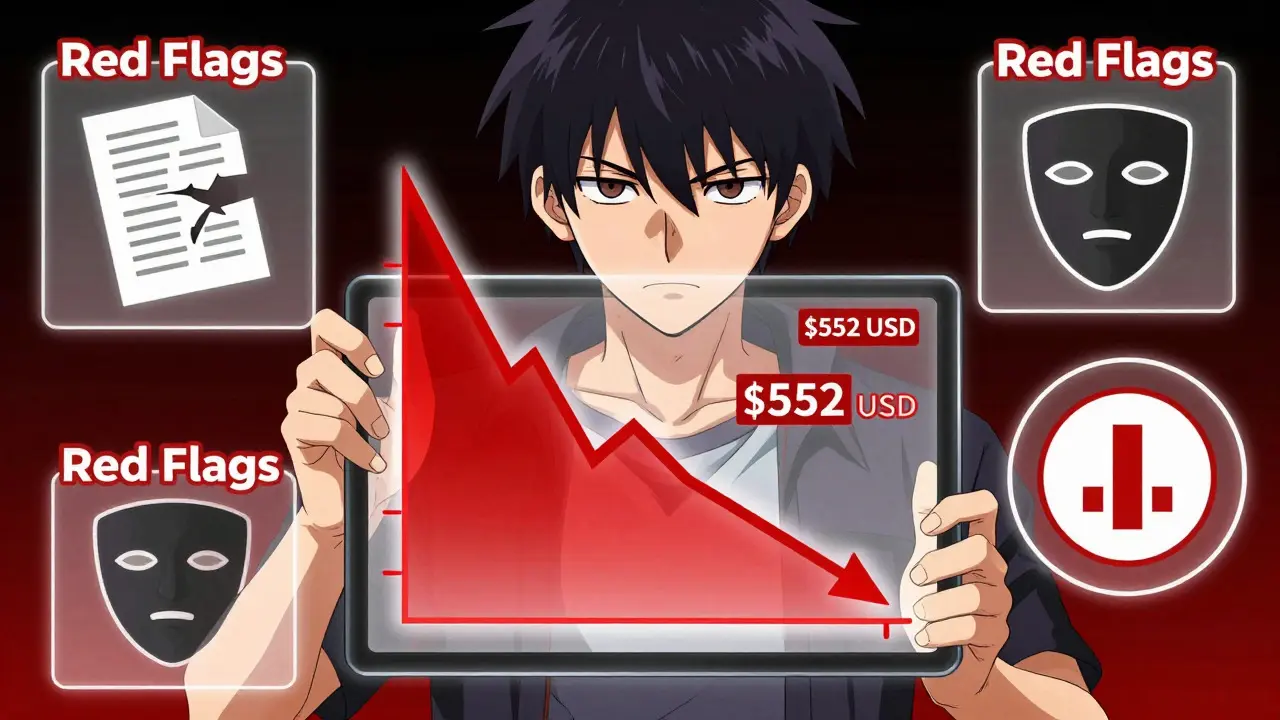
The price action has been brutal. In January 2025, DEFAI hit an all-time high of roughly $0.0097. By August 2025, it had crashed to an all-time low of $0.000078. As of mid-2026, it trades around $0.000063. That is a drop of over 99% from its peak. To put that in perspective, if you bought $1,000 worth at the top, you would have less than $7 left today.
| Metric | Value |
|---|---|
| All-Time High | $0.009748 (Jan 2025) |
| All-Time Low | $0.000078 (Aug 2025) |
| Current Price Range | $0.000063 - $0.000082 |
| Market Cap | ~$51,000 USD |
| 24-Hour Volume | ~$552 USD |
| CoinMarketCap Rank | #3276 |
Look at that trading volume. Five hundred dollars a day. That is barely enough to cover gas fees for serious traders. It indicates that almost no one is buying or selling. Liquidity is thin, which means if you try to sell a large amount, you will likely crash the price further. This is what analysts call a "zombie token"-it’s technically alive, but it has no pulse.
How DEFAI Compares to Real DeFAI Leaders
You can’t judge a fish by its ability to climb a tree, and you shouldn’t judge DEFAI against Bitcoin. You should judge it against other DeFAI tokens. And here, it fails miserably.
The DeFAI sector is dominated by projects that actually deliver. Tokens like AIXBT, GRIFFAIN, and ANON have market caps in the hundreds of millions. They have active communities, real users, and verifiable AI integrations. Even smaller players like ChainGPT have transparent development histories and thousands of GitHub commits.
DEFAI has none of this. Its market cap of $51,000 represents 0.003% of the total DeFAI sector. It is statistically invisible. When industry analysts write reports on DeFAI trends, DEFAI doesn’t even make the footnote. It’s not that it’s struggling; it’s that it’s irrelevant. The gap between DEFAI and the leaders isn't just a difference in price; it's a difference in existence.
The Community Void
In crypto, community is oxygen. Without it, projects suffocate. Check the socials for Eliza.Finance. Their Twitter account has fewer than 2,500 followers, and tweets get three likes. Reddit discussions about DEFAI are rare, and when they do appear, they’re usually warnings. Users have labeled it a "low-cap trap" and "another dead AI token."
Compare that to successful projects where Telegram groups have over 100,000 members and Discord servers are buzzing with support tickets and feature requests. DEFAI has no support infrastructure. No customer service channels. No roadmap updates since early 2025. The developers seem to have moved on, leaving the token to drift in the void.
Is There Any Hope for Recovery?
It’s natural to hope for a miracle pump. Maybe a whale buys the whole supply? Maybe the team announces a major partnership tomorrow? These things happen in crypto, but they are increasingly rare for tokens with zero fundamentals.
For DEFAI to recover, it needs more than luck. It needs a catalyst. A new product launch. A listing on a major exchange. A viral moment. None of these are on the horizon. The team is anonymous (branding themselves as "Hey Anon"), which often leads to rug pulls or abandonment when hype dies. With no public figures attached and no code to audit, there is nothing to rebuild trust upon.
If you hold DEFAI, ask yourself: why? Is it sunk cost fallacy? Are you hoping to break even? Or do you genuinely believe in the technology? If it’s the latter, I’d suggest looking at the competitors who are actually building the tech. If it’s the former, be prepared for the possibility that this capital may never return.
Red Flags to Watch For
If you are exploring other low-cap AI tokens, DEFAI offers a masterclass in what to avoid. Here are the specific red flags that define its current state:
- No Technical Documentation: No whitepaper, no GitHub, no API docs. How do you know the AI works if you can’t see the code?
- Anonymous Team: While common in crypto, it becomes dangerous when combined with zero activity.
- Negligible Volume: Less than $1,500 daily volume means you might not be able to exit your position without slippage.
- Social Silence: Inactive social media for over six months is a sign of death, not dormancy.
- Price Decay: A consistent downward trend with no recovery attempts shows a lack of buyer interest.
These aren't just minor issues. They are structural failures. A project can have a bad week. It can have a bad month. But a project with no community, no code, and no volume has no future.
Conclusion: Move On
DeFAIRewards (DEFAI) is a relic of the early DeFAI hype cycle. It captured the imagination briefly but failed to deliver substance. In the fast-moving world of crypto, failure to execute is fatal. The sector is growing, yes, but the growth is flowing to projects that show results, transparency, and engagement.
If you are interested in AI and DeFi, there are plenty of healthy options. Look for projects with open-source code, active development teams, and real user metrics. Don't let the name "DeFAI" fool you. Not all tokens in the category are created equal. Some are leaders. Some are followers. And some, like DEFAI, are ghosts.
What is the current price of DEFAI?
As of mid-2026, DEFAI trades between $0.000063 and $0.000082 USD. This is a significant drop from its all-time high of $0.0097 in January 2025.
Is DeFAIRewards a scam?
While not officially labeled a scam, it exhibits many characteristics of abandoned projects. The anonymous team, lack of technical documentation, and negligible trading volume suggest it is effectively dormant. Investors should exercise extreme caution.
What blockchain does DEFAI run on?
DEFAI is an ERC-20 token built on the Ethereum blockchain. This means it requires ETH for gas fees to transfer or interact with smart contracts.
Who is behind Eliza.Finance?
The team behind Eliza.Finance and DEFAI remains anonymous, using the branding "Hey Anon." This lack of identity makes accountability difficult and increases risk for investors.
Should I buy DEFAI now?
Most analysts advise against buying DEFAI due to its extremely low liquidity, lack of development activity, and poor performance compared to other DeFAI tokens. It is considered a high-risk, low-reward asset.