
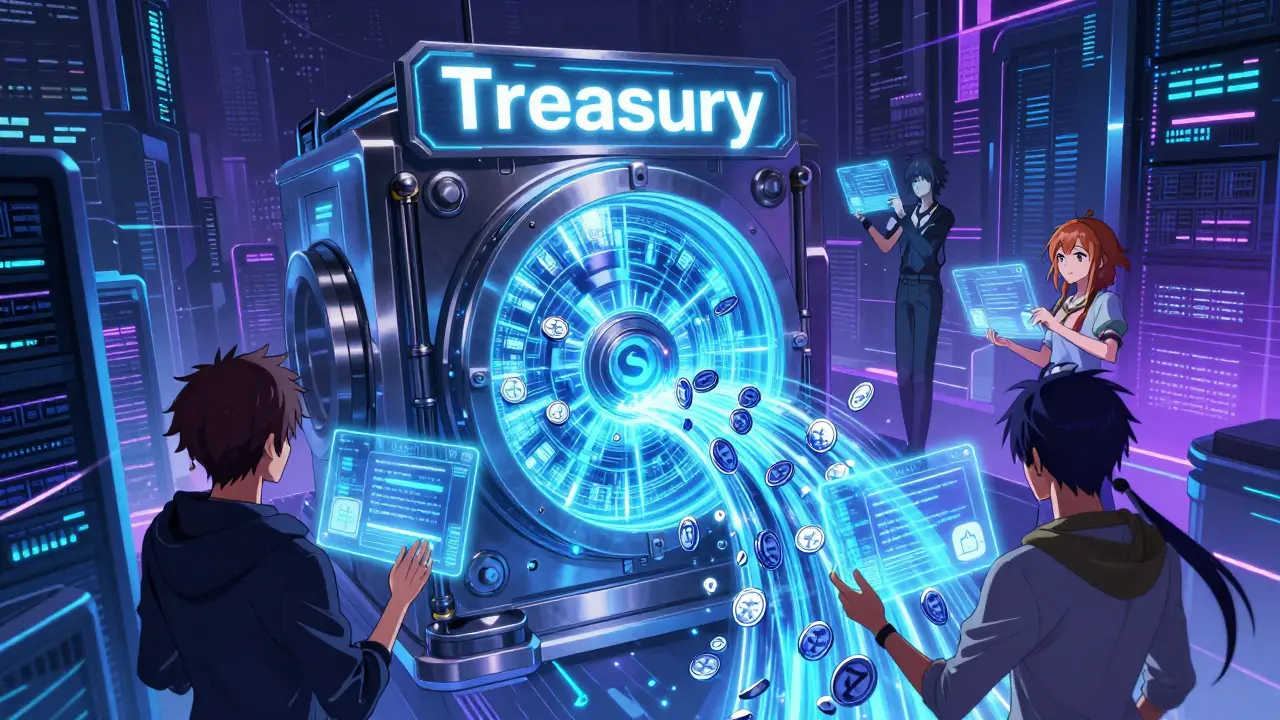
Imagine a cryptocurrency that pays you in stablecoins just for holding it. That is the promise of Automatic Treasury Machine, often branded as ATMsolcoin and trading under the ticker ATM. It is a decentralized token built on the Solana blockchain that uses an automated treasury system to distribute USDC (USD Coin) rewards to holders every five minutes. The concept sounds like passive income heaven, but before you buy, you need to understand exactly how this machine works, where the money comes from, and why it carries significant risk.
This article breaks down the mechanics, tokenomics, and hidden dangers of ATM. We will look at real data from aggregators like CoinGecko and CoinMarketCap to give you a clear picture of what you are getting into. This is not financial advice; it is a factual guide to help you make an informed decision about this specific asset.
How Does Automatic Treasury Machine Work?
The core innovation-or gimmick, depending on your view-of ATM is its automatic redistribution mechanism. Unlike traditional staking where you lock up tokens to earn interest, ATM works through transaction taxes. Here is the step-by-step process:
- You Buy or Sell: Every time you trade ATM, whether buying or selling, the protocol charges a 5% tax on the total transaction value.
- Treasury Collection: This 5% fee is collected by the smart contract’s treasury.
- Conversion to Stablecoin: The treasury automatically converts these fees into USDC, a regulated stablecoin pegged to the US dollar. This is done via decentralized exchanges on Solana.
- Automatic Distribution: Approximately every five minutes, the contract distributes the accumulated USDC proportionally to all ATM token holders.
You do not need to click "claim" or stake your tokens. If you hold ATM in your wallet, the USDC appears in your balance automatically. This relies heavily on Solana’s low transaction fees. On Ethereum, sending micro-transactions to thousands of holders would cost more in gas fees than the rewards themselves. On Solana, with fees often under $0.001, this high-frequency distribution model is technically feasible.
Tokenomics and Supply Details
Understanding the supply helps you gauge scarcity and potential inflation. ATM has a fixed supply, which means no new tokens are minted after launch. Here are the key metrics based on data from major aggregators:
| Attribute | Value / Detail |
|---|---|
| Blockchain | Solana (SPL Token) |
| Total Supply | 999,990,000 - 1,000,000,000 ATM |
| Max Supply | 999,990,000 ATM (Fixed) |
| Transaction Tax | 5% (Buy and Sell) |
| Reward Currency | USDC (USD Coin) |
| Distribution Frequency | Every ~5 minutes |
The fixed supply suggests that the project does not rely on inflationary minting to fund rewards. Instead, the rewards come entirely from the volume of trades. This creates a direct link between trading activity and yield: if people stop trading, the rewards stop flowing.
Price, Liquidity, and Market Reality
Here is where things get tricky. ATM is classified as a micro-cap cryptocurrency. Its market capitalization is extremely small, often hovering around $10,000 to $15,000 (or roughly 0.27 BTC). To put that in perspective, major Solana tokens like SOL have market caps in the billions.
Liquidity is thin. Daily trading volumes on platforms like CoinGecko and CoinMarketCap sometimes show near-zero volume. When liquidity is this low, even a small buy order can spike the price, and a small sell order can crash it. You might see prices quoted around $0.00005 or lower, but these numbers change drastically with minimal volume.
If you try to sell a large amount of ATM, you may face high slippage. Slippage is the difference between the expected price and the executed price. In a pool with only a few thousand dollars of liquidity, selling $100 worth of ATM could drop the price significantly, meaning you get back less USDC than you anticipated.

Security Risks: The Unaudited Contract Problem
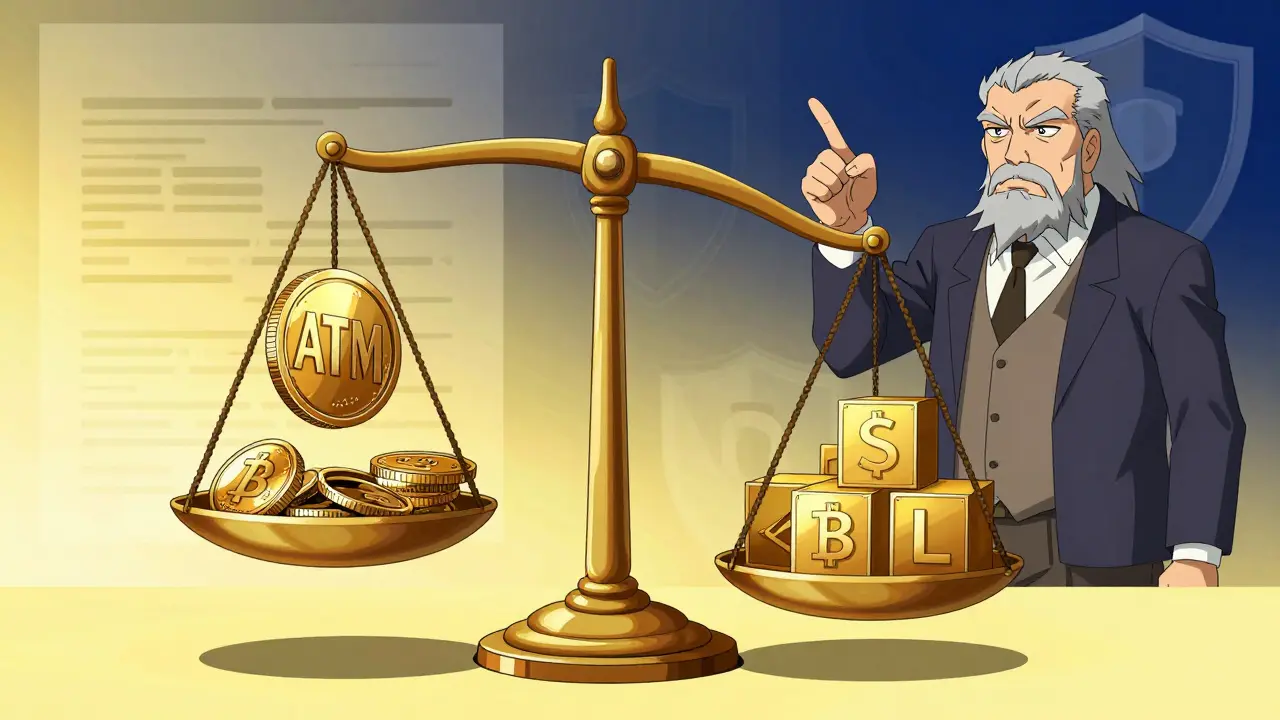
This is the most critical section for your safety. As of 2026, there is no public record of a formal smart contract audit for Automatic Treasury Machine from reputable firms like CertiK, Trail of Bits, or Quantstamp.
Why does this matter? An unaudited contract means you cannot verify:
- Admin Privileges: Can the developer change the 5% tax rate to 100% tomorrow? Can they blacklist your wallet so you cannot sell?
- Upgradeability: Is the contract immutable, or can the creator update the code to drain the treasury?
- Code Flaws: Are there bugs that could allow hackers to steal the USDC reserves?
In the world of DeFi, "trust me bro" is not a security strategy. Without open-source code verification or an audit report, you are trusting the anonymous developers completely. Rug pulls-where developers withdraw all liquidity and disappear-are common in this sector. While ATM has been active for some time, the lack of transparency remains a persistent red flag.
Regulatory Concerns
Regulators like the U.S. Securities and Exchange Commission (SEC) and the UK’s Financial Conduct Authority (FCA) have been cracking down on tokens that promise profits solely from the efforts of others. The marketing language around ATM-"passive income," "automatic rewards"-mirrors the phrasing used in projects previously flagged as unregistered securities.
If regulators decide that ATM is a security, centralized exchanges could delist it, and legal action could freeze assets. This adds a layer of legal risk on top of the technical risks. Always check your local regulations before engaging with such assets.
How to Buy ATM (If You Choose To)
If you accept the risks and want to proceed, here is how you typically acquire ATM. Note that ATM is not listed on major tier-1 centralized exchanges like Coinbase Pro or Binance Spot. You must use decentralized methods or smaller exchanges.
- Get a Solana Wallet: Install a wallet like Phantom or Solflare. Secure your seed phrase offline.
- Fund with SOL or USDC: Buy SOL or USDC on a major exchange and transfer it to your wallet.
- Connect to a DEX: Use a Solana-based decentralized exchange like Raydium or Orca. Alternatively, check if LBank (a smaller centralized exchange) has listed ATM, as per recent announcements.
- Swap for ATM: Search for the ATM token address. Double-check the contract address to avoid fake tokens. Execute the swap, accepting the 5% tax.
Remember, once you buy, your funds are in your wallet. There is no customer support to call if something goes wrong.
Comparison: ATM vs. Traditional Yield Farming
How does ATM stack up against other ways to earn crypto yields?
| Feature | Automatic Treasury Machine (ATM) | Aave/Lending Protocols | Solana Staking |
|---|---|---|---|
| Risk Level | Very High (Unaudited, Micro-cap) | Medium (Audited, Established) | Low (Protocol Native) |
| Yield Source | Transaction Taxes | Borrower Interest | Block Rewards |
| Liquidity | Very Low | High | High |
| Audit Status | None Publicly Available | Multiple Audits | Core Protocol Audited |
| Potential Return | High (but unsustainable) | Moderate | Stable (~6-8%) |
ATM offers the allure of high returns without locking up your principal, but it lacks the fundamental stability of lending protocols or native staking. The yield is dependent on speculative trading volume, not real-world utility or debt obligations.
Conclusion: Is ATM Worth It?
Automatic Treasury Machine is a speculative experiment in automated rewards on Solana. It works technically, distributing USDC to holders regularly. However, it suffers from extreme illiquidity, lack of security audits, and regulatory ambiguity.
If you are looking for safe, long-term wealth preservation, ATM is likely not for you. If you are an experienced trader willing to gamble small amounts on high-risk, high-reward micro-caps, you might find opportunities here. But never invest more than you can afford to lose entirely. The absence of a team, roadmap, or audit means the project could vanish overnight.
Is Automatic Treasury Machine (ATM) a scam?
There is no definitive proof that ATM is a scam, as it has functioned and distributed rewards for some time. However, it exhibits many characteristics of high-risk speculative tokens: no public audit, anonymous team, and low liquidity. These factors increase the risk of a rug pull or manipulation, so treat it with extreme caution.
How do I claim my USDC rewards from ATM?
You do not need to claim them manually. The smart contract automatically distributes USDC to your wallet address approximately every five minutes, provided you hold ATM tokens during those intervals. Check your Solana wallet balance for USDC.
Can I buy ATM on Coinbase or Binance?
No, ATM is not listed on major centralized exchanges like Coinbase or Binance Spot. You must use decentralized exchanges (DEXs) on Solana like Raydium or Orca, or smaller centralized exchanges like LBank if available.
What happens if trading volume drops to zero?
If no one buys or sells ATM, the 5% transaction tax generates no revenue. Consequently, the treasury cannot buy USDC, and rewards will stop. Your yield is directly tied to the speculative activity of other traders.
Is the ATM token supply infinite?
No, the total supply is fixed at approximately 1 billion tokens. This means the project does not inflate the supply to pay rewards; it relies solely on transaction fees.
Why is the price of ATM so volatile?
ATM has very low liquidity and a tiny market cap. Small trades can move the price significantly. Additionally, because it is a speculative asset with no underlying utility, price movements are driven purely by sentiment and hype rather than fundamentals.
Has ATM been audited by a security firm?
As of 2026, there is no publicly available audit report from recognized firms like CertiK or Trail of Bits. This is a major security risk, as you cannot verify the integrity of the smart contract code.
What is the difference between ATM and SafeMoon?
Both are reflection/reward tokens. However, SafeMoon originally operated on BSC/Ethereum and rewarded in its own token. ATM operates on Solana and rewards in USDC (a stablecoin), aiming to reduce volatility in payouts. ATM also has a lower 5% tax compared to SafeMoon's historical 10%.