


Imagine trying to buy a coffee with a dollar bill that the government says you’re not allowed to touch. That’s essentially what happened to Tornado Cash, a non-custodial Ethereum-based cryptocurrency mixer designed to obscure transaction trails. For years, using this tool felt like walking on thin ice for anyone in the United States. But as of March 2025, the ice cracked, and the Treasury Department officially lifted sanctions against its smart contracts. If you’ve been wondering whether you can finally use privacy tools without looking over your shoulder, or if you’re just curious how a piece of code ended up on a terrorist watchlist, you’re in the right place. This isn’t just legal trivia; it changes how we think about money, privacy, and who gets to control the digital rails.
What Exactly Is Tornado Cash?
Before we get into the legal drama, let’s clear up what the tech actually does. Tornado Cash is a decentralized application (dApp) launched in August 2019 by Roman Semenov and Roman Storm. Think of it as a digital blender for your crypto. You deposit Ether into a smart contract, and later, you withdraw it from a different address. The link between your input and output gets broken on the public ledger, making it hard for outsiders to trace where your money came from or went.
This process relies on zero-knowledge proofs, a cryptographic method that lets you prove you own the funds without revealing which specific deposit they belong to. It’s like putting cash in an envelope, mixing it with other envelopes, and then taking out a new envelope with the same amount inside. Nobody knows which original bill was yours. Since its launch, the protocol processed over $7.6 billion worth of Ether. While privacy enthusiasts loved it, regulators watched nervously because bad actors also love anonymity.
Why Did the US Government Sanction It?
In August 2022, the U.S. Department of the Treasury’s Office of Foreign Assets Control (OFAC) slapped Tornado Cash onto the Specially Designated Nationals (SDN) list. This was a huge deal. It meant any American interacting with Tornado Cash’s addresses was technically breaking the law. Why? Because OFAC claimed the mixer helped launder more than $7 billion in crypto, including funds stolen by North Korea’s Lazarus Group after the Axie Infinity hack.
The government argued that Tornado Cash failed to implement basic anti-money laundering controls. They pointed to hacks like the Harmony Bridge heist ($96 million) and the Nomad Heist ($7.8 million), noting that significant portions of these stolen funds passed through Tornado Cash. For compliance teams at exchanges like Coinbase or Binance, this created a nightmare. Should they block users who had ever touched those addresses? Many did, freezing accounts and delaying withdrawals, even for innocent users who just wanted some privacy.
The Legal Battle: Code vs. Property
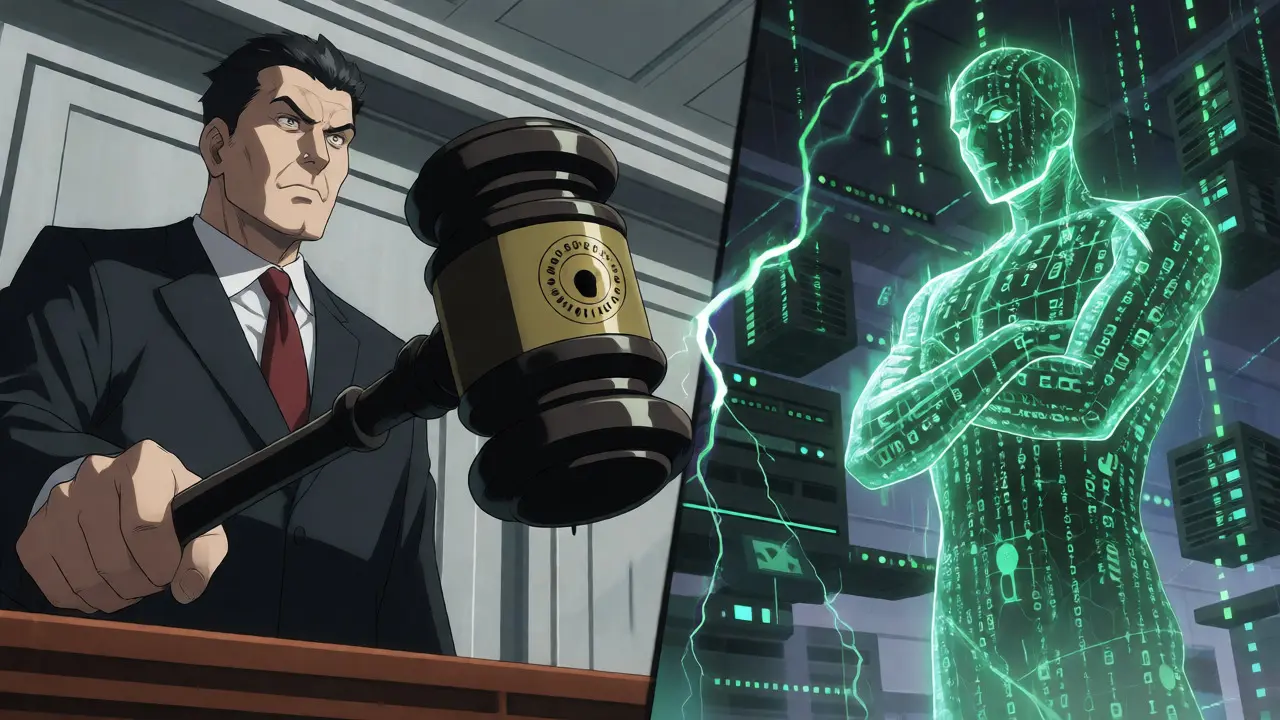
The core question wasn’t just about crime; it was about legal definitions. Can you sanction software? In November 2024, the U.S. Fifth Circuit Court of Appeals answered this in the case of Van Loon v. Department of Treasury. The court ruled that OFAC had exceeded its authority under the International Emergency Economic Powers Act (IEEPA). Their reasoning? Immutable smart contracts don’t qualify as "property" or "interests in property" under the law. You can’t freeze code that runs autonomously on a blockchain.
This distinction matters. Traditional sanctions target people or entities-companies, banks, individuals-who have control over assets. Smart contracts, once deployed, are autonomous. No one can shut them down, change their rules, or seize their funds unless the code allows it. By treating code like a bank account, regulators tried to apply old financial rules to new technology, and the courts said, "Not so fast." This ruling didn’t just help Tornado Cash; it set a precedent for every decentralized protocol facing regulatory heat.
The Delisting: What Changed in 2025?
Following the court’s lead, the Treasury Department officially delisted Tornado Cash’s smart contracts on March 21, 2025. This means Americans can legally interact with the protocol again. Exchanges can unblock deposits and withdrawals related to those addresses. However, there’s a catch. The Treasury kept sanctions in place against developer Roman Semenov. So, while the tool is legal, the person behind it is still restricted. You can use the app, but you might want to avoid hiring Semenov for consulting work if you’re a U.S. entity.
This nuanced approach signals a shift in strategy. Regulators seem to be moving away from banning entire protocols and toward targeting human accountability. It’s easier to prosecute a person for conspiracy than to sue a line of code. For users, this removes the immediate fear of asset seizure, but it doesn’t mean privacy tools are fully mainstream yet. Compliance departments are still cautious, often requiring extra verification for transactions involving mixers.
Implications for Privacy and DeFi
So, what does this mean for the broader crypto ecosystem? First, it validates the idea that decentralized technology has rights. If regulators can’t sanction immutable code, they have to find other ways to enforce rules, likely through interface-level regulations (like banning front-end websites rather than the backend contracts). Second, it highlights the tension between transparency and privacy. Blockchain advocates argue that total transparency hurts individual freedom, while governments worry about illicit flows.
For developers, the message is mixed. Building privacy-preserving tech is now safer, but you can still face criminal charges for operating an unlicensed money transmitting business. Roman Storm, another co-founder, faces three conspiracy charges from the DOJ, including money laundering and violating IEEPA. These cases aren’t about the code being illegal; they’re about whether the humans running it acted responsibly. If you’re building in DeFi, ensure you understand the difference between protocol risk and personal liability.
| Feature | Pre-Delisting (2022-2024) | Post-Delisting (2025-Present) |
|---|---|---|
| Status of Smart Contracts | Sanctioned (SDN List) | Delisted (Legal to interact) |
| Status of Developers | Some sanctioned (e.g., Roman Semenov) | Roman Semenov remains sanctioned; others face DOJ charges |
| US User Interaction | Prohibited (risk of penalties) | Permitted (legal clarity restored) |
| Exchange Compliance | High friction; frequent account freezes | Reduced friction; standard KYC applies |
| Legal Precedent | Unclear; aggressive enforcement | Code is not "property" under IEEPA |

How to Use Privacy Tools Safely Now
If you’re thinking about using a mixer again, here’s a practical checklist to keep yourself safe:
- Check the Address: Ensure you’re interacting with the official, delisted contract addresses. Scammers often create fake versions with similar names.
- Document Your Source: Keep records of where your funds came from before mixing. If an exchange asks why you deposited mixed coins, having proof of origin helps.
- Avoid Sanctioned Individuals: Remember, Roman Semenov is still on the SDN list. Don’t send payments directly to him if you’re a U.S. person.
- Monitor Exchange Policies: Just because it’s legal doesn’t mean every platform likes it. Some exchanges may still flag transactions from known mixers for manual review.
- Understand Tax Implications: Mixing coins doesn’t erase tax liabilities. You still owe taxes on gains, regardless of the path the coins took.
Frequently Asked Questions
Is Tornado Cash completely legal to use in the US now?
Yes, as of March 2025, the smart contracts themselves are no longer sanctioned. U.S. persons can legally interact with the protocol. However, specific developers remain sanctioned, so you should avoid direct financial dealings with those individuals.
Why did the courts rule that smart contracts cannot be sanctioned?
The Fifth Circuit Court ruled that immutable smart contracts do not fit the legal definition of "property" or "interests in property" under the International Emergency Economic Powers Act (IEEPA). Since OFAC’s authority is limited to sanctioning property interests, they could not legally block the code itself.
Will my crypto exchange freeze my funds if I use Tornado Cash?
It’s less likely now than before, but still possible. While the legal risk is gone, many exchanges maintain internal risk policies that flag mixer-related transactions. It’s best to check your specific platform’s terms of service regarding privacy-enhancing technologies.
Are other crypto mixers affected by this ruling?
Indirectly, yes. The ruling sets a powerful precedent for any decentralized protocol with immutable code. It suggests that regulators will struggle to sanction pure software products, potentially encouraging the growth of other privacy-focused DeFi applications.
What happens to the criminal charges against the developers?
The delisting of the smart contracts does not drop criminal charges against individuals. Roman Storm still faces trial for conspiracy to operate an unlicensed money transmitting business and money laundering. The courts distinguish between the legality of the tool and the conduct of its creators.