


Quick Takeaways
- Legal Status: Legal, but subject to a 30% tax on profits plus a 4% cess.
- Fastest Payment: UPI is the gold standard for instant deposits.
- Entry Barrier: You can start with as little as ₹100 on platforms like WazirX.
- Must-Haves: A valid PAN card and Aadhaar for KYC verification.
- Tax Warning: Compliant exchanges automatically deduct 1% TDS on transactions.
Understanding the Indian Crypto Landscape
Before you spend a single rupee, you need to understand the rules of the game. In India, Cryptocurrency is a digital or virtual currency secured by cryptography, allowing for decentralized peer-to-peer transactions. While the Supreme Court struck down the RBI's ban years ago, the taxman is very active. Since April 2022, any profit you make from selling or trading crypto is taxed at 30%. You can't offset losses from one coin against gains from another, which makes the math a bit painful for active traders.
Despite the taxes, adoption is exploding. With over 15 million active users and a massive developer base, India has become a hub for Web3. Most people aren't just speculating; they're using crypto for cross-border remittances or as a hedge against the annual inflation rate, which recently sat around 6.8%. If you're a student or a young professional, you're in good company-about 67% of Indian users are under 35.
Picking the Right Exchange for Your Needs
Not all platforms are created equal. Depending on whether you want a simple "buy and hold" experience or professional trading tools, your choice will change. You'll mostly choose between domestic exchanges (built for India) and global giants.
| Exchange | Min. Deposit | Payment Methods | Best For... | TDS Compliance |
|---|---|---|---|---|
| WazirX | ₹100 | UPI, Bank Transfer | Beginners | Automatic |
| CoinDCX | ₹100 | UPI, Bank Transfer | Compliance | Automatic |
| ZebPay | ₹100 | UPI, Bank Transfer | Mobile App User | Automatic |
| Binance India | ₹500 | Bank Transfer, P2P | Advanced Variety | Manual (Risk) |
| Kraken | ₹2,000 | Bank Transfer | Low Fees/Liquidity | Manual |
If you're just starting, buy crypto for fiat in India using a domestic exchange. Why? Because they handle the 1% Tax Deducted at Source (TDS) automatically. If you use a global exchange like Binance and forget to manually calculate your TDS, you're risking a clash with the Income Tax Department. For those moving huge volumes, Kraken is a powerhouse with deep liquidity, but the lack of UPI support means you're stuck waiting 24-48 hours for bank transfers to clear.

Step-by-Step: How to Buy Your First Coin
Setting up your account typically takes about 15 to 30 minutes. Here is the exact flow you'll go through:
- Registration: Download the app or visit the website and create an account with your email and a strong, unique password. Avoid using the same password you use for your email-hackers love that shortcut.
- KYC Verification: This is the non-negotiable part. You'll need to upload your PAN (Permanent Account Number) and Aadhaar card. Most apps will ask for a live selfie while you hold your PAN card to prove you're a real person.
- Funding Your Account: Choose your payment method. UPI is the fastest, often settling in under 15 seconds. If you're depositing a larger sum, a traditional bank transfer (IMPS/NEFT) is more reliable.
- Executing the Trade: Go to the "Buy" or "Trade" section. Pick the coin you want-like Bitcoin or Ethereum-and enter the amount of INR you want to spend. You don't need to buy a whole coin; you can buy a tiny fraction (a "Satoshi") for as little as ₹100.
- Secure Your Assets: Once the trade is done, your coins sit in the exchange's wallet. For small amounts, this is fine. But if you're building a serious portfolio, move your funds to a cold wallet.
The Hidden Costs: Fees and Taxes
Buying crypto isn't free. You'll encounter two types of costs: trading fees and government taxes.
Trading fees vary. WazirX usually sticks to a flat 0.20% fee for both makers and takers. ZebPay uses a tiered system where you pay between 0.15% and 0.50% depending on how much you trade. If you're buying ₹1,000 worth of crypto weekly, a 0.5% fee might seem small, but it adds up over a year. Always check the "Fee Schedule" in the app settings before committing.
Then there is the 1% TDS. Under Section 194S of the Income Tax Act, exchanges must deduct 1% of the transaction value when you sell or trade. This isn't an extra tax on top of the 30% profit tax; it's a way for the government to track your crypto activity. If you use a non-compliant global exchange, you are responsible for reporting and paying this yourself, which is a bureaucratic nightmare.
Security Pitfalls to Avoid
India has seen a rise in crypto thefts, often totaling crores of rupees. Most of these aren't "hacks" of the blockchain, but simple security lapses by users. The most common mistake? Reusing passwords. If a hacker gets your password for one site, they'll try it on every single exchange you use.
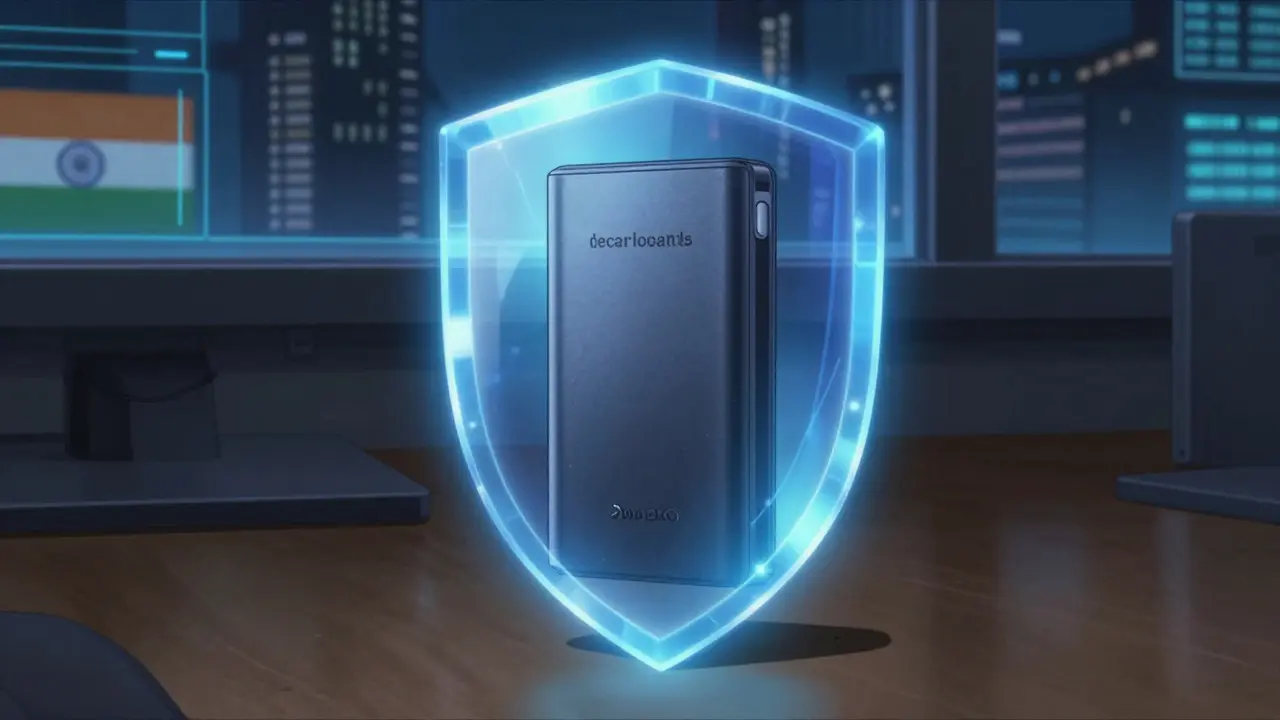
To stay safe, enable Two-Factor Authentication (2FA) using an app like Google Authenticator-do not rely solely on SMS codes, as SIM swapping is a real threat. Also, consider a Hardware Wallet is a physical device that stores cryptocurrency private keys offline, making them immune to online hacking. A Ledger Nano S+ costs around ₹11,999, which is a small price to pay if you're holding lakhs in assets. Remember the 2024 ZebPay breach where ₹18.7 crore was compromised; keeping your money on an exchange always carries a risk.
What's Next for Crypto in India?
The landscape is shifting toward a hybrid model. The Reserve Bank of India (RBI) is pushing the Digital Rupee (CBDC), which is essentially a government-backed digital currency. It's not the same as Bitcoin because it's centralized and doesn't fluctuate in value, but it's the gateway to digital payments of the future.
We are also waiting for the proposed Crypto Asset Regulation Bill. If passed, it could provide the regulatory clarity that institutional investors (like big banks and hedge funds) need to enter the market. Until then, the market remains retail-driven, powered by students and tech-savvy youth who are comfortable with the current tax regime.
Is it legal to buy cryptocurrency in India in 2026?
Yes, it is legal to own and trade cryptocurrency in India. However, it is not "legal tender" like the Rupee. You can buy and sell it, but you must comply with the 30% tax on profits and the 1% TDS requirements.
How much minimum money do I need to start?
On domestic exchanges like WazirX or CoinDCX, you can start with as little as ₹100. Global exchanges like Binance India may require higher minimums, typically around ₹500 for bank transfers.
What documents are required for KYC?
You will need a valid PAN (Permanent Account Number) card and an Aadhaar card. Most platforms also require a live selfie or a photo of you holding your PAN card to prevent identity fraud.
Why is 1% TDS deducted from my trade?
The 1% Tax Deducted at Source (TDS) is a mandate by the Income Tax Act to track crypto transactions. Compliant Indian exchanges deduct this automatically and remit it to the government on your behalf.
Which is the fastest way to deposit INR?
UPI (Unified Payments Interface) is by far the fastest method, with most domestic exchanges processing deposits in under 15 seconds. Traditional bank transfers (NEFT/IMPS) are a slower alternative.
Do I have to pay tax if I don't sell my crypto?
Generally, the 30% tax applies to your "gains" upon selling or swapping one cryptocurrency for another. Simply holding a coin (HODLing) without selling it usually doesn't trigger the profit tax, but you should always consult a tax professional for your specific situation.
Next Steps and Troubleshooting
If you're stuck during the process, here are a few common scenarios:
- UPI Payment Failed: If your money was deducted but not credited to the exchange, don't panic. This happens often due to bank server lag. Take a screenshot of the transaction ID and open a support ticket. Note that domestic exchanges can sometimes take up to 72 hours to resolve these.
- KYC Rejected: This usually happens because of glare on the ID card or a blurry selfie. Ensure you are in a well-lit room and the text on your PAN card is crystal clear.
- Withdrawal Issues: If you can't move your coins, check if you've enabled "Withdrawal Whitelisting." This is a security feature that prevents coins from being sent to unapproved addresses.






Comments (24)
Robert Smith
April 29, 2026 AT 07:54 AMThis is actually pretty helpful 🚀📈
Arti Jain
April 29, 2026 AT 17:42 PMOnly a fool would use global exchanges. Indian platforms are superior and keep our economy strong. Stick to domestic apps or don't bother
Livvy Cooper
April 30, 2026 AT 19:01 PMthis is all just a scam and the taxes are bad
Abhishek Verma
May 2, 2026 AT 18:40 PMOh sure, just give your PAN and Aadhaar to a random app and everything will be great. What could possibly go wrong with that plan? lol
Michael Repak
May 3, 2026 AT 16:33 PMGreat breakdown!!! This is exactly what a newbie needs to see!!!! Really love the table!!!
VIVEK SINGH
May 3, 2026 AT 17:03 PMImagine thinking a 30% tax is 'manageable'. The government basically treats us like ATMs while the 'Web3 hub' dream stays a fantasy. But hey, keep buying those Satoshis, maybe the blockchain will save your soul from the taxman
Lex Harley
May 3, 2026 AT 18:20 PMLove the detailed guide. Does the 1% TDS apply to intra-exchange swaps or just fiat-to-crypto pairs? My alpha suggests P2P might be a bit more gray area for slippage and tax drag
Rachel S
May 4, 2026 AT 10:54 AMI must insist that users prioritize the cold wallet mentioned. The ZebPay incident was an absolute catastrophe! 😱 One simply cannot trust an exchange with long-term holdings in this volatile climate. It is practically an invitation for disaster! :)
Carli Bates
May 5, 2026 AT 15:47 PM30 percent tax and we call it investing. the irony is just delicious lol
edie rosa
May 6, 2026 AT 05:21 AMIt's actually disgusting that we're encouraging people to gamble their savings when the system is rigged against them. Who cares if it's 'legal' when the tax structure is designed to bleed you dry? I've seen so many people lose everything and it's just heartbreaking that this is presented as a 'beginner guide' instead of a warning label. The psychological toll of watching a portfolio dip while knowing the government takes the profit but doesn't help with the losses is just cruel. It's practically a trap for the desperate. I can't even imagine how some of you sleep at night promoting this stuff as a viable financial move for students. It's predatory. Period.
Lloyd I
May 6, 2026 AT 15:34 PMKeep pushing forward everyone! If you're nervous, just start with that ₹100 limit and learn the ropes slowly. We're all in this together
Harvey Alford
May 7, 2026 AT 06:27 AMI tried UPI and it failed twice. Absolute trash.
Rain Richardsson
May 8, 2026 AT 10:21 AMSounds simple enough. Glad to see the low entry point.
Kristi Swartz
May 10, 2026 AT 08:49 AMthe pan card requirement is basic law in india and anyone who complains about it is just ignorant of how financial tracking works
Jehan ZA
May 11, 2026 AT 13:17 PMThe inclusion of the Digital Rupee context is most appreciated. It provides a necessary balance to the conversation regarding centralization.
Gabrielle Danis
May 11, 2026 AT 18:10 PMFor those using Ledger, please ensure you purchase directly from the official manufacturer to avoid compromised devices.
Aaron Zeiler
May 11, 2026 AT 18:43 PMjust use a cold wallet for anything over a few thousand rupees if you dont want to lose it all
Alex Mazonowicz
May 12, 2026 AT 06:16 AMThis is so exciting!!! The future of finance is here!!!! Let's gooooo!!!!
Tracy McBurney
May 12, 2026 AT 10:04 AMThe analysis of the 2024 ZebPay breach is superficial. They failed to mention the specific vulnerability in the API that allowed the compromise, which is far more important than just 'security lapses'. If you are actually tracking assets, you should be looking at the audit reports, not a beginner's blog post. The lack of technical depth here is quite alarming for anyone claiming to be 'informed'. It's a glorified marketing piece for exchanges.
Kathleen Warren
May 14, 2026 AT 08:33 AMIt's okay to be scared of the taxes. Just take it one step at a time and maybe talk to a pro
Barbara Jones
May 15, 2026 AT 04:32 AMmy kyc got rejected like thire times because the lighting was bad lol
Brendan Thraxton
May 16, 2026 AT 15:49 PMstart small and keep learning you got this
Veronica Bago
May 17, 2026 AT 12:29 PMNice and easy guide, thanks for sharing!
Jan Conrad
May 17, 2026 AT 23:20 PMQuick question on the TDS-does that apply to the entire transaction volume or just the realized gain?