

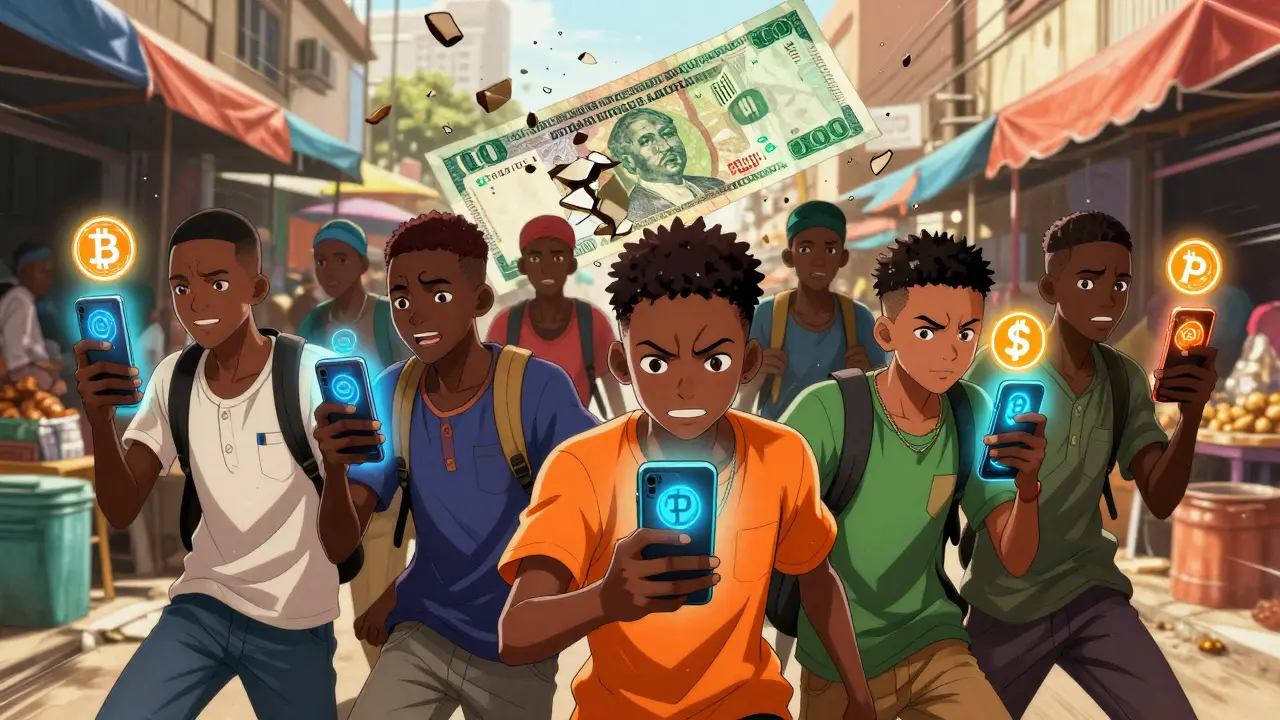
Nigeria’s P2P crypto market isn’t just growing - it’s rewriting how money moves in the country.
In 2025, over 36% of Nigerian adults still don’t have access to traditional banking. Yet, nearly half of them are trading crypto daily - not through banks, not through brokers, but directly with each other. This is the real story behind Nigeria’s P2P crypto boom: people bypassing broken systems to buy Bitcoin, USDT, and other digital assets using their mobile phones and local bank accounts.
The trigger? A collapsing Naira. Since 2016, the currency has lost over 75% of its value against the US dollar. Inflation hit 24% in 2023. When your savings vanish overnight, crypto becomes a lifeline. And because banks were banned from dealing with crypto exchanges between 2021 and 2023, P2P platforms filled the vacuum. Today, even with new regulations, P2P still makes up 68% of all crypto activity in Nigeria - more than double the global average.
How P2P crypto works in Nigeria - no middlemen, no delays, just direct trades
Unlike centralized exchanges where you buy crypto from a company, P2P platforms connect buyers and sellers directly. You pick a seller offering USDT for Naira. You pay them via bank transfer, mobile money, or even airtime. Once they confirm receipt, the platform releases the crypto to your wallet. It’s simple. It’s fast. And it’s legal - since early 2025, when Nigeria’s Investments and Securities Act (ISA 2025) gave the Securities and Exchange Commission (SEC) full authority over digital assets.
Before ISA 2025, the Central Bank of Nigeria (CBN) blocked banks from working with crypto firms. That forced traders to use P2P. Now, banks can legally service licensed platforms, but most users still prefer P2P because it’s faster, cheaper, and doesn’t require jumping through bureaucratic hoops.
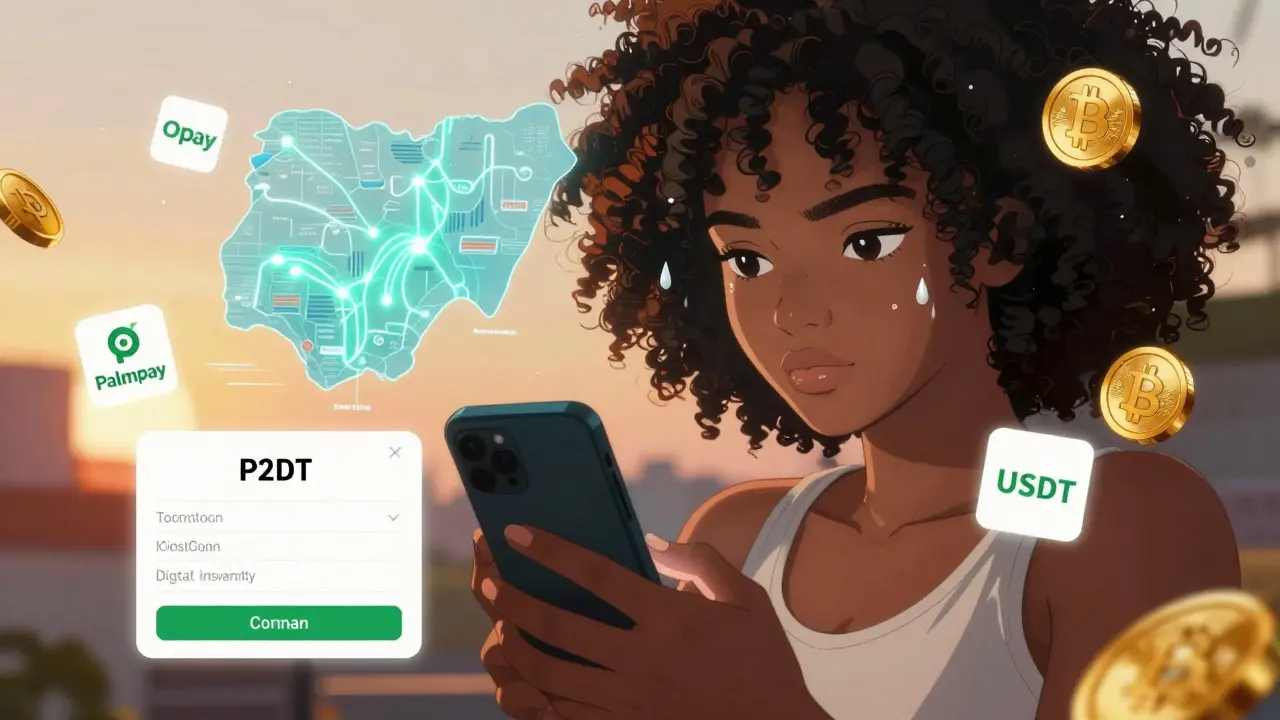
Transactions typically take 2 to 15 minutes. Payment methods include bank transfers (the most common), OPay, PalmPay, and even Paystack. No one needs a credit card. No one needs a passport. Just a phone number and a verified ID.
The top 5 P2P platforms dominating Nigeria in 2025
There are now seven major licensed platforms, but five stand out - each with a different strength.
- Binance P2P leads with 45% of the market. It supports over 500 cryptocurrencies and 20+ payment methods. Its dispute system is trusted - 89% of users say their issues were resolved fairly in 2025. But new users report slower KYC checks now, adding up to 40% more time to get started.
- Bybit is the favorite for local language support. It offers 24/7 customer service in Yoruba, Igbo, and Hausa - something no other global platform does. Traders say it processes Naira payments 12-15% faster than competitors because of deep bank integrations.
- YellowCard is the education leader. It has over 120 tutorial videos in Nigerian languages, and 85% of users finish them. It’s also the only platform with instant Naira deposits and zero trading fees. But its app crashes during peak hours in 43% of stress tests.
- Breet wins on speed. 98% of its transactions complete within 5 minutes. It’s the go-to for people who need cash fast - like traders paying rent or buying groceries. Its Trustpilot rating is 4.3/5, with users praising how quickly money hits their bank account.
- Busha is Nigeria’s first SEC-licensed exchange. It offers limit orders, recurring buys, and seamless swaps between 15 cryptocurrencies. With 28,500 Google Play reviews and a 4.6/5 rating, it’s the most trusted by long-term users. The downside? Customer support takes 47 minutes on average to respond during busy times.
Market rankings are clear: Binance leads in volume, Bybit in local service, YellowCard in education, Breet in speed, and Busha in reliability.
What users really complain about - and how to avoid it
Most people love P2P. But not everything is smooth.
One big issue: payment verification delays. Over 65% of users report waiting hours for bank payments to clear. Sometimes, it’s because the bank flags the transaction as suspicious. The fix? Use multiple payment methods. If OPay fails, try PalmPay. If bank transfer stalls, switch to airtime.
Another problem: exchange rate swings. Prices can shift 2.7% during a 10-minute trade. That’s why experienced traders set price alerts and avoid trading during market spikes - like when the Naira drops suddenly after a CBN announcement.
Then there’s fraud. 22% of crypto scams in Q2 2025 involved fake sellers pretending to be verified. How to protect yourself? Always check the seller’s history - look for at least 100 completed trades and a 95%+ positive rating. Never skip 2FA. But here’s the catch: 68% of Nigerian users turn off 2FA because SMS codes don’t arrive. That’s a huge risk. Use an authenticator app like Google Authenticator instead.
And don’t ignore escrow freezes. Some platforms hold funds for 72+ hours during CBN compliance checks. If your crypto is stuck, contact support immediately - but be patient. Rushing can trigger more delays.
Who’s using P2P crypto in Nigeria - and why
The typical Nigerian crypto trader is male, aged 18-34, and trades under ₦500,000 ($328) per transaction. That’s not a billionaire. That’s a student, a driver, a tailor, a nurse - someone trying to protect their income from inflation.
Women make up only 22% of users. That’s low, but growing. Platforms like YellowCard are targeting female users with financial literacy content in local dialects. Community groups on Telegram and YouTube are helping too. There are now 147 active Telegram groups for Nigerian crypto traders, each with over 1,000 members.
Most users don’t trade for profit. They trade for survival. A mechanic in Kano buys USDT with his weekly earnings so he can send money to his sister in Lagos without paying 8% in remittance fees. A university student in Ibadan uses crypto to pay for online courses priced in dollars. A market vendor in Port Harcourt saves in Bitcoin because her Naira savings lose value every week.

The future: More regulation, more growth, more risks
The SEC isn’t slowing things down - it’s making them safer. By December 31, 2025, every platform must implement real-time transaction monitoring. That means fewer scams, longer verification, and better security.
More platforms are coming. The SEC expects 35-40 licensed exchanges by year-end - up from just 12 now. That’s good news for competition. But it also means more players trying to cut corners. Watch out for platforms promising “guaranteed returns” or “no KYC.” Those are red flags.
Experts predict Nigeria’s P2P crypto market will hit $5.1 billion by 2027. Institutional investors are starting to take notice. Banks are preparing to offer crypto custody services. Even pension funds are exploring digital asset exposure.
But the biggest threat isn’t regulation. It’s infrastructure. 31% of rural users still can’t access stable internet. Electricity outages last hours. Mobile networks drop calls. That’s why apps like Busha and YellowCard are building offline modes and SMS-based trade alerts.
For now, P2P crypto in Nigeria isn’t a trend. It’s a necessity. And as long as the Naira keeps falling, people will keep trading - peer to peer, phone to phone, trust to trust.
Frequently Asked Questions
Is P2P crypto trading legal in Nigeria in 2025?
Yes, it’s fully legal. Since the Investments and Securities Act (ISA 2025) was passed in January 2025, the Securities and Exchange Commission (SEC) has regulated all crypto platforms. Only licensed exchanges can operate, and they must follow strict security and reporting rules. Unlicensed platforms are shut down, but legitimate P2P trading is protected under the law.
Which P2P platform is best for beginners in Nigeria?
YellowCard is the best for beginners. It has zero trading fees, instant Naira deposits, and over 120 free tutorial videos in local languages like Yoruba and Igbo. Its app is simple, and customer support is responsive. While Binance has more coins, YellowCard reduces complexity - perfect if you’re just starting out.
Can I get scammed on P2P crypto platforms in Nigeria?
Yes, scams happen - but they’re falling. In 2024, 42% of new users lost money in their first month due to fake sellers or payment reversals. In 2025, that dropped to 28% thanks to SEC enforcement and platform improvements. Always trade with verified sellers who have 100+ completed trades and a 95%+ rating. Never send money before crypto is released. And never disable 2FA.
Why do P2P transactions take longer than expected?
Delays usually come from bank verification or CBN compliance checks. If your bank flags the transaction as “suspicious,” it can take hours to clear. During market volatility, platforms may also pause trades temporarily. To avoid delays, use multiple payment methods and avoid trading during peak hours (8-11 AM and 6-9 PM). Also, keep your ID documents ready for quick KYC.
Do I need to pay taxes on P2P crypto profits in Nigeria?
Currently, Nigeria doesn’t have a formal crypto tax law. However, the SEC requires platforms to report large transactions to the Federal Inland Revenue Service (FIRS). If you’re making consistent profits, it’s wise to keep records. While no one is auditing small traders yet, that could change. Stay compliant by documenting all buys, sells, and wallet addresses.
What’s the safest way to store crypto bought on P2P platforms?
Never leave large amounts on exchange wallets. Move your crypto to a private wallet - like Trust Wallet or MetaMask - after each trade. P2P platforms use cold storage and 2FA, but they’re still targets for hackers. If you’re trading small amounts regularly, keeping a small balance on the platform is fine. But for savings, always use a non-custodial wallet you control.




Comments (24)
Daniel Verreault
December 28, 2025 AT 12:23 PMBro this is wild. Nigeria's P2P scene is basically the future of finance. No banks? No problem. People are just trading crypto like it's cash. Binance P2P is king but damn, Breet's speed is insane. 98% under 5 mins? That's not a platform, that's a fucking ATM with blockchain.
Jacky Baltes
December 28, 2025 AT 14:06 PMThe underlying truth here isn't about technology-it's about sovereignty. When a state fails to preserve the value of its currency, its citizens don't wait for permission to innovate. They build alternatives. This isn't crypto adoption. It's economic self-determination.
Rick Hengehold
December 28, 2025 AT 14:11 PMThis is why crypto isn't about speculation. It's survival. People aren't day trading. They're feeding families. That's the real story.
Brandon Woodard
December 29, 2025 AT 23:33 PMAh yes, the noble peasants of the digital age, bypassing corrupt institutions with their smartphones and faith in blockchain. How poetic. And yet, the SEC is now regulating this? The same SEC that couldn't stop the 2008 crash? The irony is thicker than Naira inflation.
Ryan Husain
December 31, 2025 AT 16:24 PMThe fact that 68% of crypto activity in Nigeria is P2P speaks volumes. This isn't a fringe movement. It's the mainstream now. And it's working because it's simple, fast, and accessible. The rest of the world is still arguing over regulation while Nigeria's people are already living the future.
Jack and Christine Smith
January 1, 2026 AT 09:27 AMomg i just found out about busha and its like 4.6 rating?? im so impressed. i thought all crypto apps were garbage but this one actually works??
Jackson Storm
January 2, 2026 AT 09:22 AMYou guys are missing the real win: YellowCard’s tutorials in local languages. That’s not just UX-that’s cultural inclusion. Most crypto platforms treat Africa like a market to exploit, not a community to empower. YellowCard gets it.
Raja Oleholeh
January 3, 2026 AT 07:08 AMNigeria is showing the world how it's done. India should take notes. We have 900 million unbanked people and still rely on banks. Pathetic.
Prateek Chitransh
January 4, 2026 AT 10:45 AMAh yes, the classic 'Africa is rising' narrative. Let me guess-next you’ll tell me they’re building rockets with recycled phones. Meanwhile, the average Nigerian still can’t get stable internet. This isn't innovation-it's desperation dressed up as a TED Talk.
Michelle Slayden
January 4, 2026 AT 22:16 PMThe institutionalization of peer-to-peer financial autonomy, underpinned by regulatory clarity and technological accessibility, represents a paradigm shift in monetary sovereignty. The Nigerian case study is not merely anecdotal; it is a blueprint for post-colonial economic reclamation.
christopher charles
January 6, 2026 AT 00:46 AMI’ve used Binance P2P for months. The KYC is a nightmare now-like, 3 days just to verify? But once you’re in? Smooth. And the 89% dispute resolution rate? That’s rare. Most platforms just ghost you. Not them.
Vernon Hughes
January 7, 2026 AT 05:16 AMThe infrastructure gap is real. 31% rural users without stable internet? That’s not a market. That’s a humanitarian challenge. No app fixes that. Electricity comes first.
Alison Hall
January 7, 2026 AT 12:37 PMI love how YellowCard helps women learn crypto. My cousin in Lagos started trading last month and now she’s sending money to her kids abroad without fees. It’s tiny but it matters.
Amy Garrett
January 9, 2026 AT 07:08 AMwait so you can buy crypto with airtime?? that’s wild i had no idea. im gonna try this tmrw
Haritha Kusal
January 10, 2026 AT 19:06 PMthis is so inspiring!! i live in india and we have so many problems but seeing nigeria do this makes me believe we can too!!
Mike Reynolds
January 12, 2026 AT 00:14 AMI’ve seen friends get scammed on P2P. One guy sent Naira and never got the BTC. The seller vanished. That’s why checking 100+ trades and 95%+ rating isn’t optional-it’s life insurance.
dayna prest
January 12, 2026 AT 20:53 PMLet’s be real-this isn’t financial freedom. It’s a digital pyramid scheme dressed in blockchain glitter. The SEC? A fig leaf. The real power is still with the platforms. They’re the new banks. And guess what? They’ll charge you when you least expect it.
Brooklyn Servin
January 13, 2026 AT 16:53 PMThe fact that 68% of users turn off 2FA because SMS doesn’t work? That’s the real crisis. Not the Naira. Not the SEC. It’s the broken telecom infrastructure. You can’t have decentralized finance if your phone can’t receive a code. This is like building a Ferrari with a bicycle tire.
Phil McGinnis
January 14, 2026 AT 07:58 AMThe West loves to pat itself on the back for 'empowering Africa.' But the truth? Nigeria’s crypto boom is a symptom of collapse, not progress. The CBN banned crypto because they knew what was coming. Now they’re regulating it because they lost. This isn’t innovation. It’s decay with Wi-Fi.
Ian Koerich Maciel
January 14, 2026 AT 09:33 AMI’ve been watching this unfold for years. The emotional weight here is immense. People aren’t trading for gains-they’re trading for dignity. That’s why the escrow delays hurt so much. It’s not about money. It’s about trust. And when that breaks? It’s not just a transaction. It’s a betrayal.
Andy Reynolds
January 15, 2026 AT 04:28 AMHonestly, the most underrated thing here is the community. 147 Telegram groups? That’s not just trading-it’s education, solidarity, mutual aid. People are teaching each other how to avoid scams. That’s the real crypto revolution: human connection over code.
Monty Burn
January 16, 2026 AT 22:16 PMSo let me get this straight people are risking their savings on apps run by strangers because their government failed them and now we're supposed to celebrate this as progress
Kenneth Mclaren
January 18, 2026 AT 15:24 PMThis is all a CIA operation. The SEC is controlled by the same people who crashed the dollar. They want you to trust crypto so they can track every transaction. Your phone number, your bank, your face-all in a database. Wake up. This isn't freedom. It's digital slavery with a blockchain logo.
Rick Hengehold
January 19, 2026 AT 09:38 AMI’ve seen this in my own family. My cousin in Lagos uses Breet to pay her rent. Every Friday. No delays. No fees. She’s 22. She doesn’t know what a blockchain is. She just knows it works. That’s the real victory.