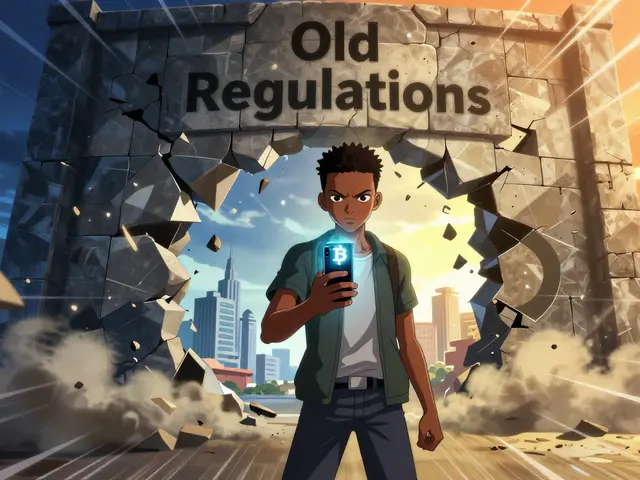

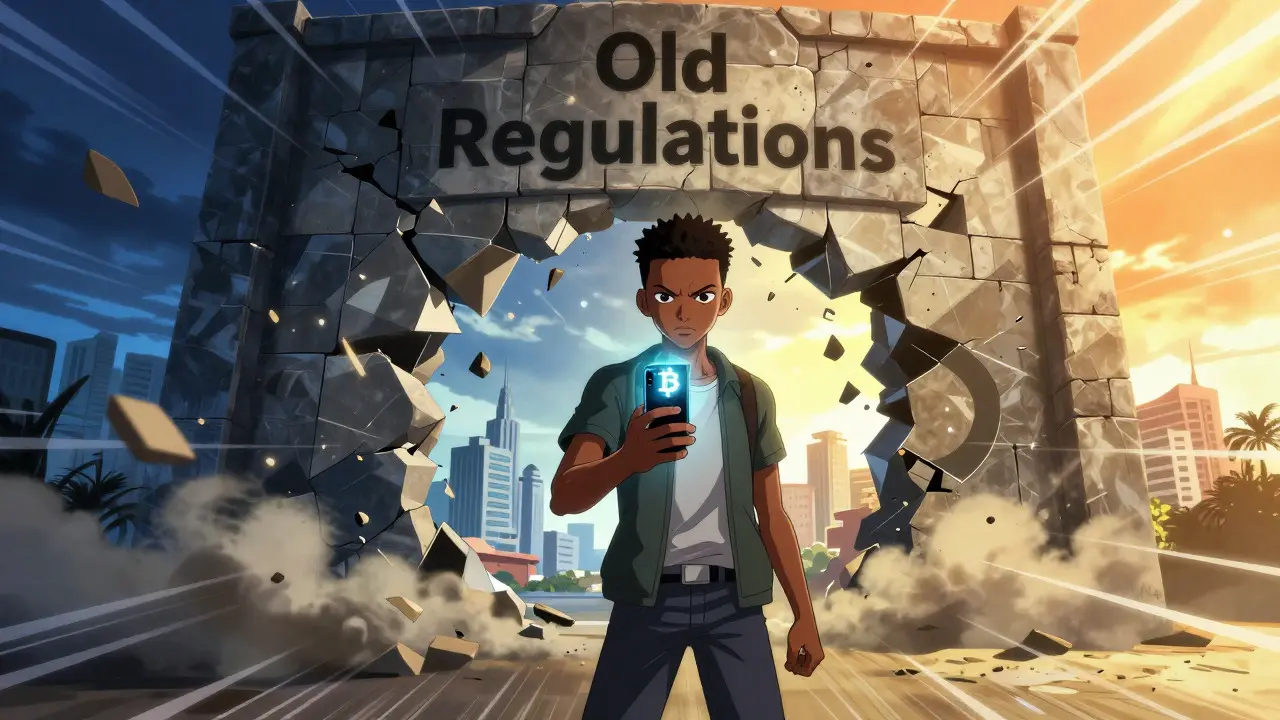
For years, holding a Bitcoin wallet in Nigeria felt like playing a game of musical chairs with your bank account. One minute you were trading freely; the next, your account was frozen because a teller spotted a P2P transfer labeled 'crypto.' But that era is officially over. Since the Central Bank of Nigeria (CBN) lifted its ban on crypto transactions in late 2023 and the passage of the Investments and Securities Act (ISA) 2025, the landscape has shifted from "avoidance" to "compliance." You don't need to hide anymore-you just need to know where the lines are drawn.
The core problem isn't that crypto is illegal; it's that the rules changed rapidly, leaving many users confused about what is now permitted and what still carries risk. This guide breaks down how to operate safely within the new legal framework, ensuring your assets remain accessible and your banking relationship stays intact.
The New Legal Reality: ISA 2025 and the End of Bans
On March 25, 2025, President Bola Ahmed Tinubu signed the Investments and Securities Act (ISA) 2025 into law. This legislation replaced the outdated 2007 version and did something historic: it officially recognized digital assets as financial securities under Nigerian law. Before this, crypto existed in a gray zone. Now, it has a clear legal home.
The primary regulatory authority for this space is the Securities and Exchange Commission (SEC). Unlike the old regime where the CBN tried to block everything, the SEC now oversees exchanges and Virtual Asset Service Providers (VASPs). This means if you use an exchange, that platform must be licensed by the SEC. If it isn't, you're operating outside the protection of the law.
Key changes include:
- Legal Recognition: Digital assets are now treated as securities, not speculative gambling tools.
- Banking Access: The CBN issued VASP Guidelines in December 2023, allowing banks to open accounts for licensed crypto businesses. Your bank can no longer freeze your account simply because you trade crypto, provided you use licensed platforms.
- Fraud Crackdown: The law explicitly bans Ponzi schemes and gives regulators access to telecom records to investigate fraud, which should reduce the number of scams targeting retail investors.
Choosing Licensed Exchanges: Your First Line of Defense
The safest way to avoid restrictions is to stay away from unlicensed offshore exchanges that rely on obscure P2P networks. The SEC has begun approving local platforms, and using them is the single best step you can take. Early approvals went to established names like Quidax and Busha. These platforms have undergone vetting processes to ensure they meet compliance standards.
Why does this matter? When you use a licensed exchange, your Know Your Customer (KYC) data is verified through official channels. This creates a paper trail that proves your activity is legitimate. If a bank ever questions a transaction, your broker can provide documentation. With unlicensed platforms, you’re often left explaining vague transfers with no institutional backing.
| Feature | Licensed Local Exchange (e.g., Quidax) | Unlicensed Offshore Platform |
|---|---|---|
| Regulatory Status | SEC Licensed & Compliant | Unregulated / Gray Area |
| Banking Integration | Direct Naira deposits/withdrawals | P2P only or third-party wallets |
| Consumer Protection | Covered by ISA 2025 | Minimal to none |
| Tax Reporting | Automated statements available | Manual tracking required |
| Risk of Account Freeze | Low (if compliant) | High (due to opaque flows) |

Understanding the Tax Regime Starting January 2026
Compliance doesn't stop at buying and selling; it extends to paying your fair share. Under the Nigerian Tax Act 2025, which takes effect on January 1, 2026, crypto assets are treated as property for tax purposes. This is a significant shift from the previous ambiguity.
Here’s how the numbers work for individuals:
- Taxable Events: You only pay tax when you sell or exchange crypto for profit. Holding crypto is not taxed.
- Personal Income Tax: Profits are subject to a sliding scale capped at 25%. This is considered progressive compared to flat-rate taxes in other jurisdictions.
- Corporate Rates: If you run a crypto business, rates vary. Companies earning between ₦25 million and ₦100 million annually face a 20% corporate income tax rate. Those earning over ₦100 million pay 30%.
- VAT on Fees: All companies subject to corporate income tax must charge 7.5% Value Added Tax (VAT) on any transaction fees they collect from users.
To stay compliant, keep detailed records of every purchase and sale. Most licensed exchanges will provide downloadable statements that map directly to these requirements. Ignoring this could lead to penalties later, so treat your crypto portfolio like any other investment account.
Practical Steps to Stay Compliant and Safe
You don’t need to be a lawyer to navigate this, but you do need to be organized. Here is a practical checklist to ensure you remain on the right side of the regulations.
- Verify Your Exchange: Check the SEC’s official list of licensed VASPs before depositing funds. If a platform isn’t listed, assume it’s high-risk.
- Complete Full KYC: Don’t skip identity verification. Partial KYC can flag your account for review. Use valid government-issued ID and proof of address.
- Use Direct Banking Channels: Deposit and withdraw Naira directly through your bank account linked to the licensed exchange. Avoid cash deposits or transfers from unknown third parties.
- Track Your Gains: Use spreadsheet software or tax software to log your cost basis and sale prices. Remember, only profits are taxable, so accurate cost basis calculation is crucial.
- Stay Updated on EFCC Actions: The Economic and Financial Crimes Commission (EFCC) works alongside the SEC. Keep an eye out for announcements about specific fraud schemes to avoid falling victim to new tactics.
A common mistake users make is mixing personal savings with trading capital without clear separation. While not strictly illegal, keeping a dedicated bank account for crypto activities makes record-keeping significantly easier and reduces the chance of accidental non-compliance.

What About DeFi and NFTs?
The ISA 2025 primarily targets centralized exchanges and investment-focused digital assets. However, the regulatory scope is expanding. Investment-focused Non-Fungible Tokens (NFTs) fall under securities regulation, meaning if you’re buying NFTs as an investment vehicle, they may be subject to similar oversight. Artistic NFTs, however, remain largely unaffected by these specific securities rules.
Decentralized Finance (DeFi) protocols occupy a more complex space. While not explicitly banned, using DeFi requires careful consideration. Since there is no central entity to hold accountable, consumer protections are weaker. If you choose to interact with DeFi, understand that you are taking on additional counterparty risk and regulatory uncertainty. For most average users, sticking to licensed centralized exchanges remains the safest path to avoiding complications.
Future Outlook and Regional Impact
Nigeria’s move toward structured regulation positions it as a potential regional fintech hub. According to CoinGecko data, Nigeria already shows the highest cryptocurrency interest levels across Africa, scoring 371 in comprehensive search trend studies. This demand, combined with the new legal clarity, is likely to attract foreign investment and institutional players who previously stayed away due to regulatory fear.
As the framework matures, expect stricter enforcement against unlicensed operators. The goal is to create a clean market where legitimate businesses thrive and bad actors are weeded out. For you, the user, this means long-term stability. The days of sudden account freezes due to arbitrary bank policies are fading, replaced by a system where compliance equals security.
Is crypto still illegal in Nigeria?
No. As of March 2025, the Investments and Securities Act officially recognized digital assets as financial securities. The CBN also lifted its ban on crypto transactions for banks in late 2023. Crypto is now legal but regulated.
Which exchanges are currently licensed in Nigeria?
The SEC has granted early approvals to platforms such as Quidax and Busha. Always verify the current status on the official SEC website, as the list of licensed Virtual Asset Service Providers (VASPs) is expected to grow.
How much tax do I pay on crypto profits in 2026?
Individuals pay personal income tax on profits, with a maximum rate of 25%. Corporate entities face rates of 20% or 30% depending on annual earnings. Note that tax is only due upon a taxable event like a sale or exchange for profit.
Can my bank freeze my account if I trade crypto?
Risk is significantly lower if you use SEC-licensed exchanges and complete full KYC. The CBN guidelines permit banks to service licensed crypto businesses. Unlicensed P2P trades still carry a higher risk of being flagged for manual review.
Do I need to declare NFTs for tax purposes?
Investment-focused NFTs are treated as securities and may be subject to reporting requirements. Artistic NFTs collected for personal enjoyment are generally not subject to securities regulations, but consult a tax advisor for specific cases involving high-value sales.