

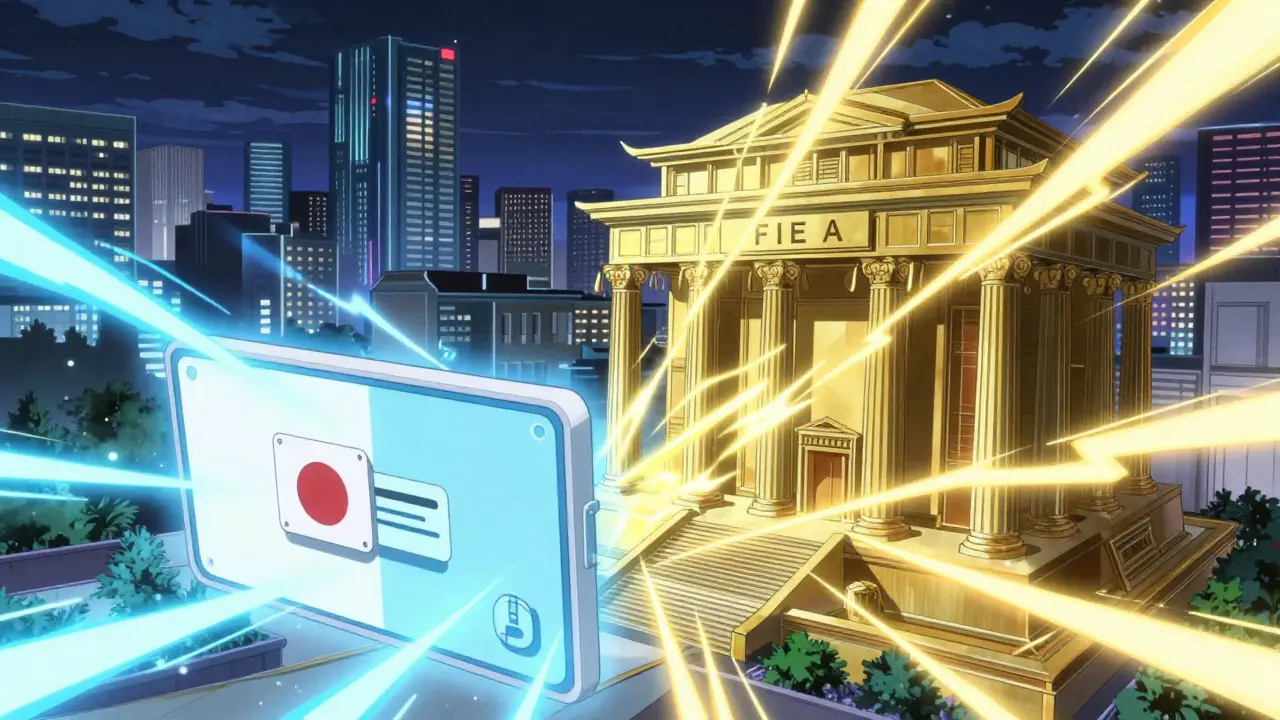
If you're planning to launch a crypto exchange in Japan, you aren't just entering a market; you're entering one of the most disciplined regulatory environments on the planet. For years, Japan has been the gold standard for how a government can pivot from treating Bitcoin as a wild west experiment to a legitimate financial asset. However, the rules of the game just changed. As of September 2025, the oversight of crypto assets has shifted from the Payment Services Act to the Financial Instruments and Exchange Act (FIEA), a move designed to treat digital assets more like traditional securities and less like simple payment coupons.
For an operator, this means the barrier to entry is high, the costs are steep, and the margin for error is zero. But there is a massive payoff: Japan is the world's third-largest crypto market, with over 12 million registered accounts as of early 2025. If you can survive the Japan crypto licensing framework, you gain access to a highly secure, institutional-grade ecosystem that retail investors actually trust.
The Big Shift: From PSA to FIEA
For a long time, the Payment Services Act (PSA) was the primary tool for the Financial Services Agency (FSA) to keep exchanges in check. It worked, but it was too narrow. The PSA treated crypto primarily as a means of payment. By September 2025, the FSA realized that crypto had evolved into a complex asset class involving security tokens and real-world asset (RWA) tokenization.
The transition to FIEA oversight creates a tiered system. Now, payment tokens follow modified PSA rules, while investment-oriented tokens face full securities regulation. This eliminates the confusing gap between "payment tokens" and "security tokens" that has caused so many legal headaches in the U.S. If you're applying for a license now, you're looking at a framework that acknowledges crypto as a multi-functional asset class.
Hard Requirements for Getting Licensed
You can't just register a shell company in Tokyo and start trading. The FSA requires a physical presence and a level of corporate maturity that scares off most startups. To get your foot in the door, you must form a kabushiki-kaisha (a joint-stock company) under Japanese law. This isn't just a paperwork exercise; you need a physical branch office and a resident manager who is personally on the hook for any regulatory failures.
Then there is the money. You need a minimum capital of 10 million yen (roughly $68,000), and your net assets must remain positive. While that number seems low, the real cost is in the compliance infrastructure. Most exchanges spend between $500,000 and $1 million just to get their systems up to code, and the process typically takes 18 to 24 months. You'll also have to endure a six-month "shadow operation" period where you run simulated transactions to prove your systems won't crash under pressure.
| Requirement | Standard/Value | Purpose |
|---|---|---|
| Corporate Structure | Kabushiki-kaisha (Joint-stock) | Legal accountability and local presence |
| Minimum Capital | 10 Million JPY + Positive Net Assets | Financial stability baseline |
| Cold Storage | >95% of user assets offline | Prevention of massive exchange hacks |
| Infrastructure | DDoS protection >1 Tbps | Network resilience and uptime |
| Compliance Cost | $500k - $1M (Average) | Rigorous audit and system setup |

The JVCEA: The Unofficial Fourth Branch of Government
The FSA sets the laws, but the Japan Virtual Currency Exchange Association (JVCEA) sets the vibe. Most licensed exchanges join this self-regulatory body, and the JVCEA often imposes standards that are even stricter than the government's minimums. If you want to list a new token, you don't just check a box; you go before the JVCEA's Token Listing Committee.
This committee is notorious for being conservative. In the second quarter of 2025, they rejected 72% of the 147 token applications they received. They require deep whitepaper reviews and audits from Japanese-certified firms like NCC Group. This slow-walk approach often means Japanese users can't trade a trending global coin until months after it has peaked elsewhere. However, it prevents the kind of "meme coin mania" that leads to retail wipeouts, which is exactly why 87% of Japanese investors say they feel secure using licensed platforms.
Security Protocols and the '95% Rule'
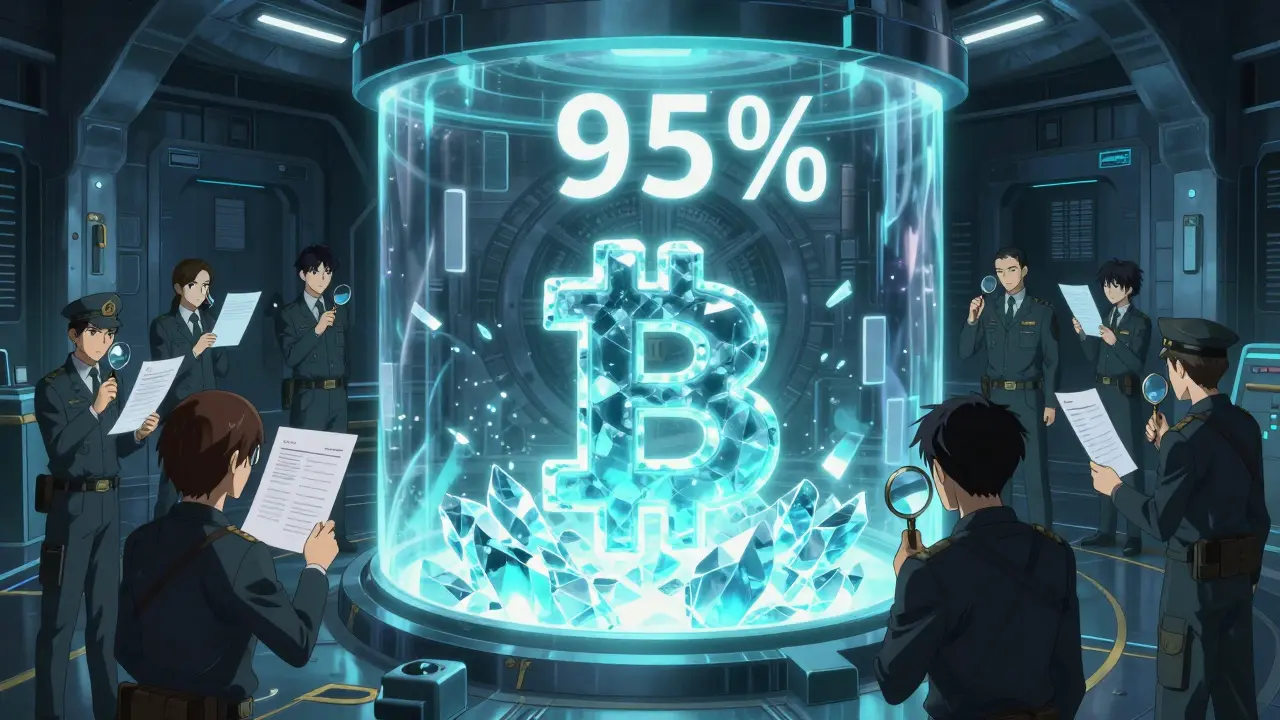
Japan's obsession with security isn't random-it's a reaction to trauma. After the 2018 Coincheck hack, where over $534 million in NEM tokens vanished, the FSA implemented the 95% cold storage rule. This means at least 95% of all customer assets must be kept in offline wallets. For an exchange, this is an operational nightmare because it limits liquidity and slows down withdrawals, but for the user, it's a life-saver. In March 2025, several platforms avoided losses during a security incident specifically because their funds weren't on the hot wallet.
Beyond storage, you need a response team capable of reacting to security incidents within 15 minutes. You also need multi-signature wallet systems and AML (Anti-Money Laundering) tools that can handle over 10,000 transactions per second. If you aren't meeting these technical specs, your registration will likely be canceled-a fate that has already befallen 17 exchanges since 2017.
Trading Restrictions and Market Trade-offs
Here is where the framework starts to hurt. To protect retail traders from massive losses, Japan has severely limited leverage. In 2023, the maximum leverage for margin trading was cut from 4x to 2x. For professional day traders, this is a deal-breaker. While traders in Dubai can use 100x leverage via VARA, Japanese traders are stuck in a low-volatility lane. This has led to a noticeable decline in active day traders on local platforms.
There is also the struggle with the banking sector. Only about 8% of Japanese banks currently provide services to crypto exchanges. Getting a fiat on-ramp is often harder than getting the license itself. However, there is a glimmer of hope: the FSA is currently reviewing rules that might allow megabanks like Mitsubishi UFJ Financial Group to register as exchange operators themselves. If the giants enter the fray, the banking bottleneck could disappear overnight.
Comparing Japan to Global Hubs
How does Japan stack up against other crypto capitals? It's a trade-off between certainty and cost. In the U.S., the SEC and CFTC are often fighting over whether a token is a security or a commodity. In Japan, the legal status of crypto as "property" has been clear since 2017. You don't have to guess if your business is illegal; you just have to figure out if you can afford the compliance costs.
Compared to Singapore, Japan is more expensive. According to PwC's 2025 data, Japanese exchanges spend roughly 25% of their revenue on compliance, while Singaporean firms spend about 15%. Singapore's Monetary Authority of Singapore (MAS) allows more self-certification for token listings, making it a faster place to innovate but potentially a riskier place for the average consumer.
How long does it take to get a crypto license in Japan?
The process typically takes between 18 and 24 months. This includes the time needed to establish a Japanese corporate entity, set up physical offices, implement required security infrastructure, and complete a mandatory six-month shadow operation period to prove system stability to the FSA.
What is the 95% cold storage rule?
It is a mandatory security requirement by the FSA stating that at least 95% of all customer crypto assets must be held in offline (cold) wallets. This prevents the majority of user funds from being exposed to online hacks, which was a direct response to the massive Coincheck breach in 2018.
Can I list any token I want on a licensed Japanese exchange?
No. Most licensed exchanges are members of the JVCEA, which requires all new tokens to be pre-approved by their Token Listing Committee. This process involves rigorous whitepaper reviews and smart contract audits. Many tokens are rejected, which often leads to a delay in new coins reaching the Japanese market.
What is the current limit on leverage trading in Japan?
Leverage for margin trading is currently capped at 2x. This restriction was implemented in 2023 to protect retail investors from extreme volatility and high-risk trading strategies.
What changed with the FIEA transition in September 2025?
The transition moved the oversight of crypto assets from the Payment Services Act (PSA) to the Financial Instruments and Exchange Act (FIEA). This shift treats crypto assets more like financial securities, providing a more sophisticated regulatory framework that can handle complex products like security tokens and tokenized real-world assets.





Comments (17)
Nishant Goyal
April 16, 2026 AT 11:36 AMSeems like a solid path for long-term stability.
Saurav Bhattarai
April 18, 2026 AT 05:43 AMOh please, imagine spending a million dollars just to be told you can't list a token by some bureaucratic committee. Truly an elite way to kill innovation. Typical.
Kim Smith
April 18, 2026 AT 11:26 AMit's kinda wild how we view money now, like these rules are just a reflection of our collective anxiety about the future of value... honestly the 95% cold storage thing is like a digital vault for the soul and even if it slows things down, maybe that slowness is what we actually need to stop the manic energy of the market. i feel like we're just trying to map old world laws onto a new world and it's gonna take decades before we even get the vocabulary right, let alone the regulashuns. it's almost poetic that the place with the most discipline is also the place where you can't just gamble with 100x leverage like some casino in the desert.
Trudy Morse
April 19, 2026 AT 05:23 AMFIEA is basically just the government admitting that crypto is just another security. It was inevitable really.
Shannon Kelly Smith
April 20, 2026 AT 08:52 AMLet's focus on the institutional trust part! 🚀 That's where the real growth is. If the big banks jump in, it's game over for the doubters! 💎🙌
Kevin Lư
April 21, 2026 AT 17:55 PMHonestly, 2x leverage is way more moral. People don't need to lose their entire life savings in five minutes because of a glitch. We should probably just ban leverage everywhere lol.
Sean Mitchell
April 22, 2026 AT 03:46 AMThe sheer audacity of requiring a six-month "shadow operation" is simply breathtaking. It is an absolute farce of a bureaucratic hurdle!
Adedamola Oyebo
April 22, 2026 AT 17:19 PMThe cold storage rule is very effective!!! It basically kills the risk of hot wallet drains...
John and Lauren Busch
April 22, 2026 AT 20:52 PMYeah, total overkill. But hey, at least it's consistent.
Gillian Kent
April 24, 2026 AT 19:45 PMi think its lavely that they care so much about the users safety even if the pros hate it. its just a different way of doin things over there
Kaitlyn Wu
April 25, 2026 AT 05:24 AMProfessional traders need to stop complaining. The 2x cap is for the protection of the masses and that's non-negotiable in a stable society.
Michael Harms
April 26, 2026 AT 10:39 AMMan, that $1M compliance cost is a steep hill to climb, but imagine the doors that open once you're actually licensed in Japan! Totally worth the grind if you've got the vision.
Mark Pfeifer
April 26, 2026 AT 19:06 PMIt is interesting that the JVCEA has more power than the FSA in some practical senses. It's a weird hybrid of government and guild.
Anna Grealis
April 27, 2026 AT 19:21 PMShadow operatin? More like spying on the tech before they let it in. They probbly have backdoors built into the regulashun reqs.
Thomas Jewett
April 28, 2026 AT 13:51 PMThis is exactly why the US needs to step up and take charge of the globl market with our own strength. We can't just let Japen lead the way in regulashun while we fight in courtrooms. It's a travesty that we don't have a unified code that forces every single exchange to follow the same moral standard of protectin the American worker and the American investor from these volatile assets that are basically just digital gambling chips for the rich elite who don't care if the little guy gets wiped out in a flash crash!
Karen Mogollon Gutierrez
April 29, 2026 AT 19:15 PMThe sheer lack of agility in the JVCEA's Token Listing Committee is an absolute tragedy for the industry. It is utterly scandalous that a token can reach its zenith globally while Japanese investors are left waiting for a stamp of approval from a committee that seems to be operating in the previous century!
nikki krinkin
May 1, 2026 AT 05:46 AMI appreciate the focus on security over speed. It gives me peace of mind knowing the funds are actually safe.