

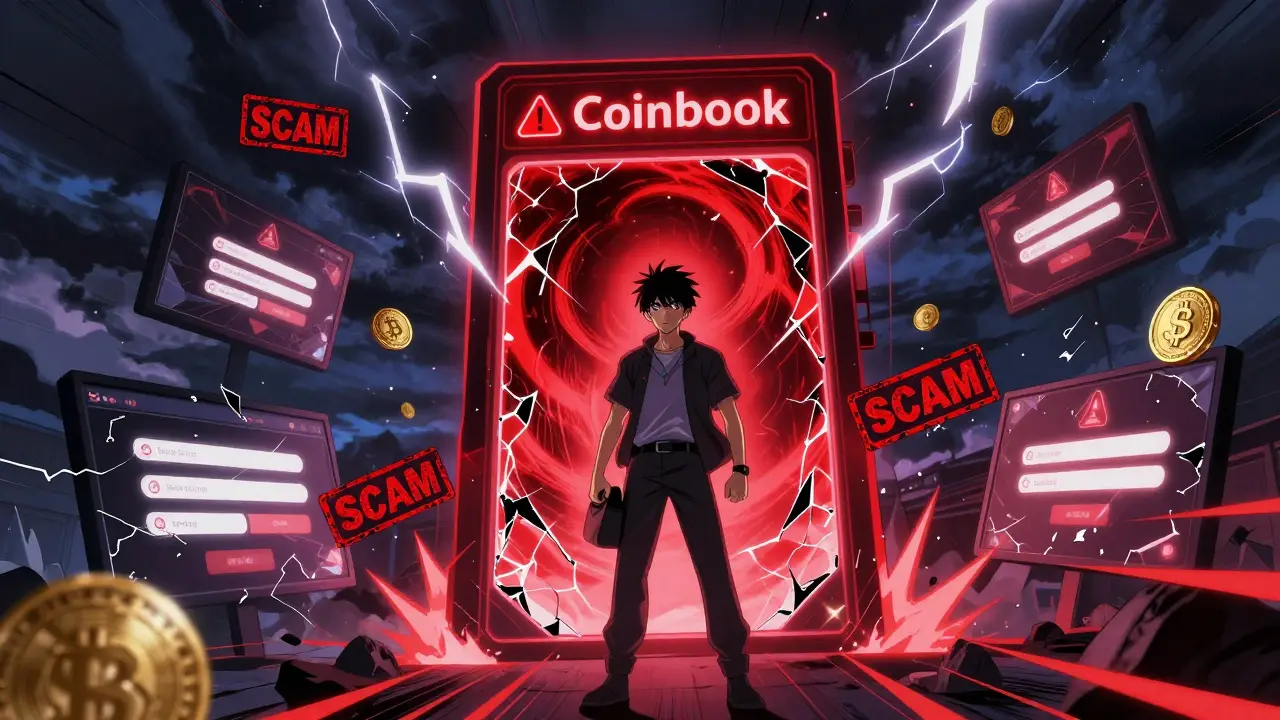
There’s no verified information about a cryptocurrency exchange called Coinbook. No official website, no regulatory filings, no user reviews on Trustpilot or Reddit, and no mention in any major crypto news outlet. If you’re seeing ads or recommendations for Coinbook, you’re likely being targeted by a platform that doesn’t exist-or worse, one that’s trying to trick you.
Every legitimate crypto exchange leaves a trail: press releases, security audits, customer support records, trading volume data, and regulatory licenses. Coinbook has none of these. Even the most obscure exchanges like WhiteBIT or Cryptology have public track records. Coinbook doesn’t. That’s not a gap-it’s a warning sign.
Why You Shouldn’t Trust Coinbook
Scammers love to copy names that sound like real exchanges. Coinbase? Close enough. Coinbook? A typo or a trap. In 2023, over $2.38 billion in cryptocurrency was stolen from exchanges worldwide. Most of those losses came from platforms that looked real but had no real security. They promised low fees, fast withdrawals, and high yields. Then they vanished.
If Coinbook asks you to deposit crypto before verifying your identity, that’s a red flag. Legitimate exchanges require KYC (Know Your Customer) verification before you can trade. If Coinbook lets you trade without ID, it’s not trying to protect you-it’s trying to disappear.
What a Real Crypto Exchange Should Look Like
Compare Coinbook to exchanges like Binance, Kraken, or Coinbase. They all have:
- Multi-factor authentication (MFA) with biometric options like fingerprint or face ID
- Cold storage for 90-98% of user funds-offline, encrypted, and inaccessible to hackers
- Regular third-party audits from firms like CertiK or Hacken
- Insurance coverage for user assets, often backed by companies like Lloyd’s of London
- Regulatory compliance with agencies like the SEC, FCA, or MAS
- Transparent fee structures clearly listed on their website
- Publicly available trading volumes and liquidity data
None of these exist for Coinbook. No audit reports. No license numbers. No insurance details. If you can’t find this information, the exchange isn’t trustworthy.
Red Flags That Coinbook Is a Scam
Here’s what to watch for:
- You found Coinbook through a social media ad or Telegram group
- The website looks like a template from Canva or WordPress
- There’s no contact email, only a chatbot
- Withdrawals take longer than 72 hours-or never complete
- Customer support responds with vague answers like “We’re working on it”
- The domain was registered less than six months ago
Check the domain registration using Whois (you can search this yourself). If Coinbook’s domain was created in 2025 or later, that’s not a new exchange-it’s a fresh scam.
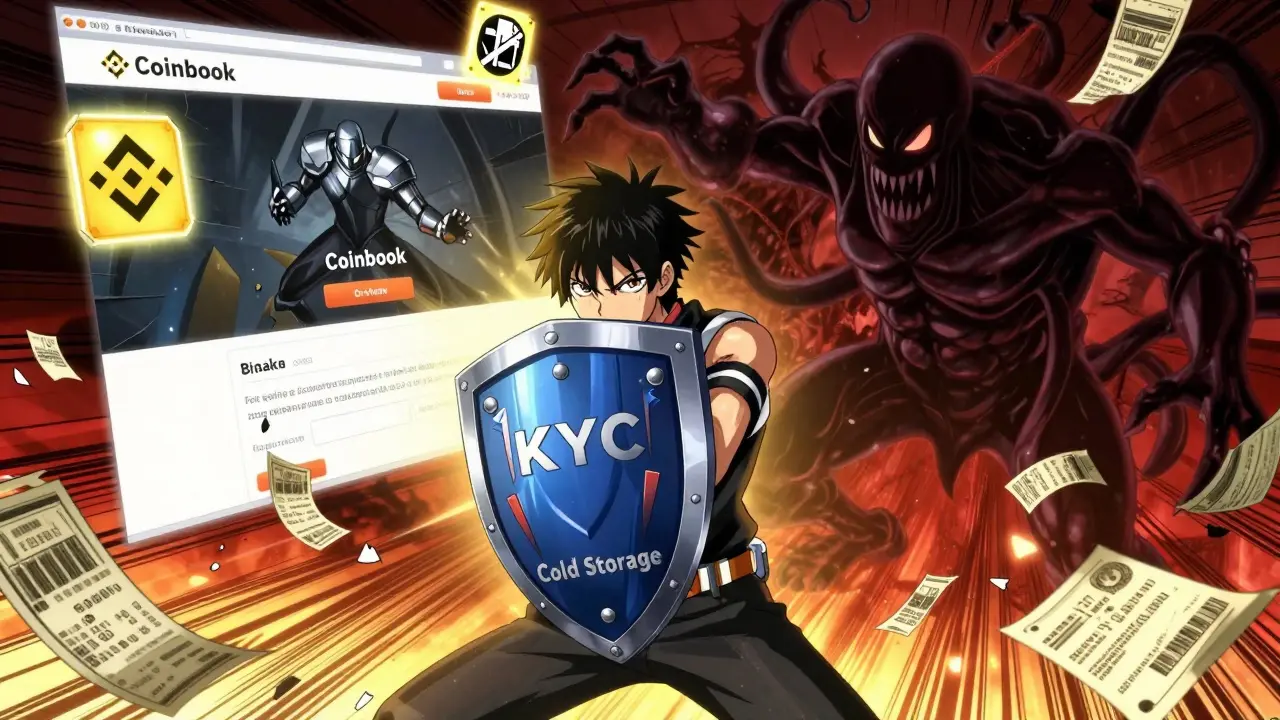
What Happens When You Deposit Into a Fake Exchange
Once you send crypto to Coinbook, you won’t get it back. Cryptocurrency transactions are irreversible. Unlike banks, there’s no FDIC insurance. No chargebacks. No legal recourse if the platform is offshore and unregulated.
Real exchanges like Kraken and Coinbase have reimbursed users after hacks. Why? Because they’re insured and regulated. Coinbook? No insurance. No legal entity. No accountability.
There are reports of users losing thousands after depositing into fake exchanges that used names like Coinbook, CoinVault, or CryptoBook. Their funds vanished. Their support tickets went unanswered. Their accounts were deleted.
What You Should Do Instead
Stick to exchanges with proven track records:
- Coinbase - Best for beginners, U.S.-regulated, 98% cold storage
- Kraken - Strong security, low fees, supports 200+ coins
- Binance - Highest liquidity, advanced trading tools
- KuCoin - Good for altcoins, non-KYC option available
- Crypto.com - Rewards program, Visa card integration
All of these have public audit reports, regulatory licenses, and years of user history. You can verify their security practices. You can’t do that with Coinbook.

How to Protect Yourself
Follow these steps before using any exchange:
- Search for the exchange name + “review” on Reddit and Trustpilot
- Check if it’s listed on CoinMarketCap or CoinGecko
- Look for a regulatory license number on their website (e.g., “FCA Registration No. XXXXX”)
- Verify the domain age using Whois
- Never deposit crypto unless you’ve tested a small withdrawal first
If Coinbook passes none of these checks, walk away. No profit is worth losing your crypto.
Final Warning
Crypto is risky enough without adding fake exchanges into the mix. There are thousands of legitimate platforms to choose from. You don’t need to gamble on Coinbook. The market is full of options with real history, real security, and real support.
If you’ve already deposited into Coinbook, stop trading immediately. Do not send more funds. Try to withdraw what you can-but know that success is unlikely. Report the platform to the FTC and your local financial regulator. And warn others. This isn’t just a bad exchange-it’s a scam waiting to be exposed.
Is Coinbook a real crypto exchange?
No, Coinbook is not a real or verified cryptocurrency exchange. There are no official records, regulatory filings, security audits, or user reviews that confirm its existence. It does not appear on CoinMarketCap, CoinGecko, or any major crypto news site. It’s likely a scam or a phishing site designed to mimic legitimate exchanges like Coinbase.
Why can’t I find Coinbook on CoinMarketCap or CoinGecko?
Legitimate exchanges are listed on CoinMarketCap and CoinGecko because they meet minimum standards for transparency, trading volume, and security. Coinbook is not listed because it doesn’t meet those standards-or worse, it doesn’t exist. If an exchange isn’t on these platforms, treat it with extreme caution.
Can I get my money back if I deposited into Coinbook?
It’s highly unlikely. Cryptocurrency transactions are irreversible. Without a registered company, insurance, or regulatory oversight, there’s no entity to hold accountable. If Coinbook is a scam, your funds are probably gone. The only action left is reporting the platform to authorities like the FTC or your country’s financial regulator.
How do I spot a fake crypto exchange?
Look for these signs: no KYC process, no contact info, poor website design, domain registered recently, promises of guaranteed returns, and no audit reports. Real exchanges have clear fee structures, public security measures, and verified user reviews. If something feels too good to be true, it is.
What are the safest crypto exchanges to use instead?
Use well-established platforms like Coinbase, Kraken, Binance, KuCoin, or Crypto.com. These exchanges are regulated, undergo regular security audits, store most funds in cold storage, and have insurance policies to protect users. They also have years of public trading history and active customer support.









Comments (14)
Andrew Midwood
March 22, 2026 AT 12:36 PMHonestly, this post is a lifesaver. I almost signed up for Coinbook after seeing a Reddit ad that looked legit. Glad I checked first. The part about domain age? I just checked mine and it was registered in 2025. Bro, that’s not a new exchange-that’s a phishing page with a fancy logo. Thanks for the clarity.
Kayla Thompson
March 24, 2026 AT 05:48 AMYou’re oversimplifying. Every major exchange started somewhere. Maybe Coinbook is just in stealth mode. You act like Binance was always this polished giant. Newsflash: they weren’t. You’re just FUD-ing because you’re scared of innovation.
Brijendra Kumar
March 25, 2026 AT 19:35 PMLMAO. You think this is the first time someone’s tried to pass off a fake exchange? Bro, I’ve seen 12 of these in the last 6 months. Coinbook? More like Coinbroke. They’re not even trying. The website’s hosted on a free WordPress theme with a fake ‘24/7 support’ chatbot that replies with ‘Thank you for your patience’ in broken English. I reported it to Chainalysis. You’re welcome.
Ananya Sharma
March 26, 2026 AT 08:12 AMI just checked Whois. Domain registered 3 months ago. No SSL cert. No socials. No team page. Just a form asking for my seed phrase. I didn’t deposit. I just closed the tab. Sometimes the safest trade is the one you don’t make.
Florence Pardo
March 28, 2026 AT 05:32 AMI’ve been in this space since 2017 and I’ve seen every scam in the book. I lost my first 0.5 BTC to something called ‘CoinVault’ that looked exactly like this. The copy, the color scheme, even the font. It’s terrifying how convincing they get. I didn’t tell anyone because I was embarrassed. But now? I speak up. If you’re reading this and you’re thinking about depositing? Just don’t. It’s not worth the shame. Or the loss.
Alicia Speas
March 28, 2026 AT 11:29 AMThank you for this comprehensive breakdown. The regulatory framework surrounding crypto is still evolving, but the absence of any verifiable licensing or audit trail is a definitive red flag. Legitimate entities operate with transparency-not obscurity. I’ve shared this with my crypto study group. Knowledge is the best defense.
Kevion Daley
March 29, 2026 AT 04:38 AM💀
Tammy Stevens
March 30, 2026 AT 05:31 AMI’m not saying Coinbook is legit-but I’ve seen legit projects start with zero footprint. Maybe they’re in private beta? Maybe they’re avoiding noise until they’re ready? The fact that you’re so quick to label it a scam makes me wonder if you’re just scared of anything that doesn’t have a VC logo on its homepage. I’ve lost money to ‘real’ exchanges too. It’s not about the name-it’s about the process.
Justin Credible
March 30, 2026 AT 08:20 AMbro i just went to coinbook and it had a live chat and the guy said 'we are live on binance' so i was like hmm maybe? then i checked binance and nope no listing. so yeah its fake. also the logo looked like it was made in canva. my cousin got scammed last year on something like this. dont do it.
Dheeraj Singh
March 30, 2026 AT 21:43 PMYou’re all naive. Coinbook isn’t fake-it’s just decentralized. You think regulators should control everything? That’s the old world thinking. The fact that you’re clinging to KYC and audits proves you’re still tied to fiat mindsets. Real crypto is permissionless. If Coinbook doesn’t have a license, that’s a feature, not a bug.
Nicolette Lutzi
March 31, 2026 AT 00:46 AMThis is all a distraction. The real scam is the SEC and the Fed. They’re scared of crypto because it cuts out their control. Coinbook might be fake, but the fact that you’re all so quick to report it? That’s the system protecting itself. They want you scared. They want you on Coinbase. Wake up. This isn’t about security-it’s about power.
Domenic Dawson
March 31, 2026 AT 21:33 PMI really appreciate this. I’ve been helping my mom navigate crypto and she almost sent $5k to Coinbook after a YouTube ad. I sat her down, showed her the Whois lookup, and we checked CoinGecko together. She’s still nervous, but now she knows what to look for. This isn’t just info-it’s protection. Thank you.
Sam Harajly
March 31, 2026 AT 22:37 PMOne thing missing from this analysis: the psychological hook. Scammers don’t rely on technical deception. They prey on loneliness. People who feel excluded from ‘elite’ crypto circles are told, 'You’re not ready for Binance-but you can join Coinbook.' That emotional manipulation is more dangerous than any fake UI. The real lesson? Never trust an exchange that makes you feel special.
Alice Clancy
March 31, 2026 AT 22:59 PMI’ve been scammed twice. First by a fake exchange, then by a ‘help desk’ that said they could recover it. I lost $12k. Now I just ignore crypto. If you’re not rich, don’t touch it. If you’re not in the US, don’t touch it. If you’re not a white guy with a Yale degree? Don’t even look. This whole thing is rigged. Coinbook? Probably just a front for the CIA. 🤡