


Imagine logging into your crypto account to find half your portfolio gone. Not hacked by a stranger, but allegedly deleted by the platform itself. This isn’t a hypothetical nightmare scenario; it’s the reality reported by users of IndoEx, a cryptocurrency exchange that has become a lightning rod for controversy in early 2026.
If you are looking for a safe place to store Bitcoin or trade Ethereum, this review might save you from a costly mistake. IndoEx markets itself as a user-friendly, no-KYC (Know Your Customer) spot trading platform. On paper, it sounds convenient. In practice, recent reports paint a picture of a high-risk operation facing severe allegations of unauthorized asset sales and withdrawal blocks. Before you deposit even $1 USDT, you need to understand what is really happening behind the scenes.
The Core Problem: Why IndoEx Is Flagged as High-Risk
Let’s cut through the marketing fluff. The biggest issue with IndoEx right now isn’t its fee structure or its lack of advanced features-it’s trust. Multiple independent reviewers and user forums have raised red flags that cannot be ignored.
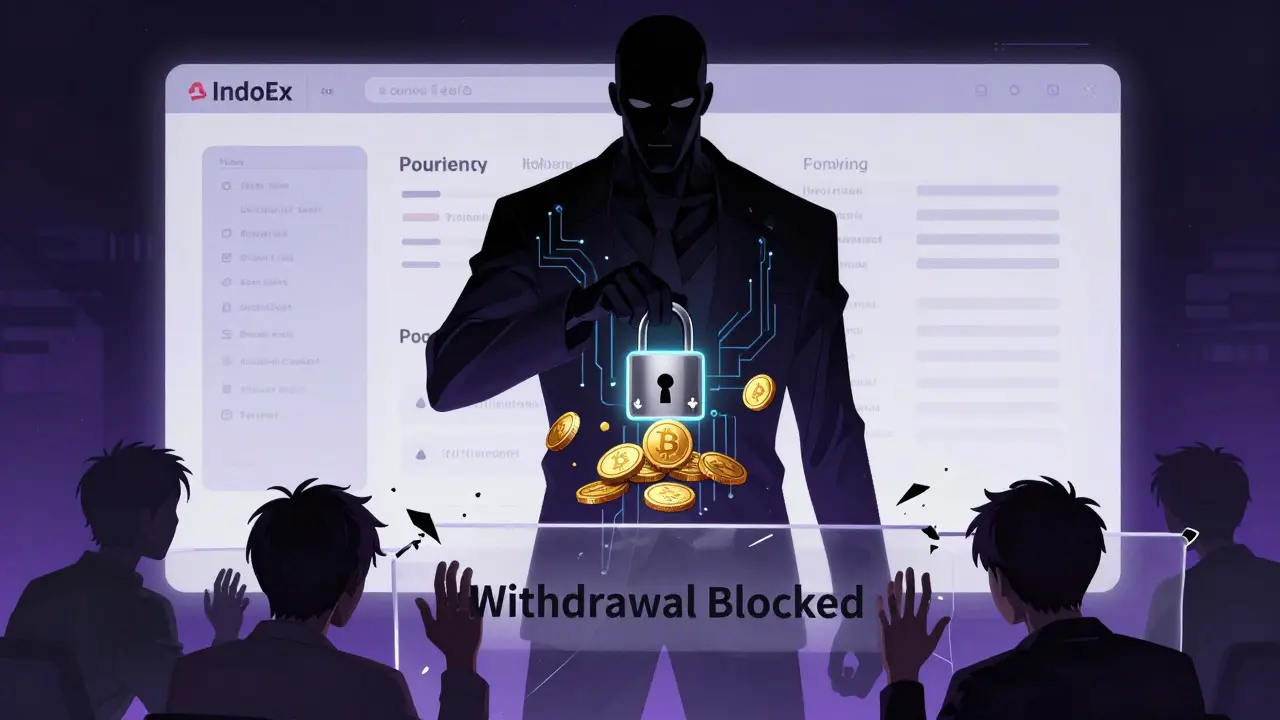
In February 2026, financial analysis firm Traders Union gave IndoEx an overall score of just 2.7 out of 10. They categorized the exchange as "high-risk." More alarmingly, CoinRanking-a major data aggregator-currently labels IndoEx as a "highly problematic cryptocurrency exchange" due to widespread allegations of unauthorized asset sales. Users on platforms like Bitcoin Forum have reported losing significant amounts, including one case where a user lost 0.87 Bitcoin and 19 Ethereum after the exchange allegedly deleted their account without recourse.
These aren’t minor complaints about slow customer support. These are accusations of theft. When an exchange can delete your funds or block withdrawals arbitrarily, you don’t own your crypto anymore-you’re just renting access to it. That is a fundamental violation of the promise decentralization was supposed to deliver.
What IndoEx Actually Offers (And What It Doesn’t)
To give you a complete picture, let’s look at the actual product. IndoEx launched in January 2019 and operates registered offices in Estonia and the United Kingdom. However, being registered in these jurisdictions does not mean it is regulated by them. IndoEx holds no tier-1 regulatory licenses, meaning there is no government body protecting your funds if things go wrong.
Trading Features:
- Spot Trading Only: You can buy and sell cryptocurrencies instantly. There is no margin trading, no futures contracts, and no options. If you want leverage, IndoEx is not for you.
- Limited Asset Selection: As of early 2026, IndoEx supports between 160 and 241 cryptocurrencies. While this includes majors like Bitcoin (BTC), Ethereum (ETH), Solana (SOL), and Cardano (ADA), it pales in comparison to giants like OKX (329 coins) or Kraken (278 coins).
- No Fiat Support: You cannot deposit USD, EUR, or other fiat currencies directly. You must already have crypto to use the platform. Deposits start at 1 USDT, and minimum orders are 10 USDT.
Fees:
The fee structure is straightforward, which is one of the few positives. IndoEx charges a flat 0.15% fee for both makers and takers on spot trades. There are no deposit fees, but withdrawal fees vary depending on the blockchain network used. For simple traders who only care about low costs and basic pairs, this might seem attractive. But low fees don’t matter if you can’t withdraw your profits.
Security: Promises vs. Reality
IndoEx claims to take security seriously. Their website highlights several features:
- Cold Wallet Storage: Most user funds are kept offline to prevent hacking.
- Two-Factor Authentication (2FA): Required for logins and withdrawals via Google Authenticator or email.
- Insurance Partnership: They partner with Hanwha, a South Korean insurance company, to provide hacking insurance. However, this insurance only covers the top 6 cryptocurrencies on the platform, leaving smaller altcoins unprotected.
- Anti-Phishing Codes: A unique code added to emails to verify authenticity.
On the surface, this looks robust. And historically, IndoEx had no record of successful external hacks. But here is the catch: most of the current problems aren’t coming from outside hackers breaking in. They are coming from inside the house. Allegations suggest internal misuse of accounts, where staff or automated systems allegedly sold user assets without permission. Insurance doesn’t cover fraud committed by the exchange itself.
| Feature | IndoEx | OKX | Kraken |
|---|---|---|---|
| Regulatory Status | Unregulated / High Risk | Regulated in multiple jurisdictions | Tier-1 Regulated (US/EU) |
| Supported Coins | ~160-241 | 329+ | 278+ |
| Fiat Deposits | No | Yes | Yes |
| Margin/Futures Trading | No | Yes | Yes |
| Trustpilot Rating | 4.2/5 (Polarized reviews) | High volume, mixed | High volume, generally positive |
| Current Reputation | Severe Fraud Allegations | Industry Leader | Trusted Veteran |
User Experience: A Mixed Bag
If you ignore the serious allegations for a moment, what is it actually like to use IndoEx? The interface is built on TradingView technology, which means it looks familiar to anyone who has used professional charting tools. It’s clean, intuitive, and easy to navigate. Both Android and iOS apps are available, so you can trade on the go.
The platform offers two account types: Basic and Enhanced. Basic accounts have lower withdrawal limits, while Enhanced accounts allow up to 100 BTC per day. Since there is no KYC, signing up is quick. You just need an email address. This anonymity appeals to privacy-focused users, but it also makes it harder to recover funds if something goes wrong. Without identity verification, there is less accountability for the exchange.
Community sentiment is deeply divided. On Trustpilot, IndoEx holds a 4.2 out of 5 rating. Some users praise the ease of use and low fees. But dig deeper into forums like Reddit and Bitcointalk, and you’ll find stories of blocked withdrawals and frozen accounts. This polarization is common among exchanges in trouble: satisfied users stay silent, while victims speak out loudly. The presence of *any* credible fraud allegations should outweigh a handful of five-star reviews.
Who Should Avoid IndoEx?
Given the current landscape in June 2026, I strongly advise against using IndoEx if:
- You are a beginner: New traders often don’t know how to secure their assets. Using an unregulated, high-risk exchange is the fastest way to lose everything.
- You hold significant value: If you have more than a few hundred dollars in crypto, do not risk it on a platform with active fraud allegations.
- You need fiat on/off ramps: IndoEx doesn’t support bank transfers or credit cards. You’ll need another exchange to move money in and out, adding complexity and cost.
- You want advanced trading tools: No bots, no copy trading, no staking, no NFTs. If you’re looking to earn yield or automate strategies, IndoEx lacks the infrastructure.
Better Alternatives for Safe Trading
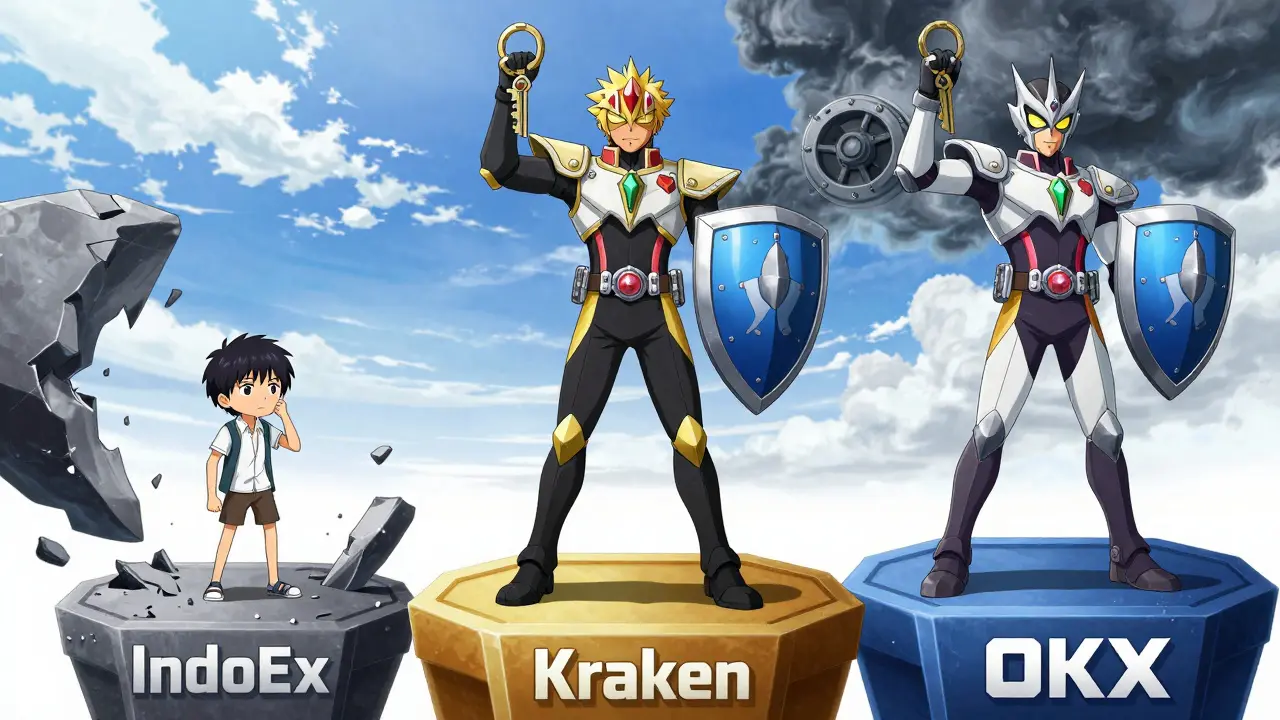
Why take the risk when safer, more feature-rich options exist? Here are three alternatives that offer better protection, regulation, and functionality:
- Kraken: One of the oldest and most trusted exchanges in the world. Fully regulated in the US and EU, with strong security records and excellent customer support. Ideal for beginners and long-term holders.
- OKX: A global leader with over 300 supported coins, deep liquidity, and advanced trading features including futures and options. Great for active traders who want variety.
- Bybit: Known for its user-friendly interface and strong focus on derivatives, Bybit also offers spot trading with competitive fees. It has improved its regulatory standing significantly in recent years.
All three platforms require KYC, which adds a step during sign-up but provides legal recourse if issues arise. They also offer fiat deposits, making it easier to fund your account from a bank transfer.
Final Verdict: Stay Away Until Proven Otherwise
IndoEx may have started with good intentions in 2019, offering a simple, no-KYC spot trading experience. But in the fast-moving world of crypto, reputation is everything. The current allegations of unauthorized asset sales and withdrawal failures are too serious to dismiss. A 2.7/10 safety score from Traders Union and warnings from CoinRanking are clear signals that this platform is not ready for prime time.
As of June 2026, my advice is simple: keep your funds elsewhere. Use established, regulated exchanges that prioritize transparency and user protection. If IndoEx resolves these issues, publishes proof of reserves, and gains proper regulatory oversight, we can revisit this review. Until then, the risk far outweighs the benefit of a 0.15% trading fee.
Is IndoEx a scam?
While "scam" is a strong word, IndoEx is currently facing severe and widespread allegations of unauthorized asset sales and withdrawal blocks. Independent reviewers label it as "high-risk" and "problematic." Until these issues are resolved and proven false, treating it as potentially fraudulent is the safest approach.
Does IndoEx require KYC?
No, IndoEx does not require Know Your Customer (KYC) verification for basic accounts. This allows for anonymous trading, but it also means less accountability and fewer protections if you encounter issues with your account or funds.
What are the trading fees on IndoEx?
IndoEx charges a flat 0.15% fee for all spot trades, regardless of whether you are a maker or taker. There are no deposit fees, but withdrawal fees depend on the specific cryptocurrency and blockchain network used.
Can I deposit fiat currency (USD/EUR) on IndoEx?
No, IndoEx does not support fiat currency deposits or withdrawals. You can only deposit cryptocurrencies such as USDT, BTC, or ETH. To use the platform, you must first acquire crypto from another source.
Is IndoEx regulated?
IndoEx is not regulated by any major financial authority. Although it has registered offices in Estonia and the UK, it does not hold tier-1 regulatory licenses. This lack of oversight increases the risk for users, as there is no government-backed protection for your funds.
What happened to users who reported losing funds on IndoEx?
Some users on forums like Bitcoin Forum have reported losing significant amounts of Bitcoin and Ethereum, claiming the exchange deleted their accounts or sold their assets without permission. These cases remain unresolved, contributing to the platform's poor reputation and high-risk classification.









Comments (14)
Terry Hyland
June 14, 2026 AT 23:14 PMThese crypto platforms are just fronts for organized crime and the government lets them slide because they want to track everyone anyway. It is disgusting how they steal from honest people while pretending to be tech innovators. You are all fools for trusting a website with your life savings when you know nothing about who owns it. The whole system is rigged against the little guy and this proves it once again.
Tim Lefebvre
June 16, 2026 AT 13:44 PMi mean yeah its pretty scary stuff but hey at least the fees were low right? jk dont deposit there lol. i used to trade on smaller exchanges back in the day and always got burned eventually. kraken is solid though ive been using it for years and never had an issue with withdrawals. maybe try that instead if u need a safe spot
Monica Pathammavong
June 16, 2026 AT 20:45 PMactually you idiots dont understand the real problem here. the lack of KYC is what makes them vulnerable to insider trading by employees who have access to the backend databases without proper oversight protocols. its not just about trust its about structural failure in their compliance architecture which most retail investors are too stupid to grasp. you should read up on regulatory frameworks before commenting blindly
Benjamin Eisen
June 17, 2026 AT 08:44 AMhey guys i know this sounds bad but maybe we can learn from this experience together. its important to stay calm and look for solutions rather than just panicking. has anyone tried contacting their support team directly to see if there is any way to recover funds? sometimes these things get resolved if you keep pushing politely. let me know if u find anything out
Kenneth Riley
June 18, 2026 AT 13:38 PMOH MY GOD THIS IS A DISASTER! i cant believe people still fall for these no-kyc scams in 2026. its literally criminal negligence and they should be thrown in jail immediately. my cousin lost his entire retirement fund on a similar platform last year and now hes living in his car. wake up sheeple before you lose everything too!!!
ravi mahla
June 19, 2026 AT 00:08 AMhaha wow talk about a hot mess. seriously though why would anyone use indoex when okx exists? its like choosing to ride a bicycle made of paper instead of a tesla. save yourself the headache and move your coins to a regulated exchange before they vanish into thin air. happy trading everyone!
Mark Brunschwiler
June 20, 2026 AT 09:04 AMi feel so sad for the people who lost money because it shows how broken our financial systems really are. we live in a world where trust is dead and greed rules supreme. every time someone gets scammed it feels like a piece of my soul dies a little bit more. please take care of each other and protect your wealth from these evil corporations.
Sonya O'Brien
June 20, 2026 AT 17:19 PMi completely agree with the points raised in this review especially regarding the importance of regulatory oversight which is crucial for maintaining investor confidence in digital asset markets, and while some may argue that decentralization offers certain benefits such as privacy and autonomy, the reality is that without proper safeguards and accountability measures in place, users are left extremely vulnerable to exploitation and fraud by malicious actors operating within unregulated environments.
Akeem Whittaker
June 21, 2026 AT 12:31 PMWe need to hold these companies accountable for their actions. No excuses. If you cannot guarantee the safety of user assets then you have no business operating as an exchange period. Move your funds to Kraken or Bybit immediately and stop enabling this behavior by giving them any attention whatsoever.
Skm Shubham
June 22, 2026 AT 03:01 AMThe incompetence displayed by IndoEx management is staggering. They failed basic due diligence and risk assessment procedures leading to catastrophic losses for unsuspecting victims. This serves as a cautionary tale for all participants in the cryptocurrency ecosystem to exercise extreme caution when selecting custodial services.
Rob Aronson
June 22, 2026 AT 17:01 PMFrom a technical perspective the absence of multi-signature cold storage protocols combined with inadequate internal controls creates significant vulnerabilities. Smart contract audits are essential but human error remains the weakest link in security chains. Always verify proof of reserves independently 🛡️💻
Kwon Bill
June 24, 2026 AT 03:42 AMIn Asian markets particularly India and Southeast Asia users often prioritize ease of access over regulatory compliance due to limited banking infrastructure. However this convenience comes at a high cost when platforms like IndoEx exploit these gaps. We must educate communities about self-custody solutions like hardware wallets.
Suman Patil
June 24, 2026 AT 05:00 AMLet's work together to spread awareness about these risks. Sharing knowledge helps prevent future victims from making the same mistakes. Remember that true freedom in crypto comes from controlling your own private keys not relying on third parties. Stay safe and informed friends 🙏✨
Kumaran sowkarpet
June 25, 2026 AT 13:51 PMbro really thought he could beat the system with no kyc 😂 better luck next time buddy. just buy btc on coinbase and sleep tight at night. simple as that no drama no stress. cheers mate 🍻