


When the Iranian rial lost 90% of its value over six years, people didn’t just stop buying bread-they started selling everything they owned to buy Bitcoin. In 2024, crypto outflows from Iran hit $4.18 billion, a 70% jump from the year before. That’s not a glitch. It’s not fraud. It’s survival.
People Aren’t Gambling. They’re Saving.
Most people think of cryptocurrency as something speculative. Gamblers. Day traders. Elon Musk tweets. But in Iran, crypto isn’t about getting rich. It’s about not going broke. The Iranian government controls banks. It freezes accounts. It blocks international transfers. And when inflation hits 50%, your salary buys less than half of what it did last year. So ordinary Iranians-teachers, mechanics, shop owners-started turning to Bitcoin. Not because they loved blockchain. But because Bitcoin doesn’t care about sanctions. It doesn’t need a bank. It doesn’t ask for paperwork. Chainalysis, the blockchain analytics firm, looked at every transaction and found something shocking: 92% of the outflows came from small, personal transfers under $1,000. Not state hackers. Not oligarchs. Just people trying to protect their life savings. One mother in Tehran sold her car. Another man liquidated his gold jewelry. They all bought Bitcoin. And they didn’t hold it for a month. They held it because they knew the rial would keep falling.When War Hits, Crypto Spikes
The data doesn’t lie. On April 9, 2024, Israel bombed the Iranian embassy in Damascus. The next day, Bitcoin outflows from Iran jumped 38%. On April 14, when Iran fired missiles at Israel, outflows spiked again-this time by 52%. Then, in late September and early October, another round of attacks sent crypto outflows soaring once more. Google Trends tracked it. Searches for “Iran Israel” spiked on those exact dates. And right after, blockchain records showed Iranians rushing to move money out. This wasn’t random. It was reaction. Every time tension rose, people scrambled to convert their rials into something that wouldn’t vanish overnight. Stablecoins like USDT didn’t dominate. Bitcoin did. Why? Because Iranians didn’t just want to preserve value-they wanted to move it. Bitcoin is the only digital asset that can cross borders without permission. You can’t freeze a Bitcoin wallet the way you freeze a bank account.The Domestic Exchanges That Broke the Rules
Iran didn’t have to rely on foreign exchanges. It built its own. Platforms like Nobitex, Wallex, and Ramzinex became lifelines. They let Iranians buy Bitcoin with rials. They let them sell Bitcoin to pay for medicine, laptops, even school fees. These exchanges didn’t operate in the shadows-they were registered, licensed, and tracked by the government. But then, in November 2024, the Iranian Central Bank cracked down. They demanded every user’s ID, phone number, and transaction history. They forced exchanges to hand over data. Why? Because they couldn’t control the flow anymore. People were using these platforms to escape the economy they were supposed to trust. The crackdown didn’t stop the outflows. It just made them harder. Iranians started using VPNs, proxy servers, and peer-to-peer networks. They traded over Telegram. They met in parks to swap cash for Bitcoin. The system adapted. Because the need was too real to ignore.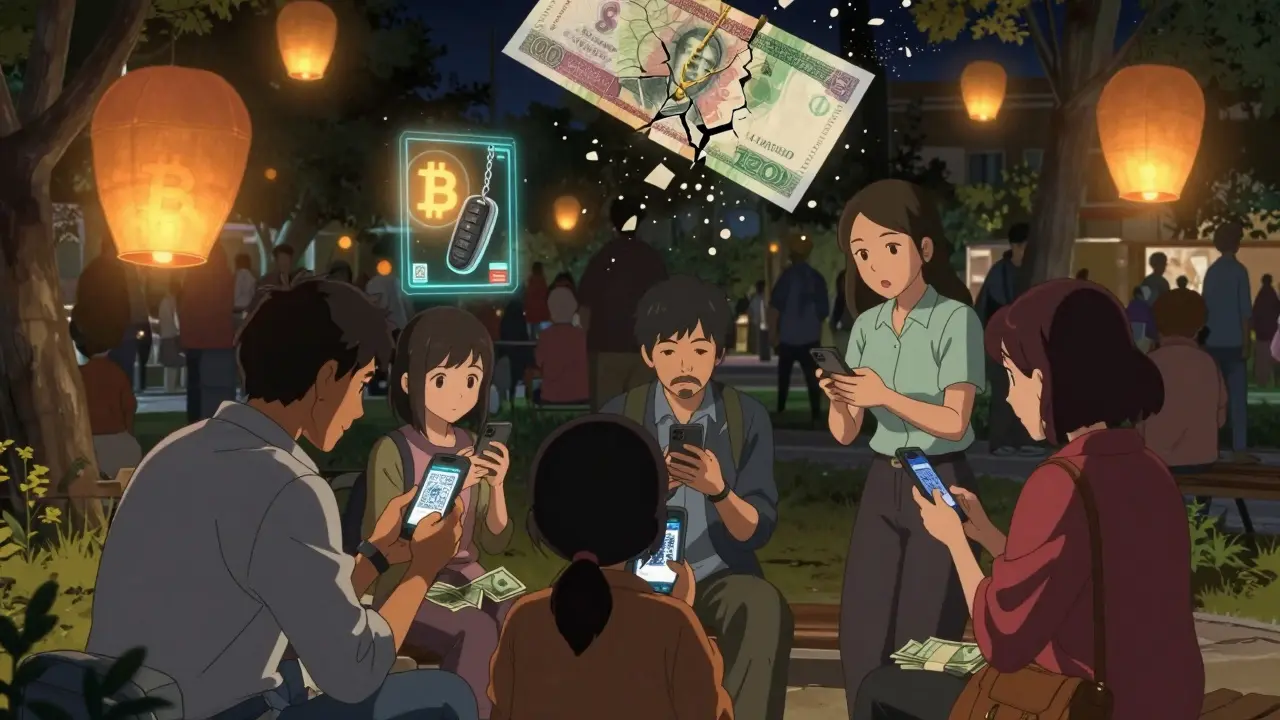
How Iran’s Crypto Scene Is Different
Other sanctioned countries tried this. Venezuela had hyperinflation. Russia faced sanctions after 2022. North Korea stole crypto. But Iran’s case is unique. Venezuela’s crypto use was mostly about survival-buying food, paying rent. Iran’s was about escape. People weren’t just buying Bitcoin to eat. They were buying it to leave. To send money to family abroad. To pay for university tuition in Turkey or Germany. To start over. Russia’s crypto use was mostly institutional. Large companies moved money through crypto to bypass Western banking. Iran’s was entirely personal. Chainalysis found no evidence of state involvement. Just millions of individuals doing what they thought was right. And unlike North Korea, which hacks exchanges to steal funds, Iran’s people were giving away their own money-literally paying to get Bitcoin out of the country. They paid fees. They paid for VPNs. They paid for advice. They paid because they had no other choice.Why the World Can’t Stop It
Exchanges like Binance and Kraken tightened rules. They blocked Iranian IPs. They flagged transactions. They required extra verification. But it didn’t work. Why? Because crypto doesn’t need a bank. A person in Tehran can send Bitcoin to a friend in Dubai in 10 minutes. No SWIFT. No paperwork. No approval. And once it’s out, it’s gone. There’s no undo button. The U.S. Treasury’s OFAC tried to track it. They added Iranian-linked wallets to sanctions lists. But new wallets popped up every day. Wallets created with new phones. New emails. New identities. It’s like trying to stop water with a sieve. Even more telling: Iranian miners kept running. They used cheap electricity to mine Bitcoin, then sold the coins abroad. The government didn’t shut them down. It taxed them. It saw crypto mining as a way to earn foreign currency. So while citizens were being blocked from buying Bitcoin, the state was profiting from it.
What This Means for the Future
Iran isn’t an outlier. It’s a warning. When governments restrict access to money, people find a way. Crypto isn’t the cause of this-it’s the symptom. The deeper issue? Trust. Iranians don’t trust their currency. They don’t trust their banks. They don’t trust their government. This isn’t going away. Sanctions aren’t being lifted. Inflation isn’t being fixed. The rial isn’t recovering. So people will keep moving money out. Chainalysis predicts 2025 will see even higher outflows. And if other sanctioned nations-like Syria, Belarus, or Zimbabwe-see Iran’s success, they’ll follow. The global financial system was built on banks, borders, and control. But in Iran, a new system is already here. It’s decentralized. It’s private. It’s unstoppable. And it’s run by ordinary people who just want to keep what they’ve earned.How Iranians Are Doing It
Here’s how it actually works on the ground:- Someone sells their car for 150 million rials.
- They open a local exchange app (like Nobitex) and buy 2.5 Bitcoin.
- They use a VPN to connect to a foreign wallet.
- They send the Bitcoin to a trusted relative in Turkey.
- The relative sells it for euros or dollars and sends cash back via hawala.
What’s Next?
The Iranian government is trying to launch its own digital currency. But no one trusts it. Why would you trust a digital rial when the real one keeps collapsing? Meanwhile, Bitcoin keeps rising. The world keeps watching. And Iranians? They keep sending money out. This isn’t about crypto. It’s about freedom. And when people feel trapped, they find a way out-even if it’s digital.Why did crypto outflows from Iran spike in 2024?
The spike was triggered by a combination of economic collapse and geopolitical tension. The Iranian rial lost 90% of its value since 2018, and inflation hit 40-50%. When Israel bombed the Iranian embassy in Damascus and Iran retaliated, citizens rushed to convert rials into Bitcoin as a hedge against both currency collapse and war. Chainalysis confirmed these spikes matched exact dates of military escalation.
Was this crypto outflow state-sponsored?
No. Chainalysis found that 92% of the outflows came from small, personal transactions under $1,000. This was not hacking, not government funds, not sanctioned entities. It was ordinary Iranians-teachers, shopkeepers, students-trying to protect their savings. Researchers called it an "alternative financial system" built by citizens, not the state.
Why Bitcoin instead of stablecoins like USDT?
While stablecoins are meant to hold value, Bitcoin is the only asset that can move freely across borders without permission. Iranians didn’t just want to preserve wealth-they wanted to escape. Bitcoin can be sent to any wallet anywhere. Stablecoins often require KYC checks, which Iranian exchanges were forced to enforce. Bitcoin, especially when moved via peer-to-peer or non-KYC channels, offered more control.
How did Iranians access crypto if banks were blocked?
They used domestic exchanges like Nobitex and Wallex before late 2024, then shifted to peer-to-peer trading via Telegram and local meetups. Many used VPNs to bypass government internet blocks. Some traded cash for Bitcoin in person. Others used family abroad to receive crypto and convert it to local currency. The system was decentralized, informal, and deeply personal.
Did the Iranian government try to stop this?
Yes. In late 2024, the Central Bank forced domestic exchanges to collect full user data and report all transactions. They blocked access to foreign platforms. But this didn’t stop the outflows-it just made them slower and riskier. Meanwhile, the government continued to allow and even tax Bitcoin mining, seeing it as a way to earn foreign currency. Their policy was contradictory: restrict citizens, profit from miners.
Is this happening in other countries?
Yes, but not like this. Venezuela saw crypto use during hyperinflation, but its outflows were smaller. Russia used crypto for corporate sanctions evasion, not personal wealth. Iran’s case is unique because it’s the largest, most widespread, citizen-driven crypto exodus ever recorded. It’s a model others may follow if sanctions continue.







Comments (25)
Patty Atima
March 16, 2026 AT 03:23 AMThis is wild. People just want to survive. Bitcoin isn't magic-it's the only thing left.
Arlene Miles
March 17, 2026 AT 07:30 AMLet me be clear: this isn't about crypto. It's about a government that turned its own people into economic refugees. When your currency is a lie, your only truth is a private key. These aren't speculators. They're refugees with Wi-Fi.
Sarah Zakareckis
March 18, 2026 AT 20:19 PMThe institutional inertia of legacy finance is crumbling under grassroots decentralization. What we're witnessing is a paradigm shift from centralized monetary control to peer-to-peer sovereignty. The rial's collapse wasn't an economic event-it was a systemic failure of trust, and Bitcoin became the emergent protocol for human dignity.
Gene Inoue
March 20, 2026 AT 03:46 AMOh wow look at these poor Iranians trying to be smart. Meanwhile in the US we just use Venmo and cry when gas prices go up. You people are literally begging for sanctions. Stop being so dramatic.
Marc Morgan
March 21, 2026 AT 06:36 AMI mean… I get it. But also, isn’t this just the world’s most expensive way to buy a latte? 🤔
Cheri Farnsworth
March 22, 2026 AT 23:57 PMI have never been more moved by data in my life. 92% under a thousand dollars. That’s not speculation. That’s a mother selling her wedding ring. That’s a mechanic trading his tools. That’s a child’s future being sent across borders in 1s and 0s. This isn’t a story about technology. It’s about humanity refusing to be erased.
john peter
March 24, 2026 AT 02:25 AMThe irony is profound. The same people who decry capitalism’s excesses now rely on its most radical product-decentralized digital scarcity-to survive the consequences of their own state’s collectivist failures. A Marxist regime, undone by Bitcoin. The universe has a sense of humor.
Sarah Hammon
March 25, 2026 AT 06:36 AMI work with refugees. This is the same pattern. When institutions fail, people build their own. No paperwork. No forms. Just trust between humans. Bitcoin is the new hawala. And honestly? It’s more reliable than any bank I’ve ever seen.
Elizabeth Kurtz
March 26, 2026 AT 13:31 PMI’m Indian. I’ve seen how hyperinflation destroys lives. But what’s happening in Iran is different. It’s not just about food. It’s about dignity. About sending your daughter to university abroad. About not having to beg for a visa. This isn’t just finance. It’s migration. It’s hope in a digital wallet.
shreya gupta
March 27, 2026 AT 17:59 PMInteresting. But why not use gold? Or real estate? Why Bitcoin? Is it just because it's trendy? Or because Western media loves a crypto narrative? I'm skeptical.
Shreya Baid
March 28, 2026 AT 11:47 AMI want to say thank you to every Iranian who held on. To every teacher who sold her car. To every father who waited in line for hours to trade cash for a QR code. You didn’t just preserve wealth. You preserved your children’s future. This is courage. This is love. This is quiet revolution.
Ricky Fairlamb
March 28, 2026 AT 20:12 PMThis is all a psyop. The U.S. government is using this narrative to destabilize Iran. The real outflows are fake. Chainalysis is a CIA front. Bitcoin isn’t even real money. It’s a digital illusion designed to drain sovereign wealth. Wake up. This isn’t survival. It’s manipulation.
Christopher Hoar
March 29, 2026 AT 17:46 PMso like… i get that the rial is trash but why not just use usdt? its pegged. why go for bitcoin? its like using a flamethrower to light a candle. also why are people using vpn? its not that hard to buy crypto. i think this is all overblown.
Billy Karna
March 29, 2026 AT 21:54 PMThe key insight here is that Bitcoin isn’t being used as an investment vehicle-it’s being used as a cross-border liquidity channel. The fact that stablecoins didn’t dominate reveals that Iranians prioritize irreversibility and censorship resistance over price stability. This is a profound shift in user behavior: from yield-seeking to freedom-seeking. The financial architecture of the 21st century is being rewritten by necessity, not ideology.
Jerry Panson
March 31, 2026 AT 14:39 PMWhile the human narrative is compelling, one must consider the macroeconomic implications. The outflow of capital represents a loss of domestic monetary control, which undermines the state’s ability to manage inflation, interest rates, and fiscal policy. The long-term consequence may be a deeper entrenchment of dual economies: one official, one underground. This is not liberation-it is fragmentation.
Carol Lueneburg
April 1, 2026 AT 14:14 PMI cried reading this. Not because of the numbers. But because of the mothers. The teachers. The kids. This is the most beautiful thing I’ve seen all year. People choosing hope over despair. Not with protests. Not with speeches. With code. With wallets. With quiet, stubborn courage. 🌍💛
Heather James
April 2, 2026 AT 14:28 PMThey didn’t need permission. They didn’t need a permit. They just… did it. That’s the real story.
Derek Lynch
April 2, 2026 AT 22:15 PMThis is the future. Every sanctioned nation will follow. Every oppressed economy will adapt. This isn’t a footnote in history-it’s the first chapter of a new global financial system. And it’s being written by people who have nothing left to lose. We’re not watching a trend. We’re witnessing the birth of a new kind of sovereignty.
Robert Kunze
April 4, 2026 AT 10:49 AMi just want to say i never thought about this before but like… if your money is worthless and your gov is trying to trap you… of course you use bitcoin. why is this even a question? its like asking why people use umbrellas in rain. duh.
Jessica Beadle
April 5, 2026 AT 18:47 PMThe data is cherry-picked. The real story is that Iran’s central bank is monetizing mining while crushing citizens. This isn’t liberation-it’s exploitation. The government is profiting from the desperation of its own people. That’s not freedom. That’s state capitalism with a blockchain veneer.
Ross McLeod
April 6, 2026 AT 02:45 AMOne must consider the epistemological framework through which this phenomenon is interpreted. The narrative of 'freedom' is a neoliberal construct, projecting Western individualism onto a context that may be better understood through the lens of cultural resilience and adaptive survival. The term 'escape' is misleading; these individuals are not fleeing-they are reconstituting economic agency within an ecosystem of systemic collapse. The blockchain, in this context, functions not as a tool of liberation, but as a recursive mechanism of self-preservation under institutional failure.
Kira Dreamland
April 7, 2026 AT 17:07 PMI’ve never been to Iran. But I’ve seen my grandma do this with her savings during the 2008 crash. She hid cash in socks. They hid Bitcoin in wallets. Same heart. Different decade.
rajan gupta
April 8, 2026 AT 07:29 AMThe world is waking up. 🌍🔥 When your government turns your life into a spreadsheet… you turn your life into a blockchain. Iran didn’t break the system. They rebuilt it. And now? The whole world is watching. #BitcoinIsFreedom
Anastasia Thyroff
April 10, 2026 AT 02:58 AMI just… I can’t. I’m sobbing. I have a cousin who lives in Tehran. She sent me a photo of her daughter’s schoolbook with a Bitcoin logo drawn on the margin. She wrote: 'This is how we’ll get out.' I don’t know what to say. I just… I don’t know what to say.
Henrique Lyma
April 10, 2026 AT 13:48 PMHonestly, the whole thing feels performative. You have these grand narratives about freedom and sovereignty, but in reality, it’s just people using a volatile asset to avoid inflation while the state quietly profits from mining. It’s not a revolution-it’s a workaround. And frankly, it’s not even that clever. You still need internet. You still need trust. You still need someone on the other end. It’s just a more complicated version of bartering. Don’t romanticize it.