

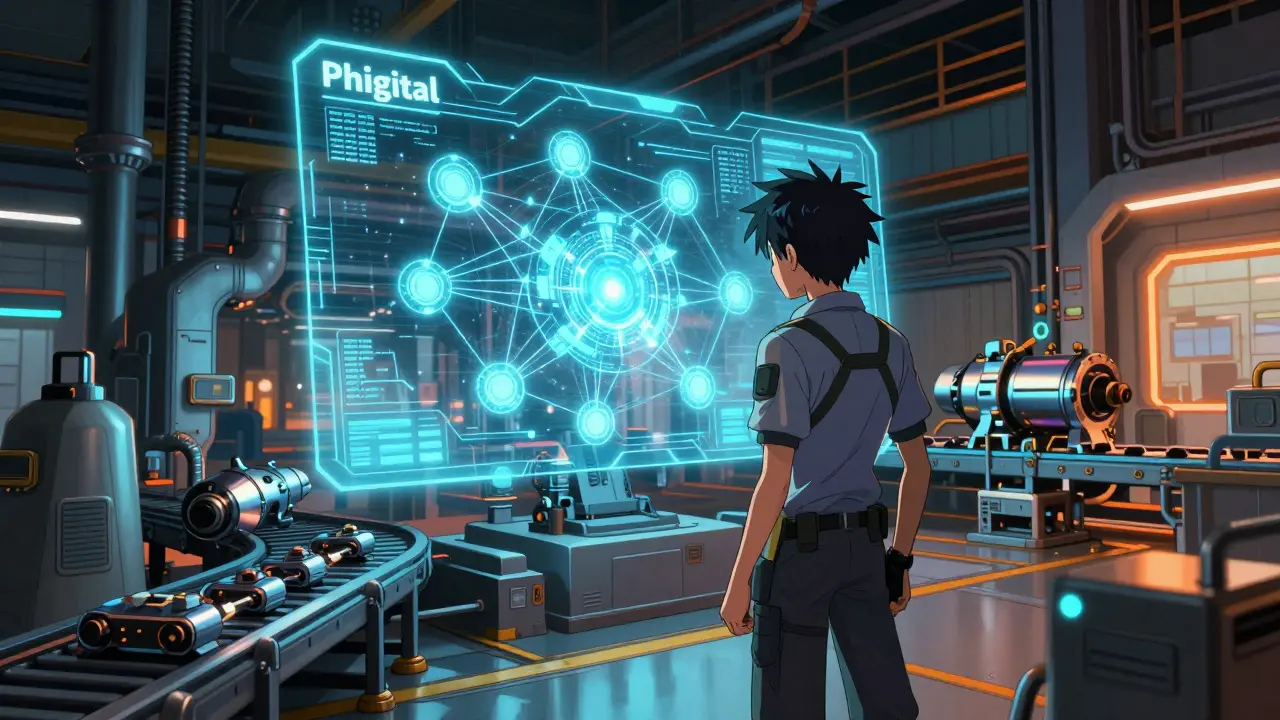
Have you ever wondered how a factory order for airplane parts could be tracked on the blockchain? That is the promise behind Smart MFG, an ERC20 cryptocurrency token designed to bridge physical manufacturing with digital supply chains through real-world asset (RWA) tokenization. Also known as MFG token, it operates within an ecosystem that claims to revolutionize how manufacturers handle purchase orders, quotes, and inventory using smart contracts.
But here is the catch: while the technology sounds futuristic, the actual market reality of holding this token in mid-2026 is quite different from its ambitious whitepaper. If you are looking at your portfolio or researching new coins, you need to separate the hype about 'hardware NFTs' from the cold hard data regarding liquidity and price volatility. Let's break down exactly what this token does, who built it, and whether it holds any weight in today's crypto landscape.
The Core Concept: Bridging Factories and Blockchain
To understand Smart MFG, you first have to look at the problem it tries to solve. Traditional manufacturing supply chains are slow, opaque, and prone to errors. A manufacturer might send a Request for Quote (RFQ) via email, wait days for a response, and then manually process a Purchase Order (PO). This creates bottlenecks.
The Smart MFG ecosystem proposes automating this through smart contracts on the Ethereum blockchain. The MFG token acts as the fuel for these transactions. Instead of just being a speculative asset, it is intended to serve specific utility functions:
- Incentivizing RFQs: Manufacturers can use tokens to prioritize their quote requests within the network.
- Securing Purchase Orders: Tokens can lock into smart contracts to guarantee payment once goods are delivered and verified.
- Tokenizing Assets: Physical items, like 3D-printed aerospace parts, are linked to digital representations called Hardware NFTs.
This approach falls under the broader trend of Real-World Asset (RWA) tokenization, which aims to bring tangible value onto the blockchain. By creating a 'Phigital' link (physical + digital), the platform attempts to provide transparency that traditional ledgers lack. However, the complexity of integrating heavy industrial processes with lightweight crypto transactions remains a significant hurdle.
Origins and Key Milestones
The story of Smart MFG Tech dates back to 2017. It wasn't born in a crypto trading room but rather in Smart MFG Labs, a research arm focusing on decentralized physical infrastructure (DePin). Their early work involved developing technology for aerospace and defense companies, including sending 3D-printed parts into space. This background gives them a unique angle compared to typical meme coins or pure finance protocols.
A critical milestone occurred in 2018 when they introduced the concept of the Hardware NFT. This innovation allowed enterprises to manage on-chain assets more efficiently, linking a physical object's lifecycle to its digital twin. Since then, the company has claimed partnerships with major industrial players such as Mitsubishi, Toyota, Ford, SpaceX, and Lockheed Martin. They also collaborate with industry bodies like the Ethereum Enterprise Alliance and MOBI (Mobility Open Blockchain Initiative).
Recent developments include the launch of MFG Phigital 1.0 in late 2024 and the rollout of version 2.0 in spring 2025. These updates focus on empowering individual makers, not just large corporations, by introducing AI-assisted Design for Manufacture (DFM) tools. Additionally, the introduction of MakerFi brings decentralized finance elements, allowing users to tokenize projects for invoice financing. This shift suggests an attempt to broaden the user base beyond enterprise clients to include independent creators and small-scale manufacturers.

Tokenomics and Supply Details
When evaluating any cryptocurrency, understanding the supply mechanics is crucial. The MFG token follows the ERC20 standard, meaning it lives on the Ethereum network. This ensures compatibility with popular wallets like MetaMask and decentralized exchanges like Uniswap, provided there is sufficient liquidity.
| Attribute | Value / Range |
|---|---|
| Blockchain | Ethereum (ERC20) |
| Circulating Supply | ~335 Million - 390 Million (varies by source) |
| Maximum Supply | ~868 Million - 870 Million |
| Token Type | Utility Token |
Note the discrepancy in circulating supply figures across platforms. CoinGecko reports around 390 million tokens in circulation, while Bybit lists closer to 335 million. This inconsistency is common among lower-cap tokens and often stems from delayed reporting or differing methods of calculating locked vs. unlocked tokens. The maximum supply caps out near 870 million, which sets the upper limit for inflation if additional tokens are minted for future incentives or team vesting schedules.
Market Performance and Liquidity Challenges
Here is where things get tricky for potential investors. As of July 2026, the market data for MFG is fragmented and concerning. Price discrepancies between exchanges are massive. One tracker might show $0.0006, while another shows $0.0012. Why? Because there is very little actual trading volume.
Let's look at the numbers. In a healthy market, prices converge quickly because arbitrageurs buy low on one exchange and sell high on another. With MFG, the 24-hour trading volume fluctuates wildly-from under $500 on some aggregators to over $80,000 on others. This volatility indicates thin order books. If you try to sell a large amount of MFG, you could easily crash the price due to lack of buyers.
Historically, the token peaked at approximately $0.43 in November 2021 during the height of the bull market. Today, it trades at roughly 99.85% below that all-time high. While many altcoins suffered similar declines, MFG's current ranking sits around #5,500 on major trackers, signaling minimal prominence. Furthermore, major centralized exchanges like Binance do not list the token for trading, and Crypto.com notes it is 'not tradable yet.' This lack of institutional access severely limits retail investor confidence and ease of entry.

Competitive Landscape: Who Else Is Doing This?
Is Smart MFG alone in trying to digitize manufacturing? Not really. The sector of blockchain supply chain solutions includes several competitors. For instance, SyncFab launched in 2013 and provides a digital platform for hardware supply chain transactions without necessarily relying on a native speculative token model. Other projects focus purely on logistics tracking using IoT sensors integrated with blockchains.
Smart MFG differentiates itself through its emphasis on Hardware NFTs and the integration of DeFi lending (MakerFi). However, the barrier to entry for traditional manufacturers to adopt crypto-based workflows remains high. Most factories still operate on legacy ERP systems that don't natively support Ethereum smart contracts. Until interoperability improves, the adoption rate may remain slow, limiting the organic demand for the MFG token.
Risks and Considerations for Investors
If you are considering buying MFG, you must weigh several risks carefully:
- Liquidity Risk: Low trading volume means you might struggle to exit your position without slippage.
- Data Reliability: Conflicting price and supply data across platforms makes accurate valuation difficult.
- Adoption Hurdles: Despite claimed partnerships, widespread industrial adoption of blockchain for POs is still nascent.
- Regulatory Uncertainty: As RWAs gain traction, regulators may impose stricter rules on tokenized assets, potentially affecting utility tokens like MFG.
Always verify contract addresses directly from official sources before connecting your wallet. Scams targeting holders of obscure tokens are common. Check if the token contract has been audited by reputable firms to ensure no hidden vulnerabilities exist in the code.
Where can I buy Smart MFG (MFG) tokens?
Due to limited exchange listings, you typically cannot buy MFG on major platforms like Binance or Coinbase. You may find pairs on smaller decentralized exchanges (DEXs) or niche centralized exchanges like Bybit or Crypto.com (check current availability as status changes). Always use a secure Ethereum-compatible wallet and verify the official contract address to avoid scams.
What is the main use case for the MFG token?
The primary use cases include incentivizing Requests for Quotes (RFQs), securing smart contract Purchase Orders (POs), and facilitating the tokenization of real-world assets (RWAs) in manufacturing. It also supports decentralized finance features like invoice financing through MakerFi.
Is Smart MFG listed on Binance?
No, as of mid-2026, Smart MFG is not listed on Binance for trading. This absence from top-tier exchanges contributes to its lower liquidity and higher price volatility compared to larger cryptocurrencies.
What are Hardware NFTs?
Hardware NFTs are non-fungible tokens that represent ownership or provenance of a physical asset, such as a manufactured part or machine. Smart MFG pioneered this concept in 2018 to link digital records with physical objects, enhancing supply chain transparency.
Why do price values vary so much across websites?
Price variations occur due to extremely low trading volume and limited exchange listings. Different platforms may aggregate data from various pools with different liquidity depths, leading to significant discrepancies in reported prices and market capitalizations.