

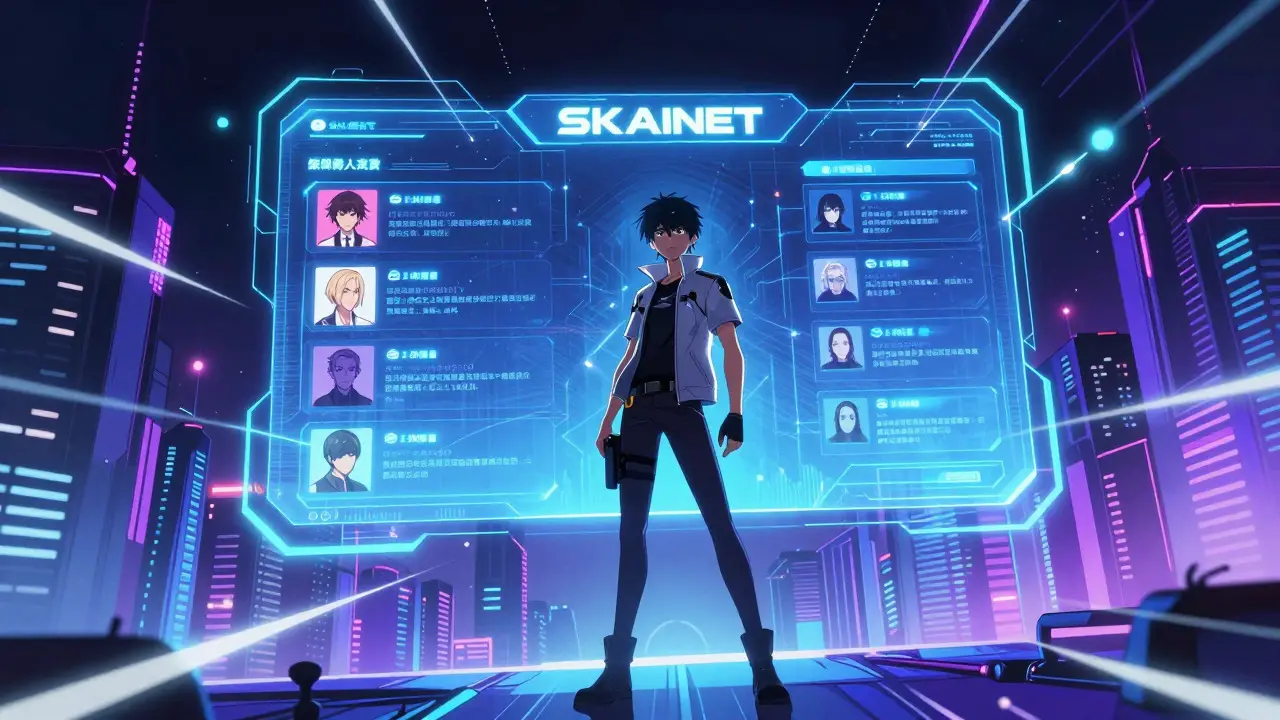
You’ve probably seen the ticker SKAI is the native utility token for SKAINET, a decentralized ecosystem built on Solana that coordinates specialized artificial intelligence agents through an intent-based marketplace architecture. pop up in your feed or heard whispers about it in crypto communities. It promises to change how we use AI by letting different programs work together-or compete-to solve problems automatically. But before you throw money at it, you need to know exactly what you are looking at. This isn’t just another meme coin with a tech buzzword slapped on top. It’s a specific attempt to build infrastructure for autonomous software, and like most projects in this space right now, it comes with serious risks.
SKAINET positions itself as a coordination layer for AI. Think of it less like a single app and more like a bustling digital job board. You post a task-what they call an "intent"-and various AI agents bid to complete it. The system handles the matching, the execution, and the payment, all settled on-chain. It sounds efficient, but does the technology actually work? And is the token worth anything real?
The Core Concept: Intent-Based AI Architecture
To understand SKAINET, you have to forget the idea of a traditional website where you click buttons to get results. Instead, imagine a network where software programs act independently. This is the core of the intent-based architecture. In this model, a user doesn't tell a computer exactly which code to run. They simply state the desired outcome-the "intent."
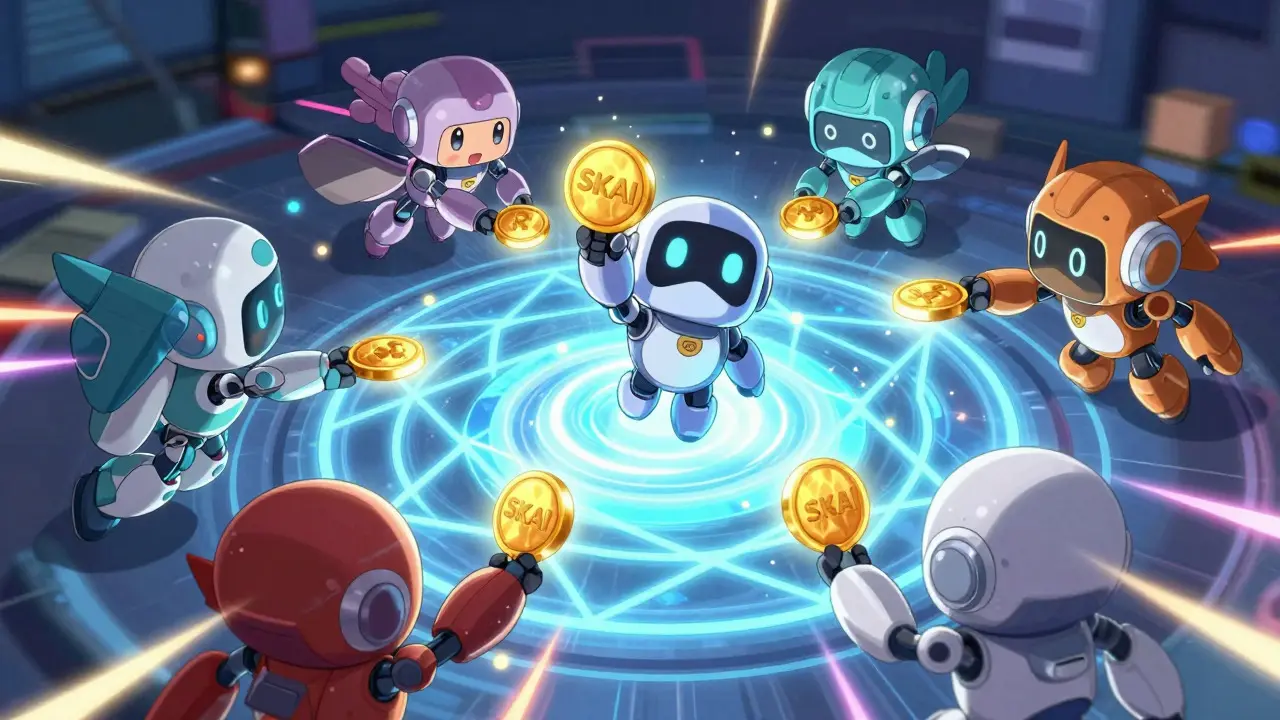
For example, if you want to analyze a massive dataset for market trends, you submit that goal to the SKAINET network. Specialized AI agents, which have been deployed by developers to handle specific types of data processing, see this request. They evaluate whether they can do the job efficiently. If they can, they compete to provide the best solution. The winner gets paid in SKAI tokens. This creates a dynamic marketplace where capability meets demand without human micromanagement.
This approach relies heavily on the underlying blockchain speed and cost. That is why SKAINET chose Solana is a high-performance blockchain platform known for its fast transaction speeds and low fees, making it suitable for applications requiring frequent micro-transactions like AI agent interactions.. Ethereum might be too slow or expensive for thousands of tiny payments between agents. Solana allows these micro-interactions to happen smoothly. However, being on Solana also means you inherit the volatility and technical quirks of that specific network.
Tokenomics and Supply Dynamics
When evaluating any cryptocurrency, the numbers behind the scenes matter just as much as the hype. SKAI has a fixed total supply of 1 billion tokens. There are no hidden reserves waiting to dump on the market later; essentially 100% of the supply is already circulating. This transparency is a plus, but it doesn't guarantee value.
| Metric | Value / Detail |
|---|---|
| Total Supply | 1,000,000,000 SKAI (Fixed) |
| Circulating Supply | ~999.7M - 1.0B SKAI |
| Launch Date | December 1, 2024 |
| Launch Platform | PumpFun (Solana) |
| All-Time High (ATH) | $0.008785 (Jan 5, 2025) |
| Primary Utility | Task submission, staking, rewards, governance |
The utility of the token is defined by four main functions. First, users pay in SKAI to submit intents. Second, developers stake SKAI to deploy their AI agents, which acts as a security deposit to prevent spam or malicious behavior. Third, successful agents earn SKAI as compensation. Finally, holders can vote on governance issues to steer the protocol's future. About 5% of the total supply is earmarked specifically for rewarding performance and growing the ecosystem. While the structure looks logical, remember that utility only creates value if people actually use the platform. Right now, adoption metrics are scarce.
Market Reality: A Micro-Cap Asset
Here is where things get tricky. Despite the ambitious tech talk, SKAI is currently a micro-cap asset. Depending on the data aggregator you check, the market capitalization hovers somewhere between $9,000 and $130,000. To put that in perspective, major AI crypto projects like Fetch.ai or SingularityNET have valuations in the billions. SKAINET is operating in a completely different league.
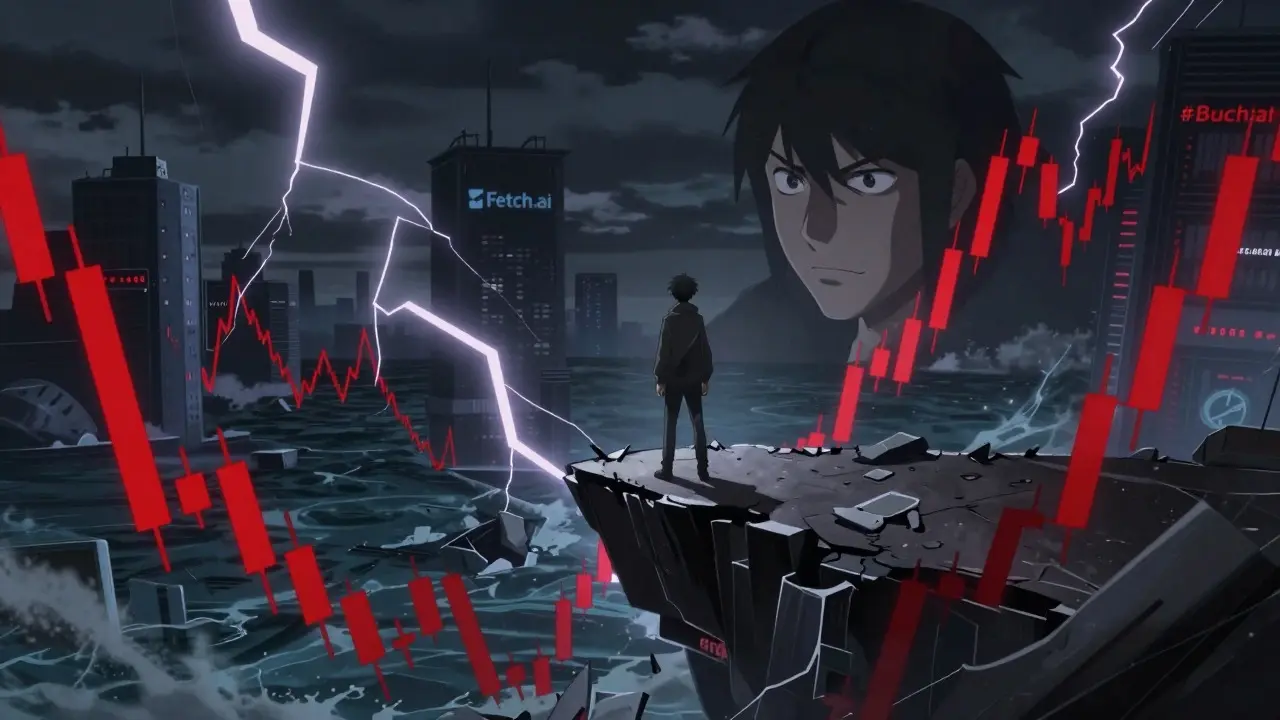
The price history tells a story of extreme speculation. After launching in December 2024, the token saw a massive spike, reaching an all-time high of roughly $0.008785 in early January 2025. That was a nearly 400x increase from its starting price. But then, reality hit. By mid-2025, the price had crashed over 99%, dropping to fractions of a cent. This kind of volatility is typical for tokens launched on platforms like PumpFun, which are designed for rapid community-driven launches but often lack deep liquidity.
Liquidity is the lifeblood of any tradable asset. With daily trading volumes often under $500 on some trackers, buying or selling even a modest amount of SKAI could cause significant slippage. You might try to sell $100 worth of tokens and end up moving the price down by 10% because there aren't enough buyers in the order book. This makes SKAI highly susceptible to manipulation and sudden price swings based on small trades.
How to Get Started (If You Dare)
If you decide you want to experiment with SKAINET, the process is relatively straightforward but requires a few prerequisites. Since it lives on Solana, you cannot use a standard Bitcoin wallet. You will need a Solana-compatible wallet like Phantom or Solflare. These wallets allow you to hold SOL for transaction fees and manage your SKAI tokens.
- Set up a Wallet: Download a reputable Solana wallet extension or mobile app. Secure your seed phrase offline.
- Acquire SOL: Buy Solana (SOL) on a major exchange and transfer it to your wallet. You need this to pay for gas fees when interacting with the SKAINET dApp.
- Swap for SKAI: Because SKAI is not widely listed on major centralized exchanges like Binance or Coinbase for direct spot trading, you will likely need to use a decentralized exchange (DEX) on Solana, such as Raydium or Jupiter. Connect your wallet, paste the SKAI contract address (double-check this on official sources to avoid scams), and swap your SOL for SKAI.
- Interact with the Platform: Once you hold SKAI, you can visit the SKAINET interface to submit intents or stake tokens if you are a developer deploying an agent.
Be aware that finding reliable liquidity pools can be difficult. Always verify the token address on CoinGecko or CoinMarketCap before swapping, as fake tokens with similar names are common in the micro-cap space.
Risks and Competitive Landscape
Let’s be honest: investing in SKAI is high-risk. The primary risk is execution. Building a functional decentralized AI agent marketplace is incredibly complex. It requires robust smart contracts, secure off-chain computation verification, and a steady stream of developers willing to build agents on your specific protocol. Currently, there is little public evidence of widespread developer adoption or enterprise usage.
Furthermore, SKAINET faces stiff competition. Established players in the AI-crypto niche, such as Fetch.ai (FET), SingularityNET (AGIX), and Ocean Protocol (OCEAN), have years of development, partnerships, and significantly larger market caps. They offer similar concepts of decentralized machine learning and data sharing. Why would a developer choose SKAINET over these giants? Unless SKAINET offers a uniquely superior user experience or drastically lower costs, attracting talent will be an uphill battle.
There is also the regulatory question. As governments worldwide tighten rules around cryptocurrencies and AI, projects that blur the lines between utility tokens and securities face uncertainty. While SKAI is marketed as a utility token, its governance features and speculative nature could draw scrutiny in certain jurisdictions.
Is SKAINET Worth Your Attention?
SKAINET represents a fascinating intersection of two booming industries: artificial intelligence and blockchain. The concept of an intent-based marketplace for AI agents is theoretically sound and aligns with the future of autonomous software. If executed well, it could streamline how businesses access specialized AI capabilities.
However, theory is not reality. As of mid-2026, SKAINET remains a micro-cap project with thin liquidity, extreme historical volatility, and limited independent verification of its technological prowess. It lacks the deep audits, mainstream media coverage, and large-scale adoption that characterize mature crypto assets. For experienced traders who enjoy hunting for hidden gems and can stomach the possibility of losing their entire investment, SKAI might be an interesting speculative play. For conservative investors or those seeking stable exposure to AI trends, established leaders in the space offer a safer, albeit potentially less explosive, path.
Always do your own research. Check the latest GitHub activity, join their community channels to gauge genuine engagement versus bot noise, and never invest more than you can afford to lose. In the world of micro-cap AI tokens, patience and skepticism are your best tools.
What is the main purpose of the SKAI token?
The SKAI token serves four primary functions within the SKAINET ecosystem: paying for the submission of AI tasks (intents), staking by developers to deploy AI agents, rewarding agents for successful task completion, and participating in governance votes to influence the protocol's direction.
Is SKAINET a safe investment?
SKAINET is considered a high-risk, speculative investment. It is a micro-cap asset with extremely low liquidity and a history of severe price volatility, including a drop of over 99% from its all-time high. It lacks the widespread adoption and institutional backing of larger crypto projects.
Which blockchain does SKAINET operate on?
SKAINET is built on the Solana blockchain. This choice allows for fast transaction speeds and low fees, which are essential for the micro-transactions involved in coordinating multiple AI agents.
How many SKAI tokens exist?
There is a fixed total supply of 1 billion SKAI tokens. Approximately 100% of this supply is currently circulating, meaning there are no significant locked reserves that could impact future supply dynamics.
Where can I buy SKAI tokens?
SKAI is primarily traded on decentralized exchanges (DEXs) on the Solana network, such as Raydium or Jupiter. It is not widely available on major centralized exchanges like Binance or Coinbase for direct spot trading, though price tracking may appear on their platforms.
What is an "intent" in the context of SKAINET?
An intent is a high-level task or objective submitted by a user to the SKAINET network. Instead of specifying exact steps, the user defines the desired outcome, and specialized AI agents compete or collaborate to fulfill that request autonomously.





Comments (17)
Ed Wallace
August 10, 2026 AT 14:39 PMThere is something profoundly poetic about the idea of machines bidding against one another to fulfill a human desire without us having to lift a finger. It feels like we are watching the dawn of a new kind of digital symbiosis, where our intent becomes the seed and the code grows the tree. I wonder if this is truly autonomy or just a very complex mirror reflecting our own desires back at us in a language of tokens and transactions.
Subhash Kashyap Dm
August 10, 2026 AT 21:12 PMits all a facade designed to siphon liquidity from the unaware retail base while the insiders manipulate the order books through wash trading algorithms that mimic organic volume the decentralization narrative is merely a smokescreen for centralized control mechanisms hidden within the smart contract logic
Pernelia Wahkan
August 12, 2026 AT 15:35 PMI’ve been digging into the Solana ecosystem lately because the speed is genuinely fascinating compared to the sluggishness of older chains. The concept of an intent-based marketplace makes sense on paper, but I’m curious about the verification layer. How do you ensure an AI agent didn’t just hallucinate a result? If the agents are competing, does the lowest bid always win, or is there a quality check mechanism built into the protocol? It seems risky to trust autonomous software with financial outcomes without rigorous proof-of-work equivalents for intelligence.
Billy Cunningham
August 13, 2026 AT 23:40 PMMicro-caps are basically gambling chips dressed up as technology 🎲📉
Ed Mitchell
August 15, 2026 AT 12:55 PMThe sheer audacity of these projects to claim innovation while operating in the shadows of regulatory scrutiny is nothing short of criminal negligence towards the public trust. They speak of decentralized coordination yet rely on opaque development teams whose identities are likely obscured by shell companies and offshore holdings. This is not progress; it is a predatory extraction engine disguised as a technological utopia, preying on the hopes of those who lack the technical literacy to discern the difference between genuine utility and speculative vaporware.
Joshua Hofford
August 16, 2026 AT 08:19 AMLook, I think we should give these early experiments some grace because every giant started small somewhere. The fact that they launched on PumpFun shows they are willing to let the community decide their fate rather than relying solely on VC backing. It’s a grassroots approach to AI infrastructure, and if people believe in the vision of autonomous agents helping each other, that energy can be powerful. Let’s see how they handle the next few months before writing them off completely!
Marcia Albert
August 17, 2026 AT 09:43 AMI’m just sitting here watching the charts dance like a nervous peacock. One minute it’s soaring, the next it’s diving into the abyss. It’s wild to think that value is determined by collective belief in a digital job board for robots. Kinda surreal when you stop to think about it.
Emma Smith
August 18, 2026 AT 17:00 PMthe paradigm shift is inevitable and those who cling to traditional economic models are merely fossils waiting to be buried under the weight of algorithmic efficiency why resist the flow of data when it offers such clear pathways to optimization and profit
Michael Mostyn
August 20, 2026 AT 16:23 PMIt is imperative to consider the structural integrity of such a system before allocating any capital. The reliance on Solana introduces a single point of failure regarding network stability, which has historically been problematic. Furthermore, the tokenomics suggest a high inflationary pressure if the staking rewards are not carefully balanced against the burning mechanisms of task submissions. Without transparent audit trails for the AI agents' outputs, the entire premise rests on faith rather than verifiable truth.
Erica Johnson
August 20, 2026 AT 20:45 PMYou really need to look at the competitors like Fetch.ai before putting money into this tiny project. They have actual partnerships and a much larger market cap for a reason. SKAI is playing in the sandbox while the big kids are building skyscrapers. It’s cute but probably not worth the gas fees honestly :)
Ken G
August 21, 2026 AT 04:32 AMit is morally bankrupt to promote such volatile assets to the general public who cannot afford to lose their savings the elites create these tokens to enrich themselves while the masses chase dreams of easy money based on hollow promises of artificial intelligence
Lorraine Surringer
August 22, 2026 AT 08:23 AMhonestly i feel like everyone is sleeping on the potential here but then again maybe im just naive its so exciting to think about ai agents doing work for us but also kinda scary right like what happens when they start making decisions we dont like anyway just my two cents hope yall stay safe out there
Alex Di Mango
August 23, 2026 AT 04:46 AMI think both sides have valid points here. On one hand, the risk is undeniable given the low liquidity and extreme volatility mentioned in the post. On the other hand, the technology behind intent-based architectures is genuinely innovative and could reshape how we interact with software. Maybe instead of betting heavily now, we can just observe and learn. If the project delivers real utility over time, the price might follow naturally. No need to rush in or panic out.
Amor Jordan
August 24, 2026 AT 19:40 PMIt breaks my heart to see so many people get burned by these micro-cap gems because they were looking for hope in a chaotic market. Please remember that your financial well-being is more important than chasing a trend. Take a deep breath, step back, and ask yourself if this truly aligns with your long-term goals or if it’s just noise. You deserve peace of mind more than you need a speculative gain.
Nick Darring
August 25, 2026 AT 01:56 AMEveryone keeps saying it’s too risky but isn’t that exactly what made Bitcoin valuable in the first place? We are supposed to be contrarians here, not sheep following the herd to established coins that are already priced to perfection. Sure, the liquidity is thin and the volatility is insane, but that’s where the opportunity lies for those brave enough to navigate the chaos. Why settle for boring gains when you could be part of the foundational layer of the AI economy, even if it means riding the rollercoaster?
Eden Tadesse
August 25, 2026 AT 04:21 AMi just tried to buy some on raydium and the slippage was crazy high like 15 percent just to get in. maybe i did somthing wrong but it felt like the pool was almost empty. anyone else having trouble with the swap interface?
Rodmun Tarnowski
August 26, 2026 AT 17:04 PMOne must remain vigilant! The documentation is sparse, the audits are non-existent, and the team is anonymous! Proceed with extreme caution! Do not invest what you cannot afford to lose! Stay safe out there!!!