
If you’ve stumbled upon Bostrom (BOOT) in your crypto feed, you’re probably scratching your head. It doesn’t look like Bitcoin. It doesn’t act like Ethereum. And its price chart looks more like a flatline than a rocket ship. So, what exactly is it?
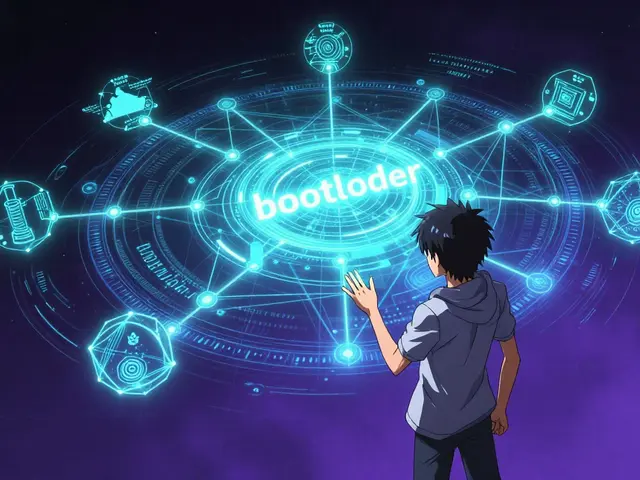
In short, Bostrom is not just another meme coin or a standard utility token. It positions itself as a superintelligence bootloader built on blockchain technology. Think of it as an attempt to create a decentralized artificial intelligence that runs on the open web, powered by community governance and stored using distributed protocols. It’s ambitious, technical, and frankly, quite niche.
The Core Concept: A Blockchain for Artificial Intelligence
To understand Bostrom, you have to look past the ticker symbol. The project aims to solve a specific problem: how do we build a shared, permissionless knowledge base for AI without relying on centralized tech giants?
Bostrom uses the Cosmos SDK framework. This is crucial because it allows Bostrom to operate within the broader Cosmos ecosystem, enabling interoperability with other blockchains. But the real magic-or at least the intended magic-comes from its integration with IPFS (InterPlanetary File System).
Here’s how it works in plain English:
- Knowledge Graph: Bostrom maintains a permissionless knowledge graph. This is essentially a massive database of facts and relationships that anyone can contribute to.
- Content Addressing: Instead of storing data on a central server, Bostrom uses IPFS to store content addresses. This makes the data resistant to censorship and deletion.
- Superintelligence Bootloader: The goal is to use this verified, decentralized data to "boot" or train AI models that are transparent and verifiable.
Unlike traditional AI projects where a company owns the data and the model, Bostrom attempts to democratize both. You don’t just hold a token; you theoretically participate in the infrastructure that feeds the AI.
How BOOT Tokens Are Used
You might be wondering why you would want to hold BOOT tokens if the AI isn’t ready yet. The token serves several functional roles within the ecosystem, primarily focusing on governance and security.
- Governance and Dispute Resolution: In a decentralized system, who decides what is true? Bostrom uses BOOT tokens for voting. For example, in partnerships like the Beyondfi protocol, BOOT holders help resolve disputes quickly. If two parties disagree on a transaction outcome, the network votes to confirm the correct state.
- Network Security via Proof of Stake: Like many modern blockchains, Bostrom relies on validators to secure the network. Users can stake their BOOT tokens to become validators or delegate to existing ones. This secures the chain against attacks.
- Super-Fluid Staking: One of the unique features promoted by Bostrom is "super-fluid staking." This allows users to stake their tokens for security rewards while still being able to trade or lend them elsewhere. It removes the liquidity lockup that usually comes with staking.
Essentially, holding BOOT gives you a say in how the network evolves and helps keep the lights on. However, because the ecosystem is still small, the impact of individual votes may feel limited compared to larger networks.
Market Reality: Price, Supply, and Volatility
Let’s talk about the numbers, because they tell a starkly different story than the ambitious whitepaper. As of May 14, 2026, Bostrom is trading at extremely low valuations, reflecting significant depreciation since its launch.
| Metric | Data Point | Note |
|---|---|---|
| All-Time High (ATH) | $0.00000017 | Reached on April 9, 2022 |
| Current Price Range | $0.0000000003 - $0.0000000012 | Varies significantly by exchange |
| Market Cap | $186K - $685K USD | Ranking #4441 to #6238 globally |
| Total Supply | ~480 Trillion to 1.3 Quadrillion | Extremely high supply dilutes value |
| 24h Volume | $0 - $879 USD | Indicates severe illiquidity |
A few things stand out here. First, the price has dropped roughly 99% from its all-time high in 2022. Second, the trading volume is negligible. On some days, the total volume across all exchanges is less than $1,000. This means if you try to buy or sell a large amount of BOOT, you will likely crash the price yourself due to lack of depth.
The supply metrics are also confusing. Different sources report circulating supplies ranging from zero to hundreds of trillions. This inconsistency is common in micro-cap tokens but adds a layer of risk for investors. Always check multiple aggregators like CoinGecko, CoinMarketCap, and Coinbase before making any moves.
Where Can You Buy Bostrom?
Accessibility is another hurdle for Bostrom. You won’t find it on major tier-1 exchanges like Binance or Coinbase Pro. Instead, availability is fragmented.
- Centralized Exchanges (CEX): Platforms like Phemex have offered guidance on acquiring BOOT. KuCoin lists information about the token but explicitly states it does not support trading for it currently.
- Decentralized Exchanges (DEX): Since Bostrom operates within the Cosmos ecosystem, you can often swap tokens on DEXs like Osmosis. This requires a compatible wallet (like Keplr) and some ATOM or OSMO gas fees.
- P2P Marketplaces: Some peer-to-peer platforms list Bostrom, allowing direct user-to-user trades.
The limited exchange support is a double-edged sword. It restricts retail access, which keeps volume low, but it also suggests that the project hasn’t failed entirely-it’s just operating in a very specialized niche.

Risks and Considerations for Investors
If you are considering adding BOOT to your portfolio, you need to go in with eyes wide open. This is not a blue-chip investment. Here are the primary risks:
1. Extreme Illiquidity: With daily volumes under $1,000, exiting a position can be difficult. You might see a price on one site that doesn’t reflect what you can actually sell for on another.
2. Technological Execution Risk: Building a "superintelligence" is incredibly hard. While the Cosmos SDK and IPFS integrations are solid foundations, the actual AI application layer remains largely theoretical or in early stages. There is no dominant consumer-facing product driving demand yet.
3. Regulatory Uncertainty: As with all cryptocurrencies, regulatory shifts can impact trading availability. Given its low profile, Bostrom lacks the legal teams of larger projects to navigate complex jurisdictions.
4. Competition: The AI-crypto sector is crowded. Projects like Fetch.ai (FET), Render (RNDR), and others have much larger market caps, better liquidity, and established partnerships. Bostrom competes directly with these giants despite having a fraction of their resources.
Is Bostrom Worth Watching?
For most casual investors, Bostrom is likely too risky and illiquid to be a core holding. However, for those interested in the intersection of decentralized science (DeSci) and AI, it represents an interesting experiment.
The project’s strength lies in its ideology: a truly open, permissionless knowledge graph for AI. If the team can deliver a functional, useful AI tool that leverages this graph, the token could see renewed interest. Until then, it remains a speculative asset with high volatility and low liquidity.
If you decide to engage with Bostrom, start small. Use a hardware wallet for storage, monitor development updates closely, and never invest more than you can afford to lose completely. The gap between the vision of superintelligence and the reality of sub-penny pricing is wide, and bridging it will take time, code, and adoption.
What is the main purpose of the Bostrom (BOOT) token?
The BOOT token is used for governance, dispute resolution, and securing the network through Proof of Stake. It allows holders to vote on network upgrades and participate in maintaining the integrity of the permissionless knowledge graph.
Can I buy Bostrom on Coinbase or Binance?
No, Bostrom is not listed on major exchanges like Coinbase or Binance. It is available on smaller centralized exchanges like Phemex and various decentralized exchanges (DEXs) within the Cosmos ecosystem, such as Osmosis.
Why is the price of BOOT so low?
The low price is due to a combination of factors: a massive total supply (in the trillions), extremely low trading volume, limited exchange listings, and a significant drop from its all-time high in 2022. It reflects the current lack of widespread adoption and liquidity.
What is the "permissionless knowledge graph"?
It is a decentralized database structure where anyone can add or verify information without needing permission from a central authority. Bostrom uses IPFS to store this data, aiming to create a reliable foundation for training decentralized AI models.
Is Bostrom a safe investment?
Bostrom is considered a high-risk, speculative investment. Its low liquidity means you may struggle to sell your tokens, and its technological goals are ambitious and unproven at scale. It should only be approached by experienced investors who understand micro-cap crypto risks.