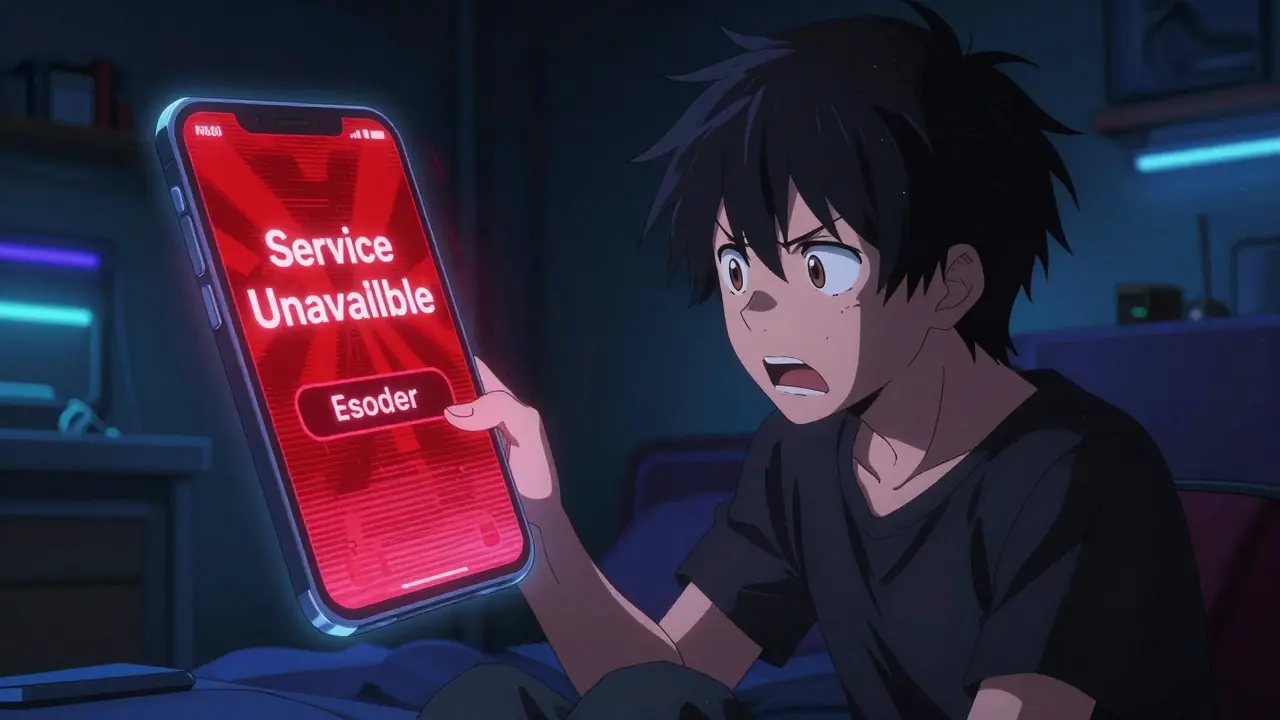
You open the OKX is a global cryptocurrency exchange platform that facilitates trading of digital assets across multiple jurisdictions. app, enter your details, and suddenly hit a wall. A cold, hard message pops up: "Service unavailable in your region." It’s frustrating, especially when you know friends in other countries are trading freely. But here’s the thing-crypto exchanges aren’t wild west saloons anymore. They operate under strict rules, and OKX is no exception.
If you’re trying to figure out whether you can use OKX from your home country, or why certain features like futures trading are locked for you, you’re not alone. The landscape of cryptocurrency exchange access limitations based on national regulatory frameworks is complex, constantly shifting, and often confusing. This guide cuts through the noise. We’ll break down exactly which countries are banned, which have limited features, and what you need to do to stay compliant while accessing the platform.
The Three Tiers of OKX Restrictions
OKX doesn’t just block countries randomly. Their restrictions follow a structured approach designed to comply with international laws, sanctions, and local financial regulations. Think of it as three distinct tiers:
- Complete Bans (Tier 1): In these regions, you cannot create an account or access any services. Period.
- Partial Restrictions (Tier 2): You might be able to sign up, but specific high-risk features like derivatives trading are disabled.
- Fully Compliant Access (Tier 3): These users get full access to spot trading, futures, Web3 wallets, and other core features, provided they pass KYC checks.
Understanding which tier your country falls into is the first step to avoiding account suspension or frozen funds.
Countries Where OKX Is Completely Banned
The most common reason people ask about OKX restrictions is because they live in a jurisdiction where the exchange is entirely prohibited. As of mid-2026, this list includes major economies and sanctioned regions. Here are the key areas where OKX does not operate:
- United States: Due to stringent SEC regulations and ongoing legal precedents set by cases against other exchanges, OKX does not serve U.S. residents. This includes all 50 states.
- Canada: Similar to the U.S., Canadian regulators require specific licensing that OKX has chosen not to pursue for its global entity.
- United Kingdom: While spot trading was previously available, recent FCA guidelines have led to a complete restriction on new registrations and existing feature access for UK residents.
- Singapore: A tricky one. The global OKX platform blocks Singaporean IPs. However, a separate entity, OKX Singapore, a regulated subsidiary operating under Monetary Authority of Singapore (MAS) oversight, serves local residents who meet strict criteria. Do not try to use the global site from Singapore; it will likely flag your account.
- Malaysia: Restricted due to Bank Negara Malaysia’s stance on unlicensed crypto exchanges.
- Sanctioned Regions: Cuba, Iran, North Korea, Syria, Crimea, Donetsk, and Luhansk regions are blocked in compliance with OFAC (Office of Foreign Assets Control) sanctions.
If you live in any of these places, attempting to bypass the ban using a VPN is a bad idea. OKX uses advanced IP geolocation and device fingerprinting. If they detect fraud, they don’t just warn you-they terminate the account and freeze assets. It’s not worth the risk.
Countries With Limited Features
In some nations, you can trade, but you can’t play with fire. Specifically, derivatives trading (futures, perpetual swaps) is often restricted due to consumer protection laws. This affects users in:
- Australia: Spot trading is fine, but derivatives are off-limits following ASIC warnings.
- Brazil: Recent central bank directives have limited leveraged products.
- South Korea: Real-name banking systems allow spot trading, but complex derivatives remain restricted to prevent capital flight.
For users in these regions, the experience is fragmented. You’ll see the futures interface grayed out. Don’t try to force it. Stick to spot trading and stablecoin pairs if you want to keep your account healthy.
How OKX Enforces These Rules
You might wonder, "Can’t I just use a proxy?" Technically, maybe. Practically, no. OKX employs a multi-layered verification system that makes bypassing restrictions nearly impossible for the average user.
First, there’s IP geolocation tracking, a technology used to determine a user's physical location based on their internet protocol address. OKX claims 99.2% accuracy in detecting residential IPs. Second, they use device fingerprinting. Even if you switch IPs, your browser data, hardware IDs, and cookie patterns can link back to your original location. Third, and most importantly, is KYC.
All users must undergo Know Your Customer (KYC) verification, a mandatory identity check process involving government-issued ID and biometric confirmation. When you upload your passport or driver’s license, the issuing country is checked against their restricted list. If your ID says "USA" but your IP says "Germany," the system flags it instantly. In Q3 2025 alone, OKX closed over 14,000 accounts for geolocation fraud. They mean business.
KYC Requirements and Transaction Limits
Even in allowed countries, you won’t get unlimited access without verification. OKX operates on a tiered KYC system:
- Level 1: Basic ID verification. Daily withdrawal limit of $10,000 USD equivalent.
- Level 2: Enhanced verification, possibly including proof of address. Higher limits apply.
- Level 3: Full institutional-grade verification. Daily limits up to $1,000,000 USD equivalent.
The process usually takes 2-4 hours for standard approvals. If you’re in Europe, support response times are faster (around 8 hours), while users in developing markets may wait up to 24 hours. Always use clear, valid documents. Blurry photos or expired IDs lead to delays.
Comparison: How OKX Stacks Up Against Competitors
| Exchange | U.S. Access | Canada Access | Derivatives in EU/UK | Regulatory Approach |
|---|---|---|---|---|
| OKX | Banned | Banned | Limited/Banned | Multi-entity compliance |
| Binance | Banned | Banned | Limited | Reactive compliance |
| Coinbase | Full Access | Limited | Limited | Strictly regulated |
| Kraken | Full Access | Limited | Available | Hybrid model |
As shown above, OKX’s strategy is unique. Unlike Coinbase, which focuses heavily on Western markets, OKX targets Asia, Africa, and emerging economies. This means if you’re in Thailand, Vietnam, or Nigeria, OKX might offer better liquidity and lower fees than Binance or Kraken. But if you’re in New York or Toronto, you’re out of luck.
What Happens If You Break the Rules?
Let’s be clear: bypassing restrictions is a violation of OKX’s Terms of Service. Section 4.2 explicitly prohibits using VPNs or false identities to access the platform. Consequences include:
- Account Suspension: Immediate freeze of all assets.
- Permanent Ban: No appeal process. Your funds may be held indefinitely pending investigation.
- Legal Risk: In severe cases, especially involving large sums or sanctioned countries, exchanges cooperate with authorities.
I’ve seen too many users lose thousands because they thought they were smarter than the algorithm. Don’t be one of them. If you’re in a banned country, look for local, licensed alternatives instead.
Future Outlook: Will Restrictions Ease?
The regulatory landscape is moving fast. By mid-2026, we’re seeing shifts. OKX has invested $230 million in compliance infrastructure since early 2025. They’ve launched entities in Switzerland and the UAE to serve previously restricted markets. There are rumors of a U.S.-compliant subsidiary, but nothing concrete yet. The SEC’s ongoing lawsuits against other exchanges make this a slow process.
Meanwhile, the EU’s MiCA regulation (fully effective since late 2024) has standardized rules across member states. This means less fragmentation in Europe, but stricter enforcement. Expect more clarity, not fewer restrictions, in the coming years.
Is OKX available in the United States?
No, OKX is completely banned in the United States. Residents cannot register, deposit, or trade on the platform. Using a VPN to bypass this restriction violates terms of service and risks account termination and asset seizure.
Why is OKX restricted in Canada?
OKX does not hold the necessary licenses required by Canadian financial regulators to operate legally. To avoid legal penalties, they block access to all Canadian IPs and reject KYC documents issued in Canada.
Can I use OKX in the UK?
Access is highly limited. While some legacy accounts may exist, new registrations are generally blocked, and derivatives trading is prohibited for UK residents due to FCA regulations. Users should seek locally regulated alternatives.
What happens if I use a VPN to access OKX?
OKX uses sophisticated detection methods including device fingerprinting and IP analysis. If detected, your account will likely be suspended, and your funds frozen. Repeated violations result in permanent bans with no recourse.
Which countries have full access to OKX features?
Many countries in Asia, Africa, Latin America, and parts of Europe have full access. Examples include Germany, France, Thailand, Vietnam, and Brazil (with some derivative limits). Always check OKX’s official risk disclosure page for the most current list.
Does OKX require KYC verification?
Yes, mandatory KYC is required for all users to access core features like trading and withdrawals. Verification levels determine your daily transaction limits, ranging from $10,000 to $1,000,000 depending on the tier achieved.