

You see a 15-second video on your feed. A charismatic creator points to a chart, laughs about a dog-themed token, and claims it’s the next big thing. Within hours, the price of that memecoin is a cryptocurrency with no inherent utility, driven primarily by internet culture and community hype jumps 200%. You feel a tug in your chest-the fear of missing out. You buy in. Two days later, the trend dies, and you’re holding a bag worth half what you paid.
This isn’t just bad luck; it’s the engine of the modern memecoin market. Unlike Bitcoin or Ethereum, which have technological roadmaps and institutional adoption curves, memecoins run on pure attention. In 2024, the total market cap of memecoins surged from under $60 billion to nearly $100 billion, a year-over-year increase of more than 50%. This explosive growth happened despite these tokens lacking clear application scenarios. The driver wasn’t code-it was conversation.
The Anatomy of a Viral Pump
To understand why prices move so violently, you need to look at the mechanics of social amplification. Traditional assets react to earnings reports and interest rate decisions. Memecoins react to tweets, TikTok trends, and Reddit threads. The correlation between major cryptocurrencies like Bitcoin and top memecoins like DOGE, SHIB, and PEPE is high-statistically around 0.85-but social media acts as a multiplier that pushes volatility far beyond standard market norms.
When a narrative takes hold, it spreads through specific channels. Twitter (now X) serves as the command center for real-time price action and influencer commentary. It is where technical analysts post charts and where celebrities drop endorsements. Research shows that Twitter sentiment aligns closely with longer-term market dynamics. If the chatter on X turns negative, the downward pressure is immediate and sustained.
TikTok, however, operates differently. It drives short-term speculation. The platform’s algorithm favors visual entertainment over financial nuance. A catchy dance, a meme format, or a simplified explanation of "to the moon" can trigger massive inflows of retail capital within minutes. Studies indicate that combining sentiment signals from TikTok and Twitter improves cryptocurrency return forecasts by up to 20%. Specifically, TikTok data alone has been shown to improve short-term Dogecoin predictions by 35%. This makes TikTok the primary catalyst for sudden, sharp price spikes that often lack fundamental backing.
Platform Roles in Price Discovery
Not all social networks influence prices in the same way. Each platform plays a distinct role in the lifecycle of a memecoin’s popularity. Understanding these roles helps you identify where the momentum is coming from-and where it might be heading.
| Platform | Primary Influence Type | Key Metric | User Behavior |
|---|---|---|---|
| Twitter (X) | Long-term Trend & News | Sentiment Alignment | Expert commentary, influencer endorsements, real-time reaction |
| TikTok | Short-term Speculation | Viral Reach | Visual memes, simplified narratives, impulsive buying |
| Community Building | Discussion Depth | Detailed analysis, coordinated buying groups (e.g., WallStreetBets) | |
| YouTube | Educational & Deep Dive | Content Duration | Influencer reviews, project fundamentals, risk warnings |
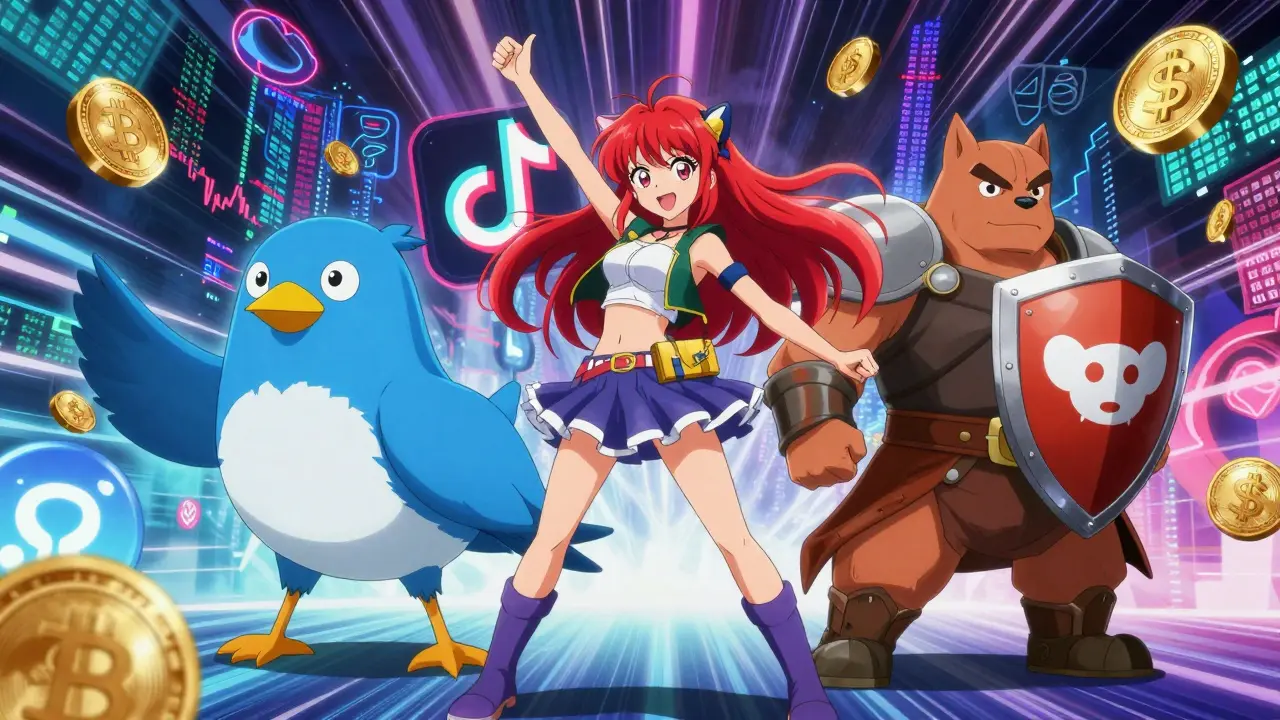
Reddit functions as the incubator. Subreddits like r/WallStreetBets or dedicated coin communities are where initial momentum builds. Here, users debate project viability and coordinate buying strategies. While Twitter broadcasts the news, Reddit creates the army. YouTube influencers then provide the "due diligence," often framing speculative bets as logical investments. This multi-platform echo chamber reinforces the narrative, making it harder for skeptics to break through.
The Psychology of FOMO and Herd Behavior
Why do people buy into tokens that are essentially digital jokes? The answer lies in human psychology, specifically the Fear of Missing Out (FOMO). Gate Research and other industry analysts highlight that social media amplifies FOMO behavior, intensifying short-term price swings. When you see friends posting screenshots of gains, the psychological pressure to participate becomes overwhelming.
This herd behavior is dangerous because it decouples price from value. In traditional markets, if a stock drops 50%, investors look for reasons why the company failed. In the memecoin world, a 50% drop might just be a "shakeout" before the next pump, according to the prevailing narrative. This mindset encourages holding losing positions while chasing new highs elsewhere.
The addictive nature of monitoring social media for the next viral opportunity is well-documented. Many traders describe the experience not as investing, but as gambling. The dopamine hit from seeing a green candle after a tweet goes viral is powerful. Conversely, the anxiety of watching a chart plummet during a negative news cycle keeps users glued to their screens, creating a feedback loop that fuels further volatility.
Red Flags: Manipulation and Rug Pulls
Because memecoins rely on hype rather than utility, they are highly susceptible to manipulation. One of the most significant risks is concentrated wallet ownership. The case of the $WOLF memecoin illustrates this perfectly. Initial hype from the WallStreetBets community drove the token to a $40 million market cap. However, on-chain analysis later revealed that 82% of the total supply was held in a handful of wallets. When those holders sold, the price collapsed, leaving retail investors with worthless tokens.
These scenarios are known as "rug pulls." Developers or early insiders promote a coin aggressively on social media, attract liquidity, and then withdraw their funds. Distinguishing between organic viral growth and coordinated pump schemes is one of the hardest skills for new traders to master. Key red flags include:
- Anonymous development teams with no verified track record.
- Sudden spikes in volume without corresponding news or fundamental updates.
- Heavy promotion by paid influencers who may not disclose their holdings.
- Liquidity locks that are not transparent or verifiable.
Academic research collected 1.36 million tweets from over 129,000 unique users to analyze engagement patterns. They found that "powertags" (hashtags preceded by dollar signs, like $BTC or $DOGE) were the primary method for identifying cryptocurrency mentions. High-frequency use of these tags by a small group of accounts often precedes artificial price inflation.

Tools for Navigating the Noise
If you choose to participate in the memecoin market, relying on gut feeling is a recipe for disaster. Successful participants use sophisticated tools to cut through the noise. Sentiment analysis software scans thousands of posts per minute to gauge overall market mood. On-chain analysis platforms track wallet movements, revealing whether large holders are accumulating or distributing tokens.
Volatility transmission data shows that TikTok and Twitter receive the most volatility shocks-at 1.90% and 4.65% respectively. Meanwhile, Dogecoin emerges as the primary transmitter of volume spillovers at 83.90%. This means that when Dogecoin moves, it drags other memecoins with it. Monitoring these leading indicators can help you anticipate broader market shifts.
However, tools only go so far. The learning curve is steep. You need to understand platform algorithms, assess influencer credibility, and make rapid decisions. Time investment is substantial; serious traders monitor multiple platforms continuously during market hours. It’s not a passive income stream-it’s a full-time job of information processing.
The Future of Social-Driven Markets
The regulatory landscape is shifting. Authorities are increasingly scrutinizing social media’s role in financial markets, particularly regarding coordinated manipulation and misleading promotional content. Platforms like Twitter and TikTok are implementing stricter policies on cryptocurrency advertising. This could dampen the organic spread of viral memecoin content in the future.
At the same time, institutional interest in social sentiment is growing. Traditional financial firms are developing cryptocurrency sentiment indexes that incorporate data from Twitter, Reddit, and TikTok. Artificial intelligence-driven sentiment analysis is becoming standard practice for professional investors. This suggests a hybrid future where social media metrics are combined with traditional financial analysis.
While social media will remain influential, market maturation may reduce the extreme volatility we see today. As regulations tighten and tools become more accessible, the gap between informed traders and casual speculators will widen. For now, though, the memecoin market remains a wild west where attention is currency, and silence is death.
Why do memecoin prices fluctuate so much?
Memecoin prices fluctuate wildly because they lack intrinsic value or utility. Their valuation is driven almost entirely by social media sentiment, viral trends, and community hype. When attention shifts, prices can crash or spike within hours, unlike traditional assets that move based on economic fundamentals.
Which social media platform has the biggest impact on memecoins?
Different platforms serve different roles. TikTok drives short-term speculative spikes due to its viral, visual nature. Twitter influences long-term trends and real-time news. Reddit builds community momentum and coordination. YouTube provides deeper analysis. Together, they create an ecosystem where each platform amplifies the others.
Can I predict memecoin movements using social media data?
Research shows that combining sentiment data from TikTok and Twitter can improve cryptocurrency return forecasts by up to 20%. TikTok sentiment is particularly effective for predicting short-term Dogecoin movements. However, prediction is not certainty, and the market remains highly volatile and prone to manipulation.
What is a rug pull in the context of memecoins?
A rug pull occurs when developers or early insiders promote a memecoin to attract investors, then suddenly sell off their large holdings, causing the price to collapse. This is common in memecoins with concentrated wallet ownership and anonymous teams, leaving retail investors with worthless tokens.
Is it safe to invest in memecoins based on social media trends?
It is extremely risky. Many social media promotions are coordinated pump schemes or undisclosed paid advertisements. Without proper due diligence, including on-chain analysis and understanding of market mechanics, investors are vulnerable to significant losses. Most experts advise treating memecoin trading as high-risk speculation rather than investment.