
It is July 2026. If you are looking at your portfolio today, the number staring back at you likely looks very different from what it did two years ago. The Bitcoin halving that took place in April 2024 has finished its initial shock phase and settled into a new economic reality for the network. We have moved past the hype cycle of "when will it happen?" and entered the era of analyzing "what actually happened?" For investors, miners, and developers alike, understanding the mechanics behind this event is no longer optional-it is essential for navigating the current market landscape.
The core promise of Bitcoin’s design was simple but radical: create a digital asset with a fixed supply that becomes harder to produce over time. This mechanism, known as the halving, cuts the reward for miners in half every four years. It is not a suggestion; it is code embedded in the protocol since day one. As we stand here in mid-2026, we can look back at four distinct halving events. Each one reshaped the market, tested the resilience of miners, and redefined how institutions view digital scarcity. Let's break down exactly how these events played out and what they mean for the future of Bitcoin.
How the Halving Mechanism Works
To understand the price impact, you first need to understand the supply side. Bitcoin operates on a strict monetary policy. There will never be more than 21 million bitcoins. That is hard-coded limit. New bitcoins enter circulation only when miners solve complex mathematical puzzles to validate transactions and secure the network. When a miner succeeds, they are rewarded with newly minted bitcoin plus transaction fees.
The "halving" is the process where this block reward is cut by 50%. It happens roughly every 210,000 blocks, which translates to about every four years given the ten-minute average block time. Why does this matter? Because it reduces the rate of inflation for Bitcoin. While central banks can print unlimited fiat currency during crises, Bitcoin’s issuance schedule remains rigid regardless of global economic conditions. This creates a deflationary pressure. As the supply of new coins slows down, if demand stays the same or increases, basic economics suggests the price should rise. This scarcity model is the foundation of the "digital gold" narrative that has gained so much traction in recent years.
A History of Four Halvings
Looking back at the data provides the clearest picture of how the market reacts to reduced supply. We have now seen four halvings, each occurring in a vastly different macroeconomic environment. Comparing them helps separate signal from noise.
| Year | Block Height | Reward Before | Reward After | Price at Halving (Approx.) | Market Context |
|---|---|---|---|---|---|
| 2012 | 210,000 | 50 BTC | 25 BTC | $12 | Niche tech experiment; low liquidity |
| 2016 | 420,000 | 25 BTC | 12.5 BTC | $640 | Growing retail interest; Mt. Gox aftermath |
| 2020 | 630,000 | 12.5 BTC | 6.25 BTC | $87-$90 | Covid pandemic; massive global stimulus |
| 2024 | 840,000 | 6.25 BTC | 3.125 BTC | $63,000 | Institutional adoption; Spot ETFs approved |
The first halving in November 2012 was almost an afterthought to the general public. Bitcoin traded around $12. Within five months, it hit $229. By late 2013, it touched $1,100. The sheer percentage gains were astronomical, but the absolute dollar amounts were small. It proved the concept worked but didn't move the needle for traditional finance.
The second halving in July 2016 changed the game slightly. Bitcoin was trading near $640. Over the next year, fueled by growing retail mania and the launch of major exchanges, the price exploded to nearly $20,000 by the end of 2017. This cycle established the pattern of a massive bull run following the halving, though the peak came well over a year later.
The third halving in May 2020 occurred during the height of the COVID-19 pandemic. Global economies were shutting down, and central banks began printing money at unprecedented rates. Bitcoin initially dipped due to liquidity crunches but then surged. Within 180 days, it broke previous all-time highs. By 2021, it surpassed $60,000. This event cemented Bitcoin’s reputation as a hedge against fiat debasement and inflation.
The fourth halving in April 2024 was the most complex yet. Unlike previous cycles, the price had already peaked before the event, reaching $73,750 in March 2024. On halving day, the price sat around $63,000. The immediate reaction was muted compared to earlier years. Why? Because the market had matured. Institutional players, including those managing spot Bitcoin ETFs, had already priced in much of the expected scarcity. The volatility was lower, but the long-term structural support remained strong.
The Miner’s Dilemma: Revenue vs. Survival
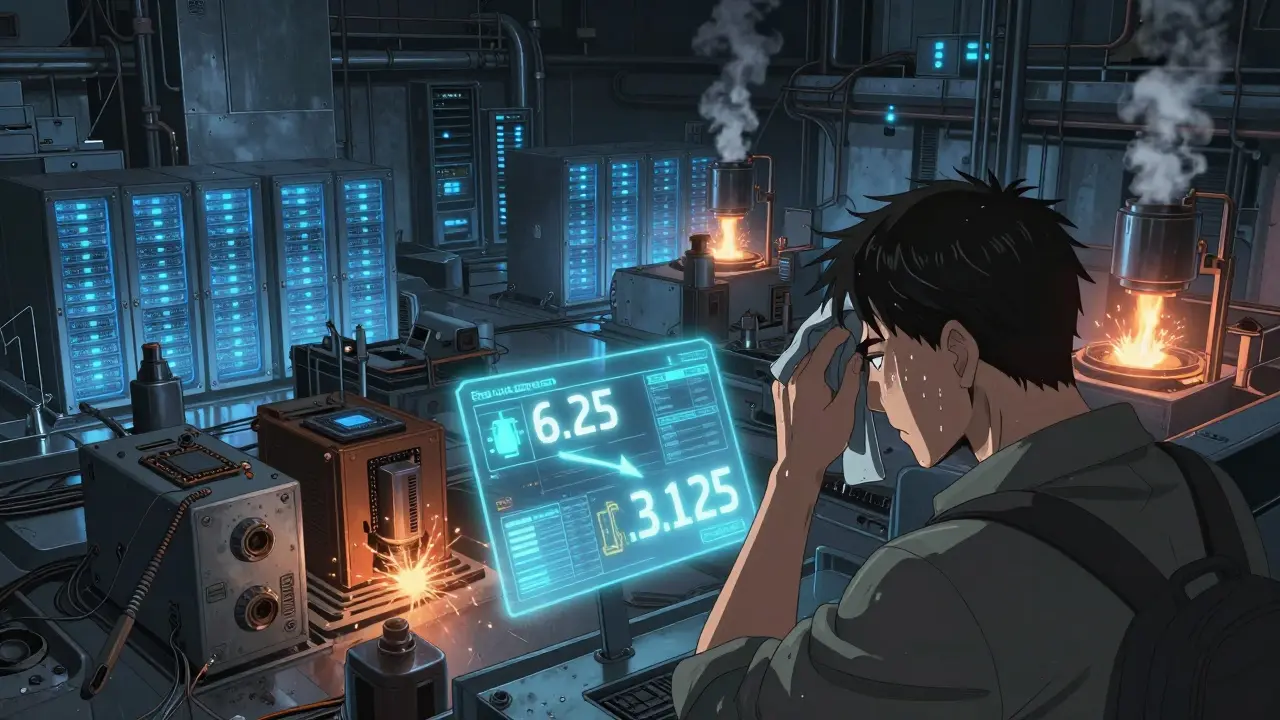
While investors cheer rising prices, miners face a harsh reality. Their primary income source-the block reward-just got cut in half. In April 2024, the reward dropped from 6.25 BTC to 3.125 BTC. Overnight, their revenue stream was slashed by 50%, assuming transaction fees stayed constant (which they rarely do enough to fully offset).
This creates immediate pressure. Less efficient mining operations become unprofitable. They must either shut down or upgrade their hardware. Historically, we see a temporary drop in the network’s hash rate-the total computational power securing Bitcoin-as weaker miners disconnect. However, this is short-lived. As the price stabilizes or rises, and as remaining miners optimize their energy costs, the hash rate recovers and often hits new records. This cycle reinforces network security because only the most efficient, well-capitalized operators survive.
For the 2024 halving, we saw significant consolidation in the mining industry. Large-scale industrial miners with access to cheap renewable energy and latest-generation ASIC chips absorbed the shock better than smaller independent operators. Transaction fees also played a bigger role in 2024. During the halving block itself, fees exceeded $2.6 million, showing that users were willing to pay premiums to be part of history. While fees won’t replace block rewards entirely, they are becoming a more critical component of miner economics.
Why Price Patterns Are Changing
If you are a trader relying on the old playbook-"buy three months before the halving, sell six months after"-you might be frustrated. The neat four-year cycles are blurring. Here is why:
- Market Maturity: Bitcoin is no longer a niche asset. With trillions of dollars in potential institutional capital via ETFs, the market depth is immense. It takes far more buying pressure to move the price now than it did in 2016.
- Front-Running: Smart money anticipates the halving. By the time the event arrives, much of the bullish sentiment has already been priced in. This leads to pre-halving rallies, like the one we saw in early 2024, rather than post-halving spikes.
- Macroeconomic Factors: Interest rates, inflation data, and regulatory news now weigh heavily on Bitcoin’s price. The halving is just one variable in a complex equation. In 2020, pandemic stimulus drove prices up. In 2024, expectations of rate cuts and regulatory clarity played huge roles.
Despite these changes, the underlying thesis holds: supply is shrinking. Since the 2024 halving, new bitcoin issuance has slowed significantly. This scarcity supports higher price floors. Even during bearish periods, the price tends to find stronger support levels than in previous cycles.
What Comes Next: The Road to 2028
We are currently in the post-halving accumulation and expansion phase. Analysts projected that Bitcoin would maintain elevated prices throughout 2025 and 2026, with many targeting breaks above $100,000 as institutional demand met constrained supply. Whether those specific targets are met depends on broader economic health, but the structural advantage remains with holders.
The next halving is scheduled for approximately April 2028. At that point, the block reward will drop again, from 3.125 BTC to 1.5625 BTC. This will further reduce inflation to negligible levels. For miners, this will require even greater efficiency. For investors, it represents another milestone in Bitcoin’s journey toward its final supply cap.
As we look ahead, keep an eye on two things: hash rate growth and fee market dynamics. If the hash rate continues to climb despite lower rewards, it signals strong confidence in the network’s long-term value. If transaction fees remain robust, it indicates healthy usage beyond mere speculation. These metrics tell a richer story than price charts alone.
Does Bitcoin always go up after a halving?
Historically, yes, but not immediately. In all four past halvings, Bitcoin experienced significant price appreciation within 12 to 18 months following the event. However, there are often short-term dips or sideways movements right after the halving as miners adjust and the market digests the change. The trend is upward over the medium term, but short-term volatility is guaranteed.
Why did Bitcoin peak before the 2024 halving?
The 2024 cycle was unique because of increased institutional participation and the approval of Spot Bitcoin ETFs. Large financial players anticipated the scarcity effect and bought in advance, driving the price up before the actual event. This "front-running" compressed the typical post-halving rally timeline, leading to a pre-halving all-time high in March 2024.
How does the halving affect miners?
Miners receive 50% fewer bitcoins for validating blocks. This cuts their revenue in half unless the price of Bitcoin doubles or transaction fees increase significantly to compensate. Less efficient miners may shut down, temporarily lowering the network's hash rate. However, as prices typically rise over time, surviving miners often recover profitability through higher coin values and optimized operations.
When is the next Bitcoin halving?
The next halving is expected to occur in April 2028. It will take place at block height 1,050,000, reducing the block reward from 3.125 BTC to 1.5625 BTC. The exact date can vary slightly depending on mining difficulty adjustments, but it will fall within a few weeks of that timeframe.
Is Bitcoin truly deflationary?
Yes, structurally. With a hard cap of 21 million coins and a decreasing issuance rate due to halvings, Bitcoin’s inflation rate drops over time. Additionally, some bitcoins are lost forever due to forgotten keys or technical errors, making the circulating supply effectively shrink. This contrasts with fiat currencies, which can be printed indefinitely by central banks.