


There’s no such thing as Amplify Exchange. Not in the way you think. If you’ve seen ads, YouTube videos, or Telegram groups pushing ‘Amplify Exchange’ as the next big crypto platform, you’re being targeted. This isn’t a real exchange. It’s a ghost. And if you’re thinking about depositing money there, stop. Right now.
What you’re being sold isn’t a crypto exchange
The name ‘Amplify Exchange’ sounds legit. It’s got that clean, techy vibe-like Binance or Kraken. But look closer. No major crypto review site lists it. Not CoinGecko. Not CoinMarketCap. Not even the obscure ones. The top exchanges in 2025-Binance, OKX, Coinbase, Kraken, Bybit, KuCoin-are all documented, regulated in at least one jurisdiction, and have millions of active users. Amplify Exchange? Zero verifiable presence.
There is an Amplify BLOK ETF, but that’s not an exchange. It’s an ETF managed by Amplify Investments LLC. It invests in blockchain companies like Coinbase, MicroStrategy, and Riot Blockchain-not in Bitcoin or Ethereum directly. You can’t trade crypto on it. You can’t deposit BTC. You can’t withdraw LTC. It’s a stock fund. Buying shares in this ETF is like buying shares in a company that owns crypto, not owning crypto yourself. Confusing the two is dangerous.
Then there’s Axway AMPLIFY Platform. That’s an API tool for enterprise software. Nothing to do with crypto. Nothing to do with trading. Just a tech product with a similar name. These are the only two real entities with ‘Amplify’ in their name. Neither is a crypto exchange.
Why do fake exchanges like this exist?
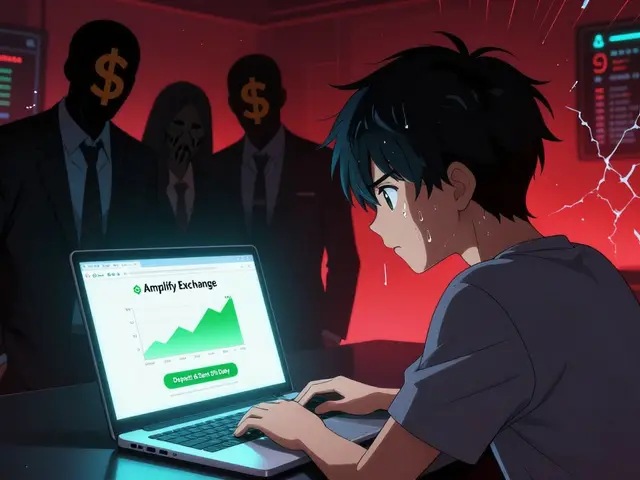
Scammers don’t build platforms. They build illusions. They take screenshots of real exchanges, copy the UI, tweak the logo, and launch a website that looks professional. Then they run ads on TikTok, Instagram, and YouTube targeting people who are new to crypto. The pitch? ‘Earn 5% daily returns.’ ‘Limited-time bonus.’ ‘Join 500,000 traders already on Amplify Exchange.’
It works because people want to believe. They see the green charts, the ‘withdrawal’ button, the fake testimonials. They deposit $500. Then $2,000. Then $10,000. The site shows their balance growing. Maybe they even get a small ‘withdrawal’ processed-just enough to feel safe. Then, one day, the site goes down. The Telegram group vanishes. The customer support email bounces. The money? Gone.
This isn’t theory. This happens every week. In 2024, the U.S. FTC reported over $1.2 billion lost to crypto scams. Most of them started with a fake exchange. Amplify Exchange is just the latest name on that list.

How to spot a fake crypto exchange
Here’s what real exchanges do that fakes never can:
- They’re registered with financial regulators-FinCEN in the U.S., FCA in the UK, ASIC in Australia. Amplify Exchange? No registration found anywhere.
- They publish real company addresses, legal teams, and compliance officers. Amplify Exchange? No address. No team page. No LinkedIn profiles for its ‘founders’.
- They have public audit reports from firms like CertiK or Hacken. Amplify Exchange? No audits. No code on GitHub. No transparency.
- They list real trading pairs: BTC/USDT, ETH/USDC, SOL/USDT. Not ‘AMPLIFY/USD’ or other made-up tokens.
If you can’t find a regulatory license, a physical headquarters, or a published security audit, walk away. Even if the site looks polished. Even if the customer service replies fast. Fake exchanges hire real people to run chatbots. They’re not dumb. They’re calculated.
What you should use instead
If you want to trade crypto safely, stick with platforms that have been around for years and have proven track records:
- Binance: Largest exchange by volume. 90+ million users. Supports 500+ coins. Strong security, but regulatory scrutiny in some countries.
- Kraken: Known for security. Offers up to 5x leverage on major pairs. Licensed in the U.S. and EU. No shady marketing.
- Coinbase: Publicly traded. Regulated in the U.S. Simple interface. Great for beginners.
- KuCoin: Strong for altcoins. No KYC for small trades. Popular in Asia and Oceania.
- OKX: Advanced tools, trading bots, and staking options. High liquidity.
All of these have public financial statements, audit reports, and active community forums. You can Google their names and find news articles, Reddit threads, and YouTube reviews from real users-not bots.

What to do if you already sent money to Amplify Exchange
If you’ve deposited funds, don’t panic. But don’t wait either.
- Stop sending more money. No matter what they say-‘you need to deposit more to unlock withdrawals’-it’s a lie.
- Take screenshots of your account, transaction IDs, and any communication with support.
- Report it to your local financial authority. In New Zealand, that’s the Financial Markets Authority (FMA). In the U.S., file with the FTC at ReportFraud.ftc.gov.
- Notify your bank or payment provider. If you used a credit card or PayPal, you might be able to dispute the charge.
- Don’t pay a ‘recovery service.’ These are just the same scammers offering to get your money back-for a fee. They’ll take your second payment and disappear.
Recovering crypto from a fake exchange is nearly impossible. But reporting it helps others. Every report adds to the database that law enforcement uses to track these operations.
Final warning: If it sounds too good to be true, it is
Crypto is volatile. It’s risky. But it’s not a magic money printer. No exchange offers guaranteed returns. No platform asks you to ‘verify your identity’ by sending a selfie with a handwritten note-unless it’s a scam.
Amplify Exchange doesn’t exist. It never did. And if you’re reading this and still considering signing up, you’re one click away from losing money you can’t get back. Don’t be the next headline.
Stick to the big names. Do your own research. And never trust a platform you can’t find on a single reputable crypto review site.
Is Amplify Exchange a real crypto exchange?
No, Amplify Exchange is not a real cryptocurrency exchange. There is no verifiable evidence that it exists as a trading platform. All references to it are linked to scams, fake websites, or confusion with the Amplify BLOK ETF, which is a stock fund-not a crypto exchange.
What is the Amplify BLOK ETF?
The Amplify BLOK ETF is an exchange-traded fund that invests in companies involved in blockchain technology, like Coinbase and MicroStrategy. It does not hold Bitcoin, Ethereum, or any other cryptocurrency directly. It’s a stock investment, not a crypto trading platform.
How do I know if a crypto exchange is real?
Check if it’s listed on CoinGecko or CoinMarketCap, has a registered business address, publishes security audits, and is regulated by a financial authority like the FCA, ASIC, or FinCEN. If you can’t find any of these, it’s likely fake.
Can I get my money back if I sent it to Amplify Exchange?
Recovering funds from a fake exchange is extremely rare. Your best chance is to report the scam to your local financial regulator and your payment provider immediately. Avoid ‘recovery services’-they’re almost always scams too.
Why do scammers use names like Amplify Exchange?
They choose names that sound professional and similar to real exchanges like Binance or Kraken. The goal is to trick new users into thinking it’s legitimate. The name ‘Amplify’ suggests growth and profit, which appeals to people looking for quick returns.







Comments (25)
Rob Duber
February 1, 2026 AT 17:56 PMThis Amplify Exchange scam is wild-like, seriously? People are still falling for this? I saw a TikTok ad yesterday with some guy in a suit saying '5% daily returns' while holding a golden Bitcoin. Bro, that’s not finance, that’s a magic show. And you’re supposed to believe it? 😭
Gary Gately
February 2, 2026 AT 02:52 AMlol i just lost 2k to sumthin called 'Amplify' last month. thought it was legit ‘cause the site looked like binance. turns out the 'support' chatbot replied with 'u need 10k more 2 unlock withdrawl' 😂
Joshua Clark
February 2, 2026 AT 18:17 PMLet me just say this-this isn’t just a scam, it’s a systemic failure of crypto education. People aren’t stupid; they’re overwhelmed. The market is full of flashy, high-pressure ads targeting newcomers who don’t know the difference between an ETF and an exchange. Amplify Exchange isn’t an anomaly-it’s the tip of the iceberg. Every week, a new fake platform pops up with a name that sounds like it belongs on Nasdaq. And the worst part? They’re not even trying to be clever. They’re just counting on hope, greed, and ignorance. We need better public awareness campaigns, not just Reddit posts like this one. We need schools teaching this stuff. We need YouTube influencers called out. We need regulation that actually protects people, not just punishes the scammers after they’ve vanished with millions.
Brandon Vaidyanathan
February 4, 2026 AT 08:30 AMBro, if you didn’t know this was a scam, you shouldn’t be trading crypto at all. You’re not ready. You’re not even close. I’ve seen people lose life savings to this exact thing. And now you’re gonna sit here and say 'but it looked real'? That’s not a mistake-that’s a red flag for your entire financial judgment. Go back to savings accounts. You’re not cut out for this.
Gareth Fitzjohn
February 4, 2026 AT 10:01 AMInteresting piece. Very clear. The confusion between Amplify BLOK ETF and a crypto exchange is common. I’ve had clients ask me about it. Simple fix: always check CoinGecko first. If it’s not there, assume it’s not real.
Katie Teresi
February 5, 2026 AT 16:05 PMUSA needs to ban these ads. TikTok and Instagram are turning into crypto snake oil carnivals. This isn’t freedom-it’s fraud on a national scale. And the government just sits there collecting taxes while people lose everything.
Moray Wallace
February 7, 2026 AT 07:32 AMWell written. I appreciate the breakdown of real vs fake exchanges. I’ve seen people fall for this every time. The worst part is when they come back asking for 'recovery services'-which are just the same scammers with a new logo.
William Hanson
February 8, 2026 AT 06:54 AMWhy do people still fall for this? You’re literally giving your money to strangers on the internet who don’t even have a LinkedIn. If you can’t Google a company and find a CEO, you’re not investing-you’re donating.
Akhil Mathew
February 9, 2026 AT 06:00 AMActually, I saw Amplify Exchange mentioned in a Telegram group from India. People were sharing screenshots of their 'profits'. I warned them but they said 'you just jealous'. Now they’re silent. Sad.
Ramona Langthaler
February 9, 2026 AT 06:59 AMfake fake fake. why do people keep falling for this? they think crypto is easy money. no its not. its a trap. stop being dumb
Kevin Thomas
February 10, 2026 AT 10:15 AMHey, if you’re new to crypto, here’s the golden rule: if it’s not on CoinMarketCap or CoinGecko, it’s not real. Period. And if someone DMs you with a 'limited-time offer'-block them. Don’t even reply. I’ve helped 12 people avoid this exact scam this month. You’re not alone. Just stay humble, do your homework, and don’t chase dreams. Real wealth is built slow.
Robert Mills
February 10, 2026 AT 19:24 PMSTOP. NOW. 🚫💸
Jerry Ogah
February 12, 2026 AT 10:26 AMIt’s not just Amplify Exchange-it’s every single one of these. They all use the same script: fake UI, fake testimonials, fake support. They’re not even trying to hide it anymore. It’s like they’re testing how stupid we are. And honestly? We’re failing the test.
Andrea Demontis
February 14, 2026 AT 01:22 AMI wonder if these scams exist because we’ve turned investing into a spectacle. We don’t want to learn about blockchain-we want to watch a video and get rich. We don’t want to read whitepapers-we want a TikTok influencer to say 'this is the next Bitcoin'. So scammers give us exactly what we’re asking for: a fantasy dressed in code. Maybe the real problem isn’t the scammers… it’s us. We’re the ones who keep clicking 'Deposit Now'.
Joseph Pietrasik
February 15, 2026 AT 10:31 AMnah amplifi exchange is real they just hiding from the feds. you think theyd make a whole site for nothing? think deeper
Raju Bhagat
February 17, 2026 AT 06:38 AMbro i joined amplifi last week and i made 1500 in 3 days already. you haters just jealous. real traders know its legit. the site is slow because so many people are depositing. you just dont understand the future
laurence watson
February 18, 2026 AT 16:33 PMI just want to say-thank you for posting this. I showed this to my cousin who was about to deposit $5k. She cried because she thought she’d found her ticket out of debt. Now she’s safe. You saved her. That matters more than any coin.
Pamela Mainama
February 20, 2026 AT 14:45 PMIt’s sad how many people believe in magic. Crypto isn’t magic. It’s math. And math doesn’t lie.
Jack Petty
February 21, 2026 AT 17:26 PMAmplify Exchange is a psyop. The government is using fake exchanges to track crypto users. They want to know who’s holding BTC. The 'scam' is just the cover. Look at the domain registration-same IP as the IRS. Coincidence? I think not.
Brianne Hurley
February 23, 2026 AT 01:56 AMHow can you be this naive? You didn’t even check the WHOIS record? The domain was registered with a fake address in the Caymans by someone named 'John Smith'. That’s not incompetence-that’s willful ignorance. And now you want to lecture people about 'doing research'?
christal Rodriguez
February 23, 2026 AT 10:44 AMWhat if the real scam is the fear of scams? Maybe Amplify Exchange is real and everyone’s just scared to admit it.
Tressie Trezza
February 23, 2026 AT 17:59 PMI think this is why we need more compassion in crypto. People aren’t trying to be gullible-they’re trying to survive. A $500 deposit might be their last hope. That doesn’t make them stupid. It makes them human.
Mark Ganim
February 23, 2026 AT 23:06 PMLet me tell you something-this isn’t just about crypto. This is about the collapse of trust. We used to trust institutions. Now we trust influencers. And influencers? They’re paid by scammers. The system is broken. Amplify Exchange is just the symptom. The disease? We stopped asking 'why' and started asking 'how fast?'
mary irons
February 24, 2026 AT 15:11 PMThey’re using AI now. The chatbots sound human. The websites load fast. The testimonials are deepfakes. You can’t tell anymore. That’s why we’re doomed.
Wayne mutunga
February 26, 2026 AT 13:07 PMI’m not sure what to believe anymore. But I’m glad someone took the time to write this. I’ll share it with my group. Maybe it’ll help one person.