

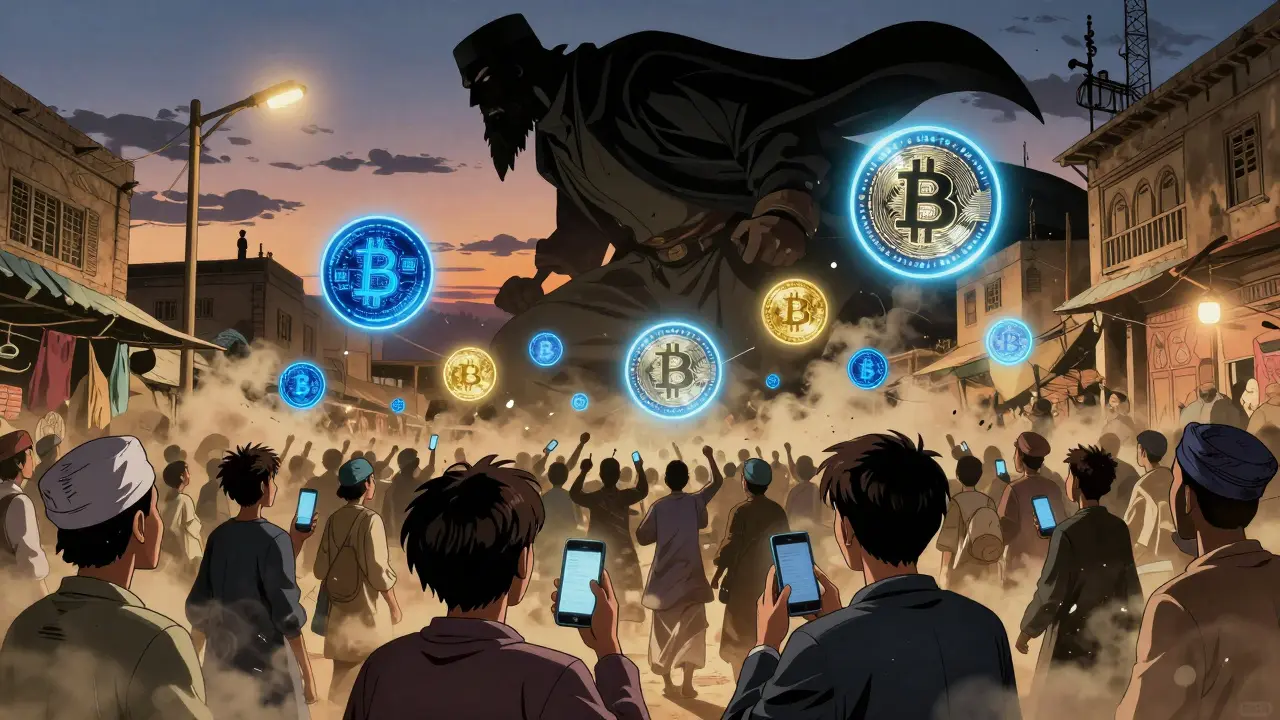
Afghanistan crypto prohibition became global news after the Taliban declared all cryptocurrency activities illegal in August 2022. Just one year prior, the nation ranked 20th worldwide in crypto adoption. This drastic policy reversal transformed Afghanistan into a case study for how authoritarian regimes clash with decentralized financial tools. Despite severe penalties, peer-to-peer networks continue operating underground-raising critical questions about enforcement limits and human rights implications.
How Crypto Went From Thriving to Illegal
In 2021, Afghan citizens turned to Bitcoin and stablecoins like USDT when international sanctions froze foreign reserves. Only 8.64 million of 40 million residents had internet access yet, transaction volumes surged dramatically. The Taliban initially tolerated this digital lifeline until August 2022 when they issued an official ban citing Sharia law interpretations calling crypto "speculative gambling" lacking real-world asset backing.
This abrupt policy shift coincided with Taliban centralization efforts. Their Ministry of Economy announced indefinite suspension of exchanges while religious scholars labeled digital assets *haram* (forbidden). By November 2022, Binance data showed monthly crypto transaction values plummeting to $80,000-a stark decline from pre-ban peaks.
Why Enforcement Proves Difficult
Taliban authorities face practical obstacles in stopping crypto use. They lack technical capacity to monitor blockchain transactions or dismantle decentralized networks. Periodic crackdowns target visible traders but miss underground P2P channels where most activity shifts.
| Factor | Traditional Banking | Cryptocurrency Networks |
|---|---|---|
| Monitoring Capability | High (centralized records) | Near-zero (decentralized ledgers) |
| User Identification | Mandatory KYC | Pseudonymous wallets |
| Bypass Methods | Impossible | Tor browsers, mesh networks |
Even with arrests reported, economic desperation fuels continued usage. A UN warning during 2022 noted 97% of Afghans lived below poverty line levels. When formal banking collapses, digital assets become survival mechanisms rather than mere investment tools.
Underground Economies Fill the Void
USDT remittance routes dominate informal channels after traditional systems failed. Families receiving foreign aid payments increasingly rely on Tether transfers instead of SWIFT-based wire services. Digital Citizen Fund reports show tech-savvy merchants converting physical goods into stablecoins during market instability periods.
These shadow markets operate through encrypted messaging apps and offline QR code transactions. While Taliban propaganda depicts crypto as Western corruption tool, grassroots reality reveals pragmatic dependency among populations cut off from conventional finance.

Impact on Women’s Financial Freedom
Roya Mahboob’s Digital Citizen Fund highlighted gender-specific impacts. Without government IDs blocking bank access, women adopted Bitcoin ownership as alternative savings methods. The organization trains female educators through covert digital literacy programs focusing on self-custody techniques.
"It gives them hope of financial freedom," Mahboob explained regarding cryptocurrency adoption amid employment bans affecting 3 million Afghan women.
Human Rights Foundation partnerships amplify these efforts by framing crypto education as human rights activism against systemic exclusion.
Global Context & Comparative Analysis
| Country | Restriction Type | Year Implemented | Black Market Activity |
|---|---|---|---|
| Afghanistan | Full prohibition | August 2022 | High (P2P dominance) |
| China | Exchange bans | 2017-2021 | Moderate (OTC markets) |
| Morocco | Lifted ban | Removed 2024 | N/A |
| Egypt | Religious fatwa | Ongoing | Moderate |
Unlike neighboring Iran where state-sanctioned mining exists, Afghanistan shows near-total suppression. Yet even stricter enforcement hasn't eliminated demand, highlighting limitations of blanket prohibitions.

What Might Change After 2026?
Experts suggest three potential scenarios shaping future developments:
- Deepening reliance on stablecoins as dollar substitute during hyperinflation episodes
- Regional power brokers leveraging crypto corridors for trade settlements
- Partial liberalization contingent on recognizing Taliban governance internationally
Current trajectories indicate sustained conflict between ideological rigidity and economic necessity driving underground innovation.
Frequently Asked Questions
Is cryptocurrency still illegal in Afghanistan today?
Yes. All forms remain prohibited under August 2022 decree though peer-to-peer trading persists clandestinely. No legal recognition granted to any digital asset operations.
How do people access crypto despite the ban?
Encrypted messaging platforms facilitate P2P deals using cash handoffs or gift card conversions. Offline wallet storage minimizes detection risks compared to exchange platforms.
Do women specifically benefit from crypto access?
Absolutely. Without identification documents blocking banking services, digital assets offer critical alternatives for savings and remittances restricted under Taliban rule.
Which countries lifted their crypto bans recently?
Morocco removed restrictions entirely in 2024 joining other nations reversing earlier prohibitions. Tunisia similarly eased controls last year focusing on regulated frameworks instead.
Could sanctions ever force policy reversal?
Unlikely short-term but long term possible if economic collapse worsens. Historical precedent shows regimes relaxing prohibitions when facing existential threats to population survival.







Comments (16)
Michael Nadeau
March 30, 2026 AT 21:07 PMState sovereignty clashes with decentralized networks constantly throughout history. Governments view money as a tool for absolute control over their populations. When citizens bypass these controls, authorities panic and resort to draconian measures. We see this dynamic play out now in Afghanistan regarding digital assets. The ban was never really about religious texts or genuine concerns about gambling. It was always about maintaining monopoly over value transfer within the region. People will always find ways to move wealth freely regardless of borders. Technology accelerates the process of finding those cracks in the regulatory wall. Surveillance states cannot track every single transaction on a public chain. This reality creates a constant tension between regulation and individual freedom. History shows that prohibition often strengthens the black market instead of eliminating it. Financial tools become weapons of resistance in these specific scenarios. Women specifically gain leverage when holding their own private keys securely. Removing reliance on corrupt institutions shifts power dynamics significantly within society. We must recognize these grassroots movements as fundamental human rights actions rather than crime. Ignoring this trend leads to further authoritarian instability in the global south. The resilience shown by ordinary citizens proves that decentralization works.
Shaira Vargas
March 30, 2026 AT 22:21 PMThis is so sad for the people down there trying to survive.
Lisa Miller
March 31, 2026 AT 20:47 PMI totally agree with your perspective on the sadness of this situation. It really highlights how much we need better global systems. Hopefully things improve soon for everyone involved.
Lisa Walton
April 1, 2026 AT 18:37 PMObviously the religious justification is just a smokescreen for total financial control.
Shubham Maurya
April 2, 2026 AT 11:29 AMBlockchain doesnt care about borders or regimes 🚫🌍 You cant stop what lives on a ledger 🔐💻 The tech wins in the end always 👊💪
Callis MacEwan
April 3, 2026 AT 08:48 AMThe liquidity mismatch in these shadow markets creates significant systemic risks for participants who lack proper off-chain settlement protocols.
Raymond K
April 3, 2026 AT 22:51 PMIts kinda crazy how fast things changed here from adoption to ban real fast. The govmnent just wants to shut down any indepence for folks. I hope peopel can still get money out safely though. It feels wrong to tell poor people they cant save.
Sean Carr
April 5, 2026 AT 14:46 PMUSDT actually helps remittance work when banks fail completely. Many families rely on Tether transfers to send food back home. Keeping wallets secure is the main priority for users now.
joshua kutcher
April 6, 2026 AT 19:52 PMI worry deeply about the women who lost their bank access suddenly. It is heartbreaking to see them excluded from basic finance. Education programs might offer a way forward eventually.
Justin Garcia
April 7, 2026 AT 21:17 PMAnyone thinking this is good for stability is delusional about how economies work. The regime will crack down harder whenever anyone tries.
athalia georgina
April 8, 2026 AT 00:24 AMi dont think its possible to stop digital money once its here thier tech is too slow compared to bitcoin. becuse of this lots of people are hurt.
Matt Bridger
April 9, 2026 AT 07:18 AMCentralized oversight remains essential for economic stability and social order
Unregulated asset classes introduce unacceptable volatility
The current trajectory suggests inevitable collapse without intervention
Fraud mitigation requires institutional gatekeepers at minimum threshold levels
We should not celebrate circumvention of lawful monetary policy frameworks
Joy Crawford
April 10, 2026 AT 20:21 PM:) I feel bad for the moms trying to buy food :( They just want to live normal lives :(( But the rules are so strict :(
Beverly Menezes
April 11, 2026 AT 16:36 PMMaybe there is a way to help them without breaking laws completely. Peace is the best thing for everyone involved hopefully.
Raymond K
April 11, 2026 AT 22:35 PMI wonder if stablecoins are the safest bet for most folks trying to avoid getting caught. It seems easier to hide cash flow using Tether than random coins.
Katrina Tate
April 12, 2026 AT 03:19 AMThe data points show high failure rates for illicit networks under surveillance pressure. Enforcement capability remains limited but growing steadily over time.